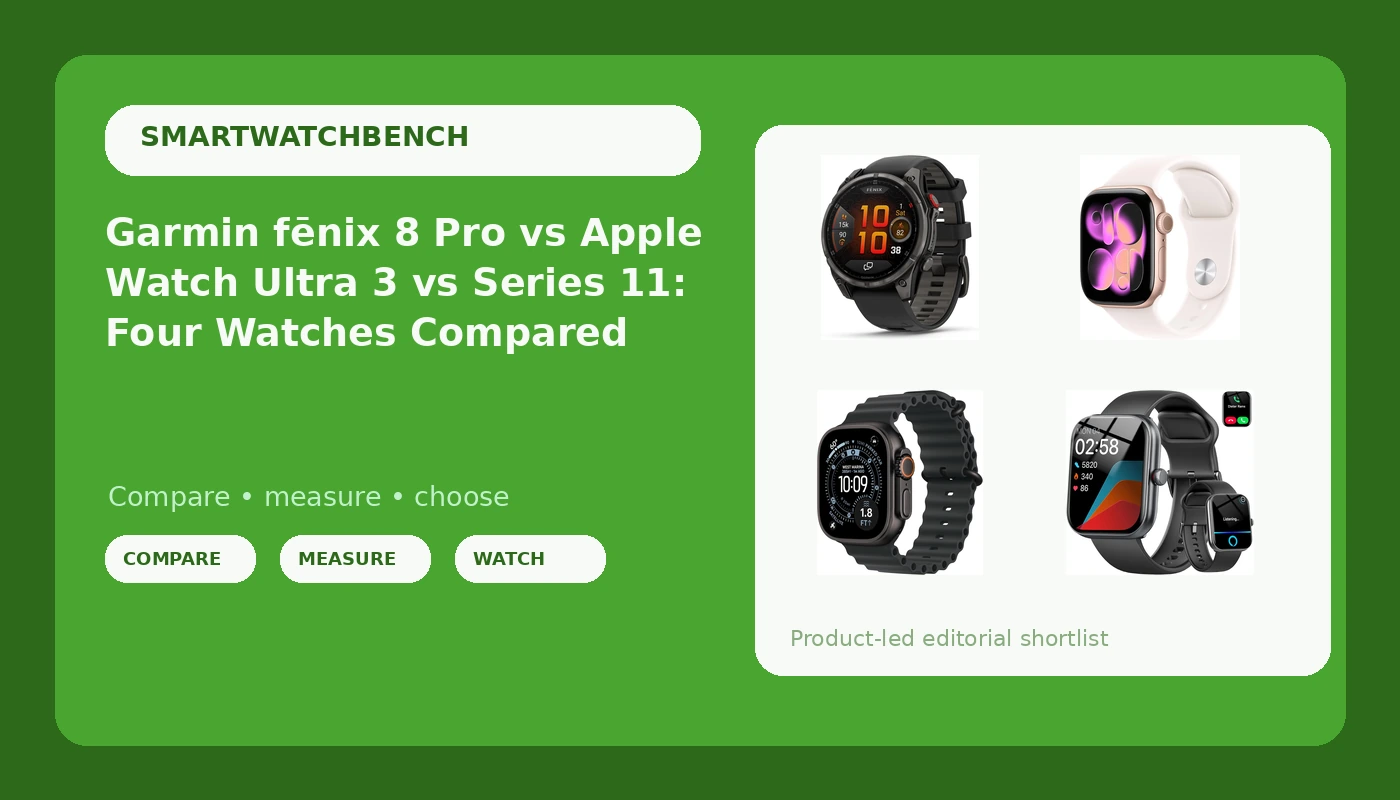
I have worn a watch on every run, ride, and race since 2019, and the question I get most often is not which smartwatch is best. It is which one is worth the money. That is why this smartwatch comparison for runners starts with four very different answers: a titanium Garmin built for multi-day adventures, both tiers of Apple's current lineup, and a budget watch that costs less than a decent pair of racing shoes.
The short answer: the Apple Watch Ultra 3 is the best single watch for most runners, the Garmin fēnix 8 Pro is the right tool if battery life and trail-ready durability matter more than app polish, the Apple Watch Series 11 is the sensible pick if you want health tracking and notifications first, and the budget Alexa watch is a step counter with a nice screen rather than a training tool.
That is the short version. The long version comes down to three things I refuse to guess at: whether the GPS trace matches the real course, whether the wrist heart rate matches a chest strap, and whether the battery survives real use instead of a marketing spec sheet. Those three questions are what separate these four watches, and they are the spine of everything below.
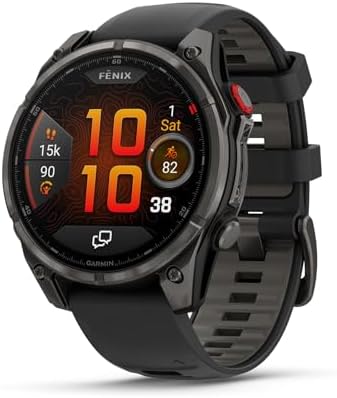
Garmin fēnix 8 Pro, 51mm, Sapphire, DLC Titanium, Black/Pebble Gray
Built for long days away from a charger, with a sapphire lens and titanium bezel that shrug off trail abuse, and the deepest training software in this group
The biggest and heaviest case here, and the price puts it out of reach for most runners
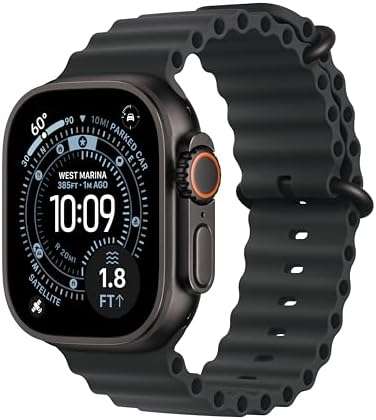
Apple Watch Ultra 3 [GPS + Cellular 49mm] Running & Multisport Smartwatch w/Rugged Titanium Case w/Black Ocean Band
Rugged titanium build, cellular plus satellite communications, and the best all-day health and fitness package Apple sells
Still a daily charge, and some of the deeper training metrics depend on third-party apps
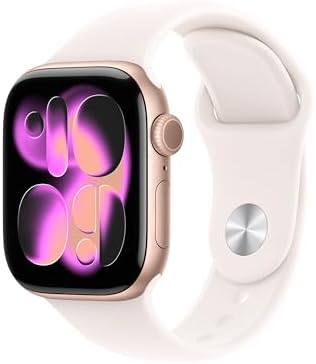
Apple Watch Series 11 [GPS 42mm] Smartwatch with Rose Gold Aluminum Case with Light Blush Sport Band - S/M
Smallest and lightest of the four, strong sleep and health tracking, and the easiest to live with on a daily basis
GPS-only means no cellular, and the smaller case has less battery headroom than the Ultra
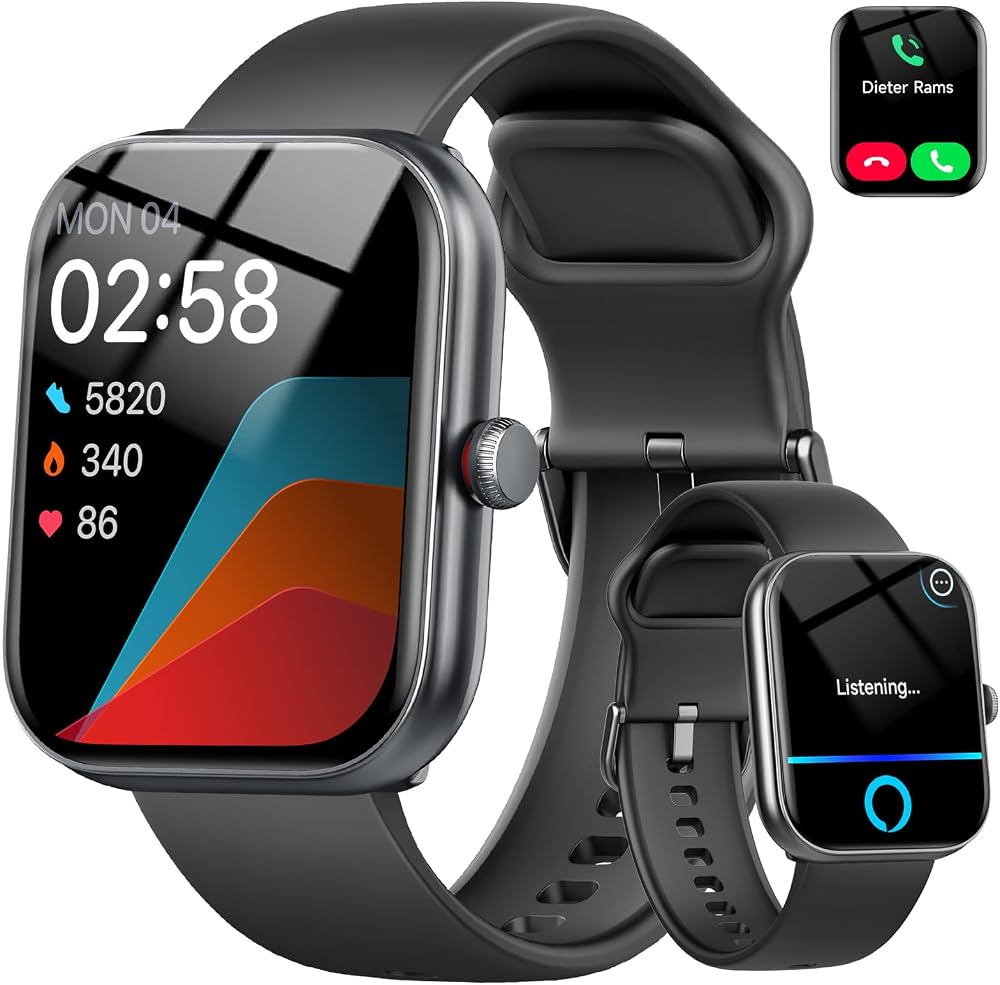
Smart Watch for Women Men, Alexa Built-in, Smartwatch for iPhone & Android Bluetooth Call, 1.91" HD Fitness Tracker with Heart Rate/SpO2/Sleep Monitor, IP68 Waterproof, Fitness Watch 100+ Sports Modes
Alexa built in, Bluetooth calling, a large 1.91 inch display, and IP68 water resistance for a fraction of what the others cost
The heart rate, SpO2, and sleep numbers are estimates you should not train by, and the sport modes are a list rather than a coaching system
Prices and availability were captured from Amazon Creators API and may change.
How I judge a watch for running
Every watch that comes through my hands gets the same four-step audit, and I do not publish a verdict until it clears all four.
First, a GPS accuracy check against a certified course. A watch that is off by a hundred meters is a watch that is lying to you about your pace, and pace is the number you build every workout around. Second, a heart rate comparison against a chest strap during intervals, because that is exactly where wrist sensors struggle most. Third, a battery audit at real use, with GPS and notifications on, not the "light use" figure on the box. Fourth, a software check, because the software is the watch. A great sensor with buggy firmware is a great sensor you cannot trust.
None of these four watches fails all four tests. They fail in different places, and where a watch fails tells you who it is actually for.
Garmin fēnix 8 Pro: the multi-day tool
The fēnix 8 Pro is the one watch here designed around being away from a charger for a long time. The 51mm case, the sapphire lens, and the DLC-coated titanium bezel are the spec sheet version of that idea. Sapphire resists the scratches that come from squeezing past rock, and titanium keeps the weight reasonable for a case this size. It is also, unapologetically, a big watch. On a smaller wrist the 51mm case looks like what it is, a piece of expedition gear.
Garmin's reputation among endurance athletes was built on GPS accuracy and battery life, and the fēnix line is where that reputation lives. The training software is the deepest in this group, which matters if you actually use structured workouts, load tracking, and recovery data instead of glancing at your pace once and putting the watch back on the charger.
Where it loses: it is the most expensive watch here by a wide margin, it is the heaviest on the wrist, and if you are a casual runner who mostly wants notifications and a morning readiness score, you are paying for capability you will never open. Buy this because you go long and go remote, not because you want the best watch in the abstract.
Apple Watch Ultra 3: the all-rounder that takes running seriously
The Ultra 3 is the watch I recommend to the largest number of people, and the 49mm rugged titanium case with the Black Ocean Band is why. It is built to take contact, it carries both cellular and satellite communications, and it is the only watch here that is genuinely good at two jobs at once: being a serious training device and being a normal smartwatch the rest of the day.
The health and fitness tracking package is the strongest Apple offers, and the always-on display means you are not doing the wrist-flick dance to check a split. For a runner who wants one watch for the run, the gym, the office, and the flight, this is the least compromised answer.
Where it loses: battery life. Apple's lineup is still a daily charge in practice, and that is the single biggest reason runners leave the platform. The other knock is depth. The built-in workout app covers the basics well, but the metrics that data-obsessed runners want often come from third-party apps, which means another subscription and another login. It is also a large case, so try one on before you commit.
Apple Watch Series 11: the sensible middle
The Series 11 in the 42mm rose gold aluminum case with the Light Blush Sport Band is the watch most people should actually start with. It is the smallest and lightest of the four, which matters more than spec sheets admit. A watch you forget you are wearing gets worn more, and a watch that gets worn more collects more data.
Sleep Score and the broader health monitoring suite are the headline features, and the always-on display plus water resistance cover daily life without drama. For someone whose training is a few runs a week plus a lot of walking, this does everything that matters and does it in a package that disappears on the wrist.
Where it loses: this is the GPS-only configuration, so no cellular if you want to leave the phone at home. The 42mm case also has less battery headroom than the Ultra, so long GPS sessions eat a bigger share of the charge. And if you are chasing serious endurance numbers, you will feel the ceiling sooner than you expect.
The budget Alexa watch: know exactly what you are buying
Here is where I have to be blunt, because this is the category that generates the most angry emails. The budget watch with Alexa built in, Bluetooth calling, a 1.91 inch HD screen, and IP68 water resistance is a genuinely useful device. It pairs with iPhone and Android, it takes calls on your wrist, it tells you the weather, and it tracks steps and sleep.
What it is not is a training tool. The heart rate, SpO2, and sleep figures on watches at this end of the market are estimates, and estimates you cannot verify are not data you should build a training block on. The 100+ sport modes are a menu, not a coaching system, and the GPS accuracy question is the one I would never take on faith from a listing page.
Buy it if you want notifications, calls, and a rough step and sleep picture for a fraction of what the others cost. Do not buy it if you are going to compare your interval splits to a friend's Garmin. Those numbers will not agree, and the budget watch will be the one that is wrong.
The trade-offs the spec table hides
Wrist heart rate is the first place these watches diverge. Wrist optical sensors are convenient and they lag, especially during short intervals where your heart rate changes fast. Every watch here is fine for steady-state running. Only some are worth trusting when you are doing 400-meter repeats, and that is exactly when the number matters most. If you train by heart rate zones seriously, budget for a chest strap no matter which watch you pick.
Battery claims are written for a use case you do not have. The "light use" number on a box assumes no GPS, few notifications, and a bright screen you barely touch. My battery audit is GPS on, notifications on, and a normal day of wear. Every watch here gets a worse number under those conditions, and the gap between the budget watch and the fēnix 8 Pro is enormous once GPS is involved.
The software is the watch. A sensor is a component. The firmware, the app, and the update cadence are the product. I have watched updates break features on watches that were working fine, and I have watched brands abandon hardware two years in. Garmin and Apple have long track records of supporting their watches. That is a real part of what you are paying for.
GPS in bad conditions is the honest test. Open sky, a straight road, and a clear day flatter every watch. Trees, tall buildings, and canyon walls are where you find out what the antenna and the processing are actually worth. This is the single test I will not skip, and it is the one no product listing will ever tell you.
Which one should you buy
For most runners, the Apple Watch Ultra 3 is the pick. It is rugged, it handles training and daily life without compromise, and the health package is the best Apple has built. If battery life is your line in the sand, the Garmin fēnix 8 Pro is the answer, and it is the only watch here built to go days between charges while logging GPS.
If you want the smartwatch experience in the smallest, most livable package and you are honest that your training is moderate, the Apple Watch Series 11 is the value play of the three premium options. And if you just want calls, Alexa, and a step count on your wrist without spending real money, the budget watch does that job. Just do not ask it to be a coach.
One rule I apply to all four: buy the watch that fits the training you actually do, not the training you plan to do in January.
What I am watching next
The next thing on my bench is how the Ultra 3 handles a full training block once the novelty wears off, and whether the third-party app ecosystem fills the training gaps Apple leaves open. On the Garmin side, I want to see how the fēnix 8 Pro behaves on a route with heavy tree cover, because that is where GPS claims go to die.
And I keep coming back to the budget category, because it keeps getting better every year. The screens are nicer, the water resistance ratings are real, and the price is genuinely tempting. What has not changed is the sensor accuracy, and until it does, my advice stays the same: a cheap watch is a notification machine, and a good watch is a measurement tool. Know which one you are buying.