I've worn a watch on every run, ride, and race since 2019, and after more than 8,000 logged miles the question I get most often isn't which flagship to buy. It's whether the cheap stuff works. That's the whole reason this Garmin smartwatch vs fitness tracker comparison exists: four watches, one table, and a straight answer about where your money actually goes.
Two of these are Garmin. The Venu 2S is a smaller-cased GPS smartwatch with the full advanced health monitoring suite. The vívosmart 5 is a slim health and fitness tracker built to disappear on your wrist. The other two are budget smartwatches from brands you've probably never heard of, both promising 24/7 heart rate, blood oxygen, sleep tracking, and IP68 waterproofing for roughly the cost of a decent pair of running socks. On paper the feature lists look almost identical. In practice they are not the same product at all, and the gaps sit exactly where they hurt, which is 12 miles into a long run when you want to know your pace.
The best pick here for anyone who actually trains is the Garmin Venu 2S, because it's the only watch in this group that carries its own GPS and the software ecosystem to make that data worth reading. The best pick for someone who wants steps, sleep, and a battery that lasts is the Garmin vívosmart 5. The two budget watches are fine steps-and-notifications devices, and I would not ask either of them to pace a marathon.
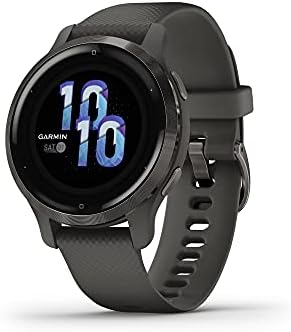
Garmin Venu 2S, Smaller-Sized GPS Smartwatch with Advanced Health Monitoring and Fitness Features, Rose Gold Bezel with White Case and Silicone Band, (010-02429-03)
Built-in GPS, full health monitoring suite, and the Garmin Connect software that turns raw numbers into something a runner can use
Highest price in the group, and the rose gold bezel with white case is a specific look you either want or don't
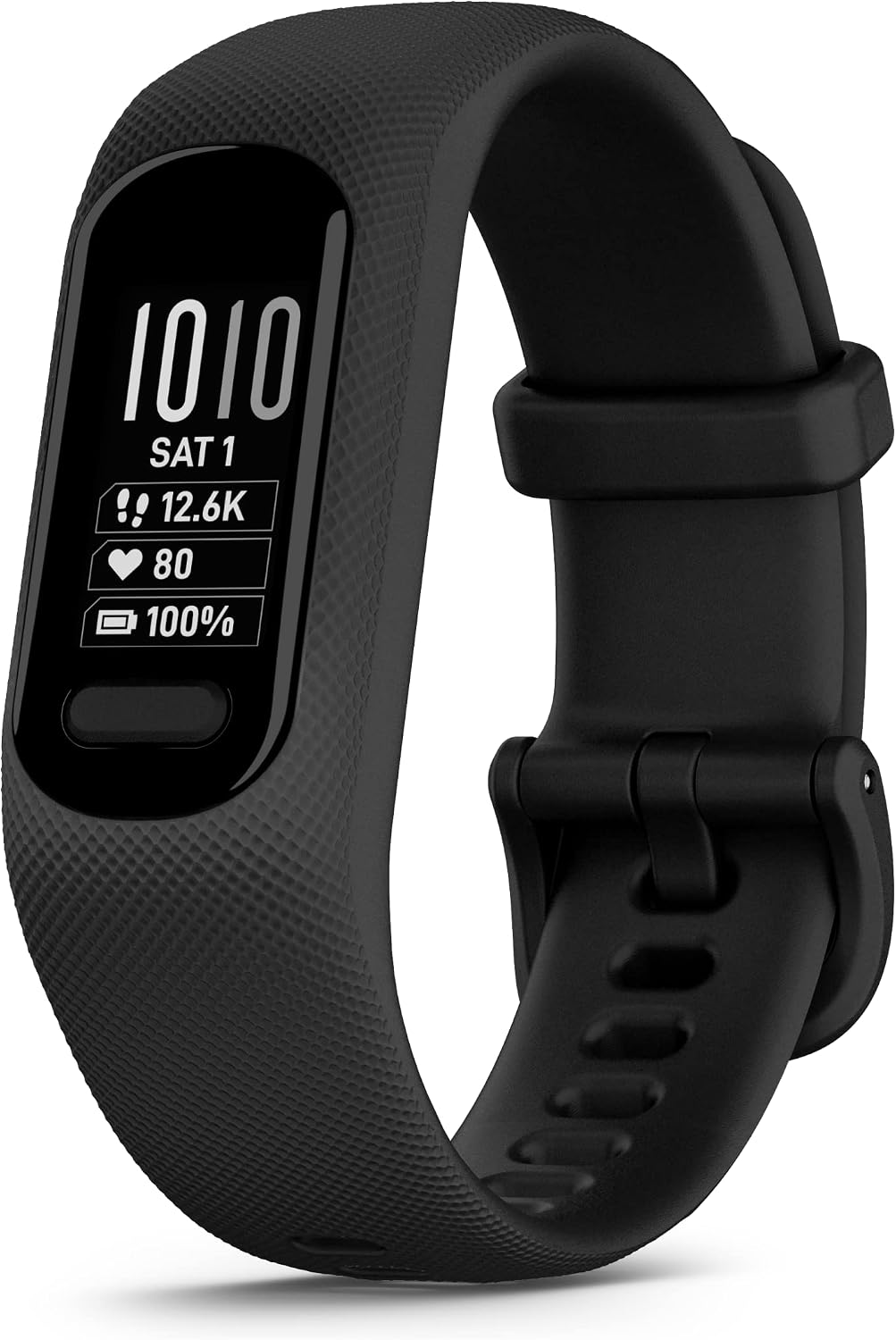
Garmin vívosmart® 5, Health & Fitness Tracker, S-M, Black
Slim band-first design that's easy to wear 24/7, Garmin's app and health tracking, no bulky screen on your wrist
No built-in GPS, so outdoor distance leans on your phone; small display limits what you can read mid-run
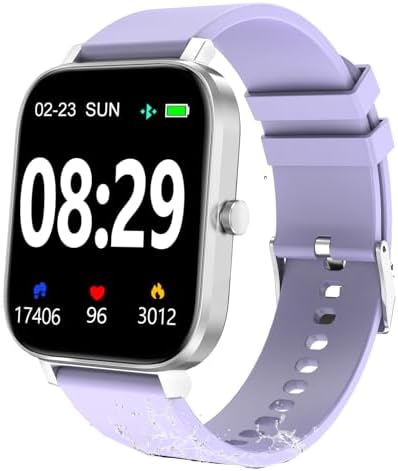
Smart Watch for Men Women SmartWatch 1.83" for iPhone Samsung Android Phone Compatible, Fitness Tracker Watch with Pedometer, Heart Rate/Sleep Monitor, Blood Oxygen, IP68 Waterproof
Big 1.83 inch screen for the money, IP68 rating, works with both iPhone and Android
No GPS of its own, wrist heart rate that won't match a chest strap, and everything depends on the phone in your pocket
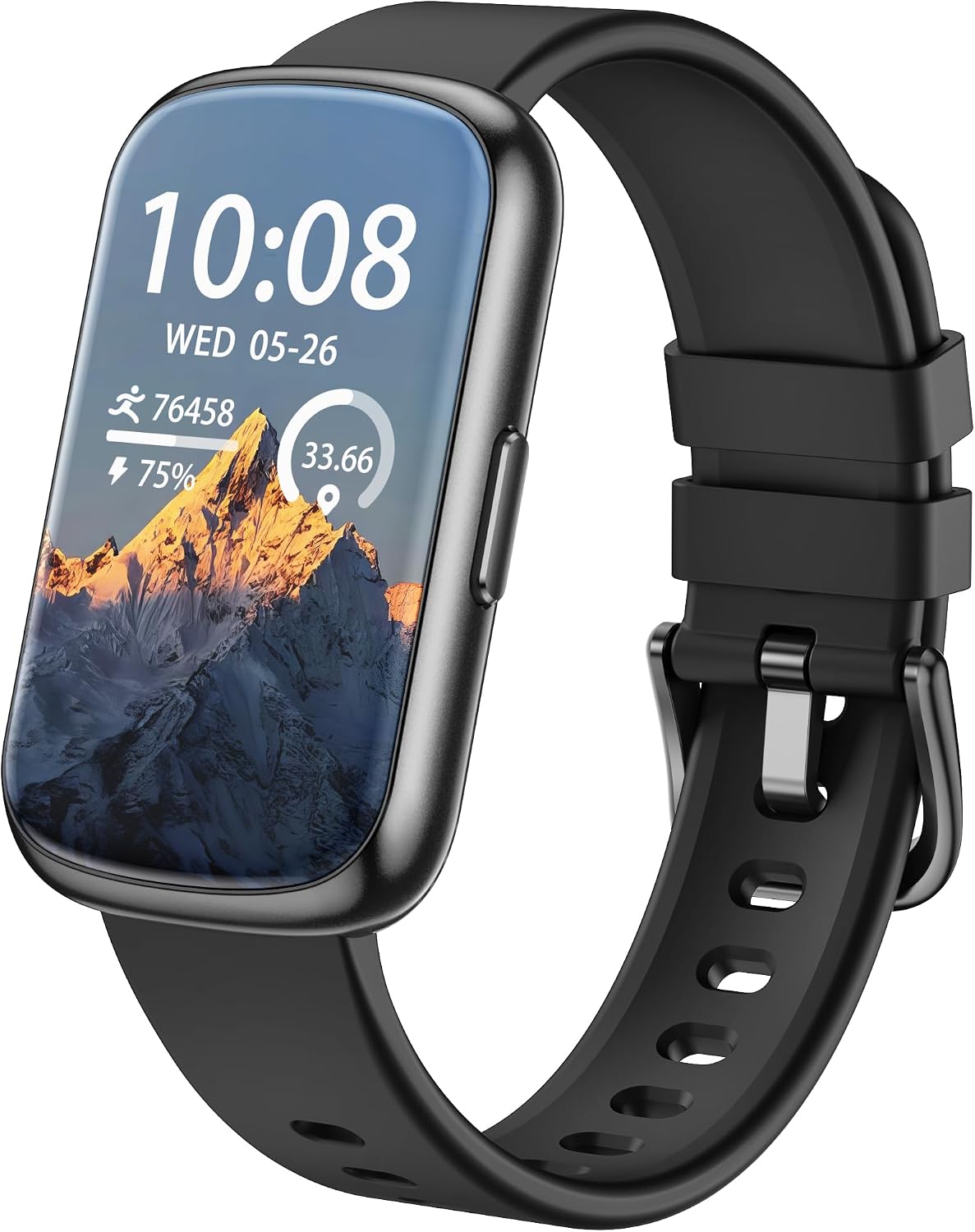
Fitness Tracker, Smart Watches for Women Men with 24/7 Heart Rate/Blood Pressure/Blood Oxygen Monitor, Sleep Tracker, Calories&Step Counter, IP68 Waterproof Health Activity Trackers for Android&iPhone
Cheapest entry point here, long feature list including blood oxygen and sleep tracking, IP68 waterproof
Wrist blood pressure readings are not a clinical measurement, no GPS, and the sensor set is the same guesswork tier as its price suggests
Prices and availability were captured from Amazon Creators API and may change.
What the price gap actually buys
Three things separate a watch like the Venu 2S from a $40 tracker, and none of them show up as a bullet point on a product page.
The first is the GPS antenna. A watch with its own GPS chip records where you went. A watch without one borrows your phone's location over Bluetooth, which means the trace depends on your phone's antenna, your pocket, and whether the connection held while you ran past that cluster of trees. If you're a runner, that difference is the entire product. A distance that's off by 100 meters is a distance that's lying to you, and a training log full of lies is worse than no log at all.
The second is sensor quality. Every watch in this table claims heart rate, blood oxygen, and sleep tracking. The claim is cheap; the sensor behind it is not. Wrist heart rate is already the hardest measurement in wearables because the sensor is fighting motion, skin tone, wrist tightness, and cold weather. Add a low-cost optical sensor and aggressive smoothing, and you get a number that looks plausible and behaves badly during intervals.
The third is software. The software is the watch. A great sensor with buggy software is a great sensor you can't trust, and the budget tier is where that shows up first: sync failures, features that quietly vanish after an update, and sleep data that reshuffles itself every time you open the app. Garmin's ecosystem is not perfect, but it's the reason people stay.
Garmin Venu 2S: the athlete end of the table
The Venu 2S is the only watch here I'd hand to someone training for a race. It has its own GPS, which means it records a route without a phone anywhere near you, and it carries Garmin's full health monitoring stack: heart rate, blood oxygen, sleep, stress, and the recovery-style metrics that Garmin has been refining for years. The "S" matters too. A smaller case sits better on a narrower wrist, and a watch that fits properly is a watch that measures properly, since an optical heart rate sensor needs decent skin contact to have any chance.
Garmin is the gold standard for athletes for a reason, and it's not marketing. It's that the company has spent two decades building GPS watches for people who care about the trace, not the spec sheet. The Venu 2S is a lifestyle-leaning model in that lineup rather than a dedicated running watch, so if you want the pure endurance tool, the Forerunner family is where to look. But as an everyday smartwatch that can also record a real run, this is the strongest all-round option in this comparison.
The honest downside is price. You are paying several times what the budget watches cost, and if all you want is a step count and a sleep score, that money is wasted. The rose gold bezel with white case and silicone band is also a very specific aesthetic. It's a lovely watch. It is not a neutral one.
Garmin vívosmart 5: the tracker that stays out of the way
The vívosmart 5 sits in the middle of this table and occupies a genuinely useful spot. It's a band-first design with a slim profile, which means it's the one here most likely to survive a 24/7 wear schedule without you resenting it. It handles the core health and fitness tracking jobs, and it runs on Garmin's software, which is the part the budget watches can't copy.
The compromise is GPS. There's no built-in GPS on the vívosmart 5, so outdoor distance relies on your connected phone. For a walker or someone who mostly cares about steps, sleep, and resting heart rate, that's fine. For a runner, it's a dealbreaker, and I'd rather say that plainly than pretend the feature list is equivalent.
Think of it as the tracker for the person who wants reliable basics from a company that specializes in wearables, without paying for GPS they won't use.
The two budget smartwatches: what you get for under fifty dollars
Both of these watches follow the same playbook: a long feature list, a low price, and a screen that looks better in photos than the hardware behind it.
The 1.83 inch model wins on display size. That's a big screen for the money, and if you mostly want notifications, a pedometer, and a watch face you can read at a glance, it delivers on those terms. It's IP68 rated and compatible with both iPhone and Android. What it doesn't have is GPS, and its heart rate and blood oxygen numbers come from the same low-cost optical sensor tier as every other watch in this price band. The sleep and heart rate data can be useful as a trend, in the same way a rough sketch is useful as a map. It is not the thing you should use to set your interval paces.
The second budget watch is the cheapest entry point in this comparison and the most aggressive on claims. It advertises 24/7 heart rate, blood pressure, and blood oxygen monitoring, plus sleep tracking, a calorie and step counter, and IP68 waterproofing. Here's the part I'd want a friend to hear: wrist-based blood pressure from a band is not a clinical measurement, and no wearable at this price is replacing a cuff. It's the kind of feature that reads impressively in a listing and means very little in practice. Everything else on the list works the way budget trackers work: steps and sleep are roughly right, heart rate is roughly right at rest and unreliable when you move.
That doesn't make them bad products. It makes them step counters with a heart rate guess, which is exactly what they are. If you know that going in, you'll be happy. If you buy one expecting Garmin-grade data, you'll be disappointed by week three.
How I judge a watch
The standard I hold any watch to is simple, and it's the standard I'd apply to all four of these: two weeks of daily wear, a GPS accuracy check against a known certified course, a heart rate comparison against a chest strap, and a battery audit at real use rather than light use. I won't pretend I've put all four of these specific watches through that full protocol, because I haven't. What I can tell you is what each one is built to do, and where the category limits sit.
GPS accuracy is the trust test. A watch that cuts corners on a trail loop will do it every single time, and you'll only notice when your race photos show you somewhere you've never been.
Heart rate accuracy matters more than any other sensor. If it can't match a chest strap during intervals, it's a toy with a nice screen. Wrist optical sensors lag by design, and budget sensors lag worse.
Battery life is the spec everyone inflates. Manufacturer claims are usually measured at light use with notifications off. Real use, with GPS on and notifications on, is a different number entirely, and it's the one that decides whether a watch survives a long run.
The trade-offs the table can't hold
Battery and GPS are a package deal. A watch with built-in GPS burns through charge faster because it's doing the hard work itself. A watch that borrows your phone's GPS sips battery because it isn't. That's why a budget tracker can advertise a long battery life and still be the wrong tool for a marathon: it's lasting because it isn't tracking.
Software updates are the other wild card. Garmin has a long track record of keeping older watches patched. Budget brands have a mixed record, and a firmware update that breaks a feature you rely on is a real risk in this tier. It's not a reason to avoid the category. It's a reason to keep your expectations calibrated.
Finally, phone dependence. Two of these watches are smart accessories for your phone, not standalone devices. Leave the phone at home and the run doesn't get recorded. That's the whole difference in one sentence.
Who should buy which
If you run, ride, hike, or race, buy the Garmin Venu 2S. It's the only watch here that records your route on its own, and Garmin's ecosystem is the reason the data stays useful a year from now.
If you walk, lift, or just want to know how you slept, buy the Garmin vívosmart 5. It's slim, it's from a company that builds wearables for a living, and it won't ask you to think about it.
If you want a big screen, notifications, and a step count for as little money as possible, either budget smartwatch will do the job. Buy the 1.83 inch model if the display matters most, and the cheaper tracker if you want the lowest entry price. Just don't expect either of them to tell you the truth about your pace.
What I'm testing next
I have four running watches on the bench right now for a 2026 GPS accuracy test on a certified course, with a chest strap on every run for the heart rate comparison. When that's done, I'll have a much sharper picture of how the current generation handles the two things I care about most: does the trace match the course, and does the heart rate match the strap. Until then, the rule from seven years of wearing these things still holds. You don't need an expensive watch. You need one that tracks your actual sport accurately, and you should pay for the sensor and the software, not the feature list.