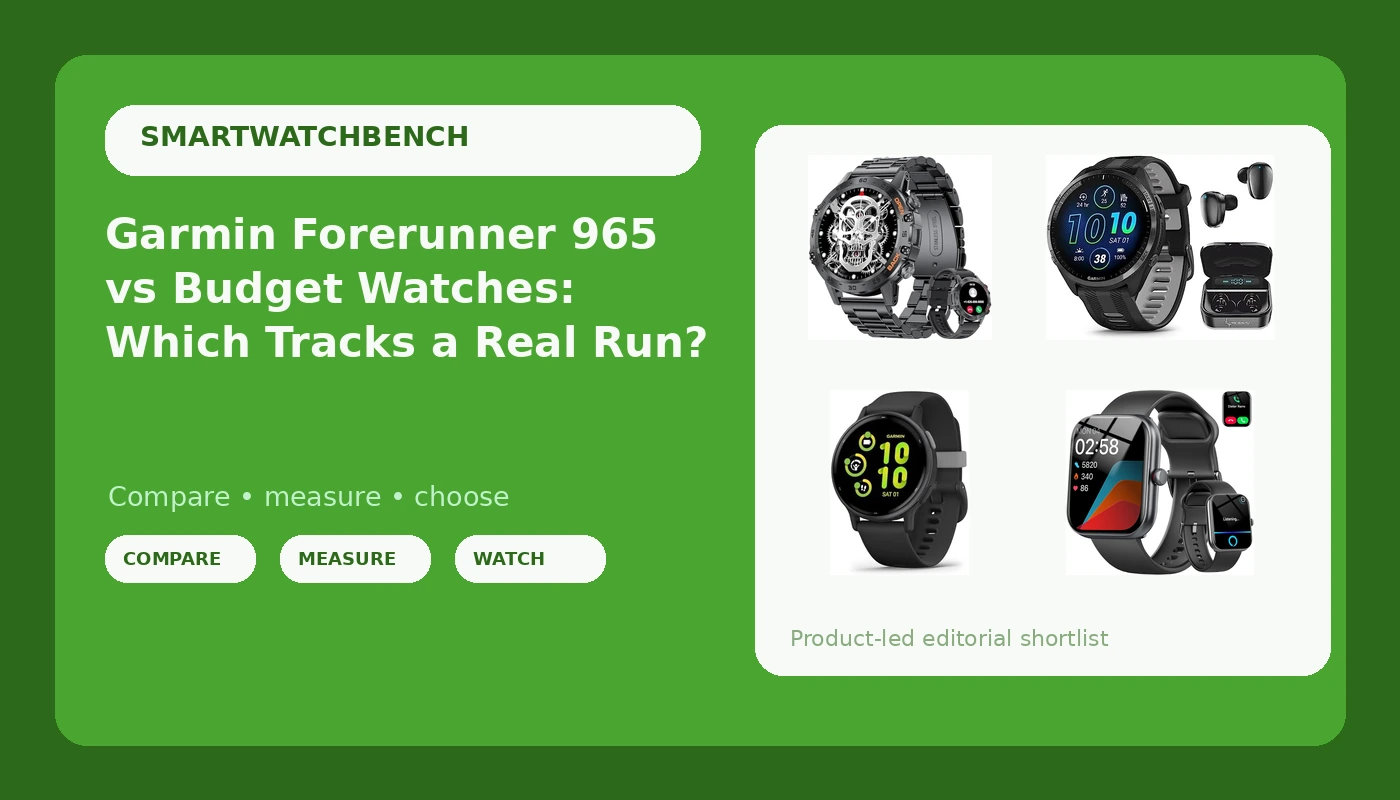
I have worn a smartwatch on every run, ride, and race since 2019, and somewhere past 8,000 logged miles I stopped caring how a watch looks on a product page. What I care about is whether the distance it reports matches the course I actually ran. This Garmin vs budget smartwatch comparison exists because a training partner asked me a fair question: can a no-name watch off Amazon do the job of a Forerunner, or is it a notification machine with a heart rate guess bolted on?
Related: GPS Watch Battery Life Explained
The short answer: the Garmin Forerunner 965 is the only watch in this group I would trust for structured training, and the Garmin vivoactive 5 is the one I would hand to a friend who wants GPS, health tracking, and a smaller case. The two budget watches are fine as everyday step counters and Bluetooth calling devices, but nothing in their listings tells you their GPS is accurate, and that is the whole game.
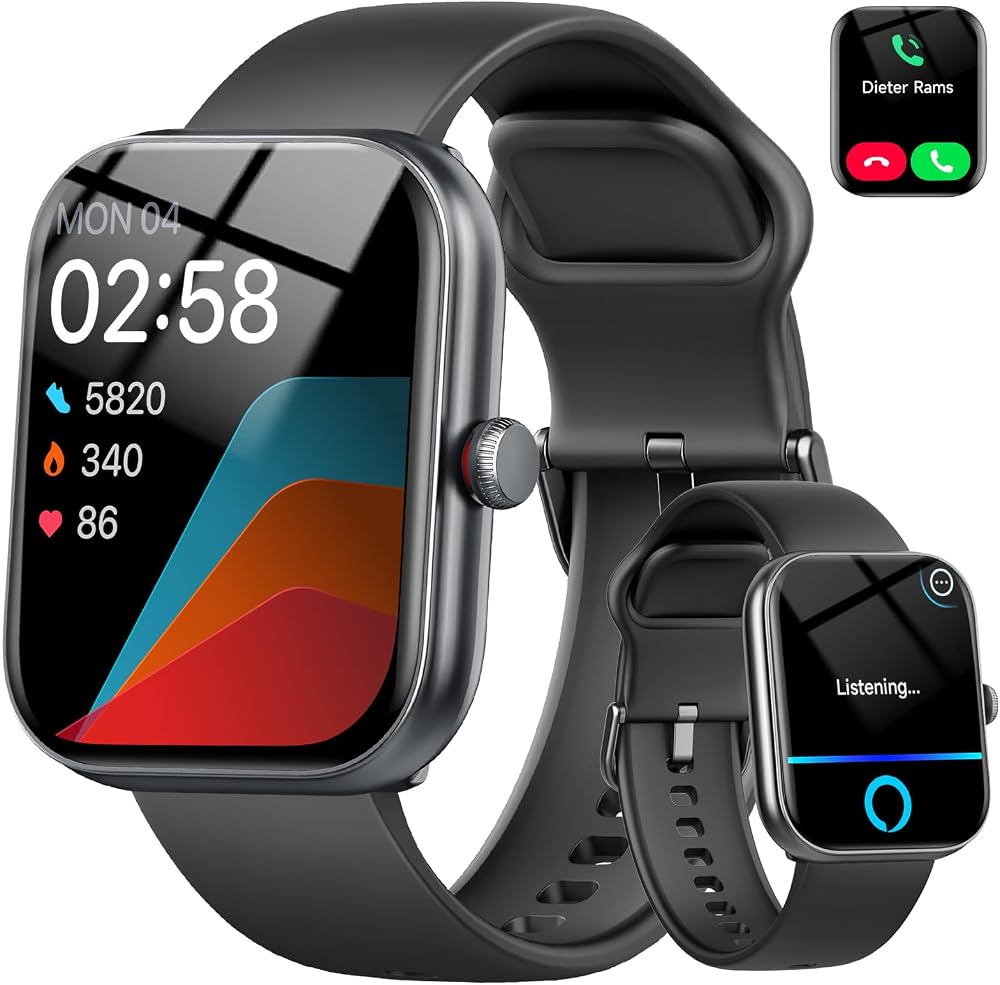
Smart Watch for Women Men, Alexa Built-in, Bluetooth Call, 1.91" HD Fitness Tracker
Biggest display here, Alexa on the wrist, calling, IP68, 100+ sport modes, unisex sizing
No accuracy story, no training ecosystem, sensor data is convenience grade
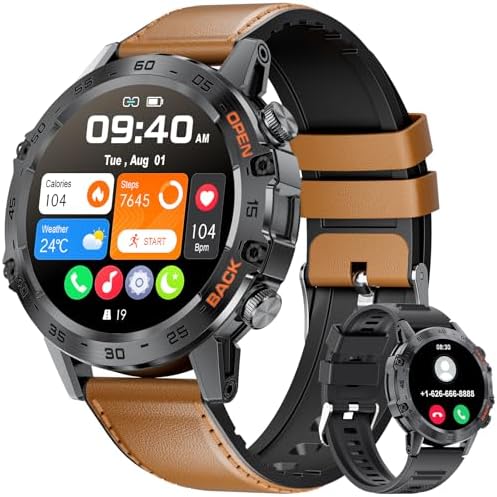
SUNKTA Military Smart Watch for Men, 5ATM Waterproof, 1.39" HD DIY Screen
5ATM rating, rugged styling, 100 sport modes, answer and dial calls, Android and iOS
Blood pressure claims from a wrist sensor, generic app, no GPS credibility
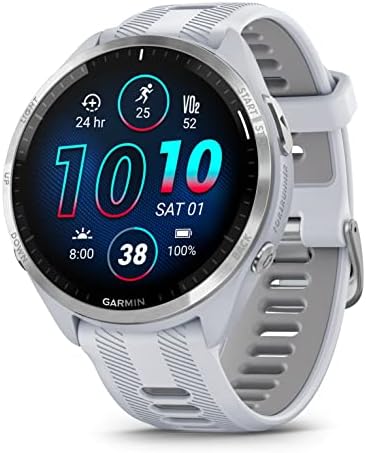
Garmin Forerunner 965 Premium GPS Running and Triathlon 47mm, AMOLED, Titanium Bezel, with Earbuds
The reference point for GPS and training data, AMOLED touchscreen, triathlon ready, earbuds included
47mm case is a lot of watch, and the price puts it in a different league
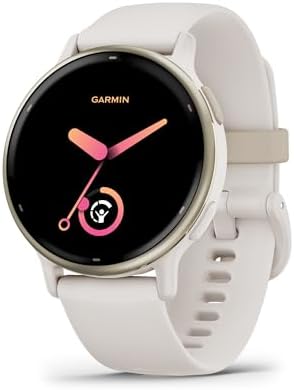
Garmin vívoactive 5, Health & Fitness GPS Smartwatch, 42mm, Black
Real GPS in a 42mm case, Garmin software, comfortable for all-day wear
Not a triathlon tool, less serious training depth than the Forerunner
Prices and availability were captured from Amazon Creators API and may change.
The four checks that decide this for me
Every watch I trust has passed four checks, and I run them in the return window so a bad unit goes back instead of sitting in a drawer.
First, GPS accuracy against a known course. I have a certified 5K loop near me and I know exactly where the mile marks fall. If a watch cuts a corner on a tree-lined path or drifts a quarter mile over an hour, I see it in the trace. A watch that is off by 100 meters is a watch that is lying to you, and no amount of sleep score polish fixes that.
Second, wrist heart rate against a chest strap. Optical wrist HR is convenient, and it lags badly on intervals. If the watch cannot roughly follow a chest strap through 400-meter repeats, its zones and its training load numbers are decoration.
Third, battery life at real use. Every listing quotes a number at light use with notifications off and GPS idle. I test with GPS on, notifications on, and a screen that wakes when I raise my wrist.
Fourth, software. The software is the watch. A great sensor with buggy firmware is a great sensor you cannot trust, and an update that breaks a feature you rely on is worse than no update at all.
Garmin Forerunner 965: the one built for structured training
The Forerunner 965 is a 47mm premium GPS running and triathlon watch with an AMOLED touchscreen, a carbon gray DLC titanium bezel, a black silicone band, and a pair of black earbuds in the box. Garmin is the gold standard for athletes, and the Forerunner line is where that reputation was built: the best GPS and battery life in the business, in my experience across years of wearing them.
What matters for a runner is not the bezel material. It is that the watch is designed around swim, bike, and run as a single workflow. If you are training for a triathlon or chasing a marathon PR, the watch has to hold a GPS fix in a city canyon, survive an open water swim, and give you numbers you can act on the next morning. That is the job description of this model, and the AMOLED display means you can actually read it in direct Colorado sun, which sounds trivial until you have squinted at a washed-out screen at mile 20.
The trade-offs are honest ones. A 47mm case is a lot of watch on a smaller wrist, and it will catch on jacket cuffs. The price is in a different bracket than everything else here. And if you mostly want step counts, texts, and a nice screen, you are paying for training depth you will never open.
Garmin vívoactive 5: the Garmin most people should actually buy
The vívoactive 5 is a 42mm health and fitness GPS smartwatch, and the size is the headline for anyone who found the Forerunner 965 too bulky. It is the watch I would recommend to the person who runs three times a week, lifts twice, sleeps badly, and wants one device that handles all of it without looking like a piece of race equipment.
You still get GPS and you still get Garmin software, which is the part that separates this from the budget tier. The difference is depth. The vivoactive line is built around health and fitness tracking rather than race day. It is not a triathlon tool, and if you are doing brick workouts and open water swims, you want the Forerunner.
Where it wins is all-day wear. A 42mm case disappears on the wrist, which means you actually keep it on overnight, which means your sleep and recovery data is continuous instead of a gap you fill with guesses. The most accurate watch in the world is useless if you take it off at 9 p.m. because it is uncomfortable.
The budget tier: what the Alexa watch and the SUNKTA actually are
Let me be fair to both of these, because they are not scams. They are a different product category wearing a smartwatch costume.
The Alexa built-in watch gives you a 1.91" HD display, which is the largest screen in this comparison, plus Bluetooth calling, IP68 water resistance, heart rate, SpO2, sleep monitoring, and 100+ sport modes, all in a unisex design. As a notification device and a step counter, that is a lot of function for the money. Alexa on the wrist is genuinely useful if you live in that ecosystem. It is the one here I would hand to someone who wants calls and texts on their wrist and does not care about split times.
The SUNKTA Military Smart Watch is the rugged option: 1.39" HD DIY screen, 5ATM water resistance, answer and dial calls, 100 sport modes, heart rate, SpO2, and blood pressure, working with both Android and iOS. The 5ATM rating is the interesting spec, because it is a static pressure rating rather than a depth rating, so treat it as splash and swim-adjacent protection and not as a dive computer. The military styling is a look, and it is a good one if that is what you want.
The sensor problem with cheap fitness watches
Here is where the budget tier falls apart for anyone training seriously, and it is not about the hardware cost. It is about what the sensors claim.
Wrist heart rate is hard. It is an optical measurement through skin, and it struggles with rapid changes in blood flow, which is exactly what happens during intervals. A good implementation follows a chest strap with a small lag. A cheap implementation spikes randomly, locks onto your cadence instead of your pulse, and reports a heart rate that matches your steps per minute. I have watched that happen on enough watches to stop trusting any wrist-only HR number during hard efforts.
SpO2 is a spot measurement at best on a wrist device, and blood pressure from a wrist optical sensor is not something I would make a health decision on. That is not a knock on the SUNKTA specifically, it is a category truth: if a watch markets blood pressure as a feature, understand that you are getting a trend line, not a cuff reading.
None of this means the budget watches are bad purchases. It means you should buy them for calls, notifications, battery, and looks, and not for training data. The moment you start building workouts around numbers you cannot trust, garbage in becomes garbage out.
Battery life: the spec everyone inflates
Battery claims are tested at light use, and light use means the screen stays dim and GPS stays off. That is not how anyone uses a running watch.
When you compare these four, ignore the marketing number and ask what the watch does with GPS on. A GPS fix is the most expensive thing a smartwatch does, and it is the one thing runners cannot turn off. A watch that advertises weeks of battery and dies on a four-hour hike is telling you the headline number was measured with the radio asleep.
The Forerunner 965 is built by the company that owns this category for a reason, and long GPS sessions are where Garmin's advantage shows up. The vivoactive 5 trades some of that endurance for a smaller case and a lighter feature load, which is a reasonable exchange for daily wear. The budget watches can post impressive standby numbers because their GPS behavior is the least documented part of the product page, and undocumented is not the same as good.
Software is the watch
The single biggest difference between a Garmin and a no-name watch is not the sensor. It is the app.
Garmin Connect is a mature platform. Your runs land in one place, the data exports, and the ecosystem connects to the training tools athletes already use. Generic companion apps from budget brands tend to do three things: sync, sometimes fail to sync, and lose history when the vendor stops shipping updates. Software updates that break features are my pet peeve across the entire industry, and the smaller the brand, the less likely a fix arrives.
Ask one question before buying any budget watch: if this company disappears in 18 months, does my data still exist somewhere I can reach it? With Garmin, the answer is yes. With a generic app, the answer is usually a shrug.
The trade-offs, stated plainly
If you want the most accurate GPS and the deepest training data in this group, you pay for the Forerunner 965. There is no budget shortcut to that, and anyone selling you one is selling you a story.
If you want real GPS, real software, and a case that works on a smaller wrist, the vivoactive 5 is the balanced pick, and it is the one I would buy for most people who are not racing.
If you want a big bright screen, Bluetooth calls, Alexa, and a rugged look for everyday wear, the two budget watches deliver that, and the SUNKTA adds a 5ATM rating and a heavier design. Just do not expect them to replace a training tool.
Who should buy which
Buy the Garmin Forerunner 965 if you race, if you follow a structured plan, or if you have ever finished a run and wondered whether the distance was real. It is the watch for people who check the GPS trace.
Buy the Garmin vivoactive 5 if you want GPS and health tracking in a 42mm case, you wear your watch to bed, and you want an ecosystem that will still exist in three years.
Buy the Alexa built-in watch if calls, notifications, and the biggest screen in this comparison matter more to you than split accuracy.
Buy the SUNKTA Military Smart Watch if you want the rugged look, a 5ATM rating, and calling, and you are comfortable treating the blood pressure and SpO2 readings as trends rather than measurements.
What I am putting these through next
I have these four on the bench for a two-week wear cycle, and the plan is the same one I use for every watch: a GPS trace against my certified 5K loop, a heart rate comparison against a chest strap on interval days, and a battery audit with notifications and GPS running. The budget pair has the most to prove, because their listings make the boldest claims with the least documentation.
If the numbers hold up, I will say so. If they do not, that is the review. Show me the GPS trace, and everything else is marketing.