Two runners can finish the same certified 10K and walk away with distances that disagree with each other and with the course marker. The difference is almost never the runner. It is the watch, and specifically how well its GPS and its wrist heart rate sensor behave while you are actually moving. Smartwatch GPS accuracy is the spec that decides whether your pace, your splits, and your training load mean anything at all, and it is the one spec the cheapest trackers quietly skip.
The problem for a buyer is that the market tells two opposite stories. One half says you need a premium multisport watch with a sapphire lens and a long feature list. The other half says a $40 band tracks everything you need. Both stories are incomplete, because they are describing different jobs. This explainer walks through four very different wearables and what each one is built to measure, so you can match the watch to the training you actually do.
Related: How to Test Your Watch's GPS Against a Course You Trust →
Quick answer
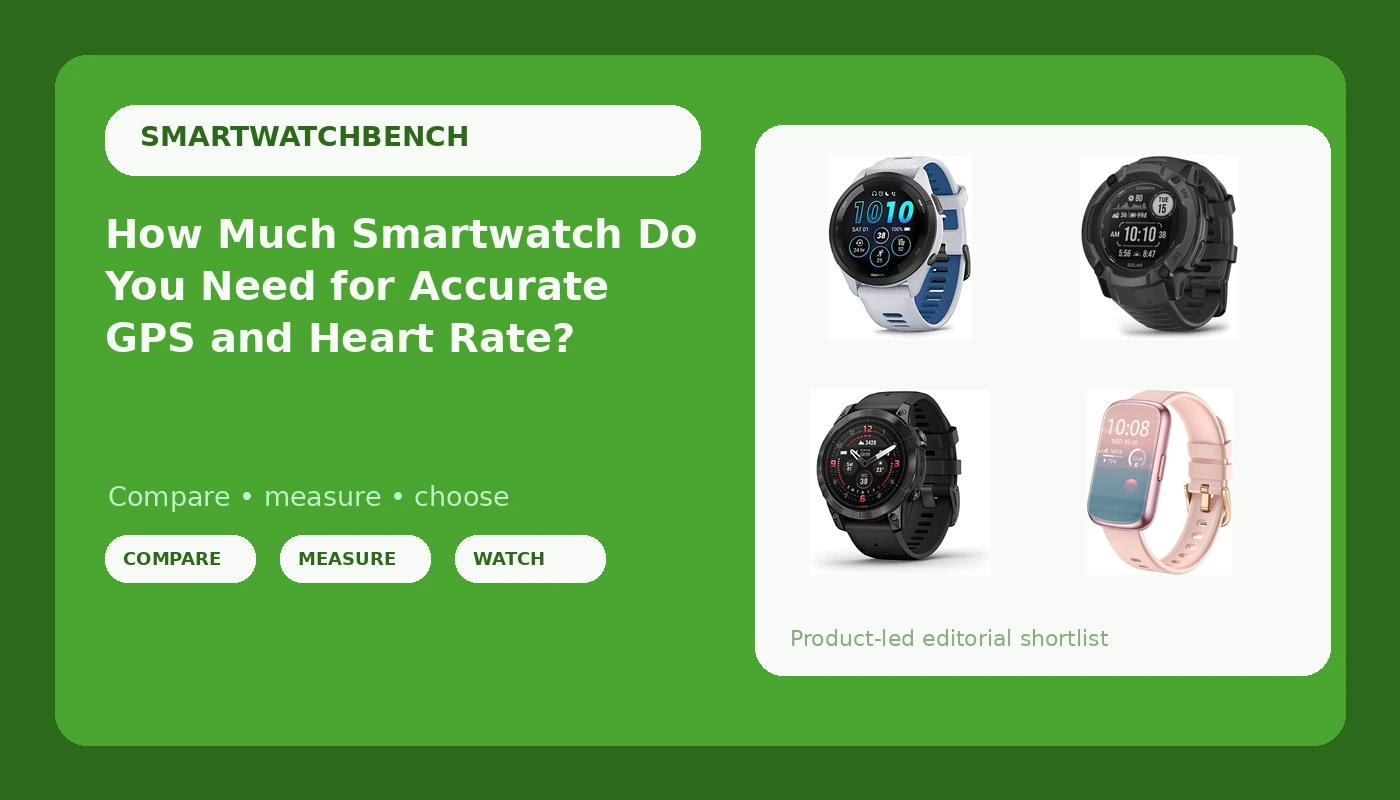
If your training depends on distance and pace, buy a GPS watch. The Garmin Forerunner® 265 is the running-focused option in this group, the Garmin Instinct® 2X Solar is the rugged outdoor option, and the Garmin epix Pro (Gen 2) Sapphire is the high performance option with a sapphire lens. The Fitness Tracker is a different product category: it covers 24/7 heart rate, blood pressure, blood oxygen, sleep, calories, and steps in an IP68 waterproof body that pairs with Android and iPhone, but its feature list does not include GPS, so it cannot measure distance or pace on its own. If all you want is all-day health and step tracking, that tracker is the right shape of product. If you want to know how far and how fast you ran, you need one of the three Garmin watches.
Four useful options
| Model | Best fit | What stands out |
|---|---|---|
| Garmin Forerunner® 265, Running Smartwatch, 46mm, Whitestone/Tidal Blue | Runners who want pace and distance from the wrist | A 46mm running-first design from Garmin's Forerunner line |
| Garmin Instinct® 2X Solar, Rugged Outdoor Smartwatch, 50mm, Graphite | Hikers, trail runners, and anyone hard on gear | Solar charging and a rugged 50mm outdoor build |
| Garmin epix Pro (Gen 2) Sapphire, High Performance Smartwatch, 47mm, Black | Athletes who want one watch for training and daily wear | Sapphire lens, 47mm case, Garmin's high performance tier |
| Fitness Tracker, Smart Watches for Women Men with 24/7 Heart Rate/Blood Pressure/Blood Oxygen Monitor, Sleep Tracker, Calories&Step Counter, IP68 Waterproof Health Activity Trackers for Android&iPhone | All-day health and step tracking on a tight budget | Heart rate, blood pressure, blood oxygen, and sleep tracking in one IP68 body |
The running pick: Garmin Forerunner® 265, Running Smartwatch, 46mm, Whitestone/Tidal Blue
The trade-off with a running-first watch is that it is tuned for pace, weight, and clarity on the wrist rather than for surviving a rock scrape. If you want a sapphire lens or solar charging, this is not that watch. What it is instead is the most direct answer to a runner's question. Garmin's training platform is where the data lands, and the watch's job is to feed it a distance and a heart rate you can defend. Pick this one when the road or the track is your sport and you want the numbers to be the point.
The rugged pick: Garmin Instinct® 2X Solar, Rugged Outdoor Smartwatch, 50mm, Graphite
The trade-off here is size and intent. A 50mm case is a lot of watch on a small wrist, and a rugged outdoor build is not trying to look dressy. Treat solar charging as a supplement to battery life rather than a replacement for plugging in, and treat the rugged designation as a statement about construction, not a promise about any one trip. Buy this one if your sessions happen on trails, in weather, and near things that scratch, and if you would rather have one tough watch than a fragile one plus a case.
The premium pick: Garmin epix Pro (Gen 2) Sapphire, High Performance Smartwatch, 47mm, Black
The trade-off is straightforward: you are paying for materials, finish, and versatility rather than for a fundamentally different training experience. A sapphire lens resists scratches that would mark a lesser screen, and a 47mm case sits between the running watch and the big outdoor tool. If you want two watches, buy the cheaper running model and a dress watch. If you want one, this is the compromise that stops the compromise from hurting. What it does not do is make your GPS trace any more honest. That still depends on where you run and what you compare it against.
The budget pick: Fitness Tracker, Smart Watches for Women Men with 24/7 Heart Rate/Blood Pressure/Blood Oxygen Monitor, Sleep Tracker, Calories&Step Counter, IP68 Waterproof Health Activity Trackers for Android&iPhone
The trade-off is the whole point of the product. Without GPS, any distance and pace it reports comes from step counting and stride assumptions, and that estimate drifts as your stride changes with pace, hills, and fatigue. Two more things worth saying plainly: consumer wrist blood pressure features are not medical devices and should not be treated as diagnostic readings, and blood oxygen readings from a wrist sensor are best read as a trend rather than a measurement. Buy this one if you want all-day heart rate, sleep, and step context at the lowest cost, and you are not using it to plan workouts by distance.
Prices and availability may change. Product images, names, and retailer links must be matched by verified ASIN. Do not state a current price, rating, stock status, or measured result without current evidence.
Why GPS accuracy and wrist heart rate are the two specs that matter
GPS accuracy is simple to define and hard to fake: it is how closely the distance your watch records matches the course you actually ran. When a watch cuts corners on switchbacks or loses the signal under tree cover, your recorded distance shrinks. A shorter distance at the same elapsed time produces a faster pace than you ran, and that inflated pace feeds straight into training load and every derived metric built on top of it. This is why a GPS trace is the first thing worth examining about any watch you are considering, and why a watch that cannot record a trace at all is not in the same conversation.
Wrist heart rate has a different failure mode. An optical sensor at the wrist reads changes in blood flow, which means it lags behind rapid changes in effort. Steady running is usually fine. Intervals are where it struggles, because your heart rate is jumping while the sensor is still catching up to the last interval. A chest strap reads the electrical activity of the heart and responds faster. That is the reason the standard check for any watch is a session with a chest strap on and the watch on the other wrist, comparing the two traces afterward rather than trusting either number on its own.
There is a third factor that ties both together: the software. A good sensor paired with firmware that drops part of the GPS track or smooths the heart rate curve too aggressively produces bad data anyway. The software is the watch. When you read about a model, look for how its data has held up over time and across updates, not just what the sensor list says on day one.
How to match a watch to your training
Work through these in order. Most disappointing watch purchases happen because the buyer started with a feature list instead of a training question.
- Write down the one number your training depends on. Distance and pace, or heart rate, or daily steps. Everything else is secondary, and the primary number eliminates most of the market for you.
- Decide whether you need GPS on your wrist. If distance and pace are on your list, any tracker without GPS is out immediately, no matter how long its feature list is.
- Match the case to your wrist and your sport. A 46mm running watch, a 47mm daily wearer, and a 50mm outdoor tool feel very different after two hours, and case size is the spec you cannot change later.
- Decide how much abuse the watch has to survive. Trail, rock, and weather push you toward the rugged option. Road, track, and treadmill do not, and you can spend that money elsewhere.
- Plan your verification before you trust the data. Know a course you can compare against and a chest strap you can compare heart rate against, so the first week of ownership answers the accuracy question instead of assuming it.
What to check before you buy
- Confirm the product page lists GPS if distance matters to you, because step-based tracking is a different measurement, not a lesser version of the same one.
- Check case size and weight against what you will actually wear for hours, not what looks good in a product photo.
- Read the waterproofing rating carefully. IP68 covers sweat, rain, and splashes, and it is not a diving rating.
- Treat wrist blood pressure and blood oxygen features as trend data, not medical measurements, and do not make health decisions from them.
- Decide whether solar charging or a sapphire lens earns its place in your actual week, or whether that money belongs in a chest strap instead.
Which option should you choose?
Choose the Garmin Forerunner® 265 when your training is road or track running and you want pace and distance from a 46mm running-first watch. Choose the Garmin Instinct® 2X Solar when your sessions happen outdoors and you want a rugged 50mm build with solar charging. Choose the Garmin epix Pro (Gen 2) Sapphire when you want one high performance watch with a sapphire lens that can cover training and daily wear. Choose the Fitness Tracker when you want all-day heart rate, sleep, and step tracking in an IP68 waterproof body and you do not need GPS distance.
The limitation is worth stating clearly. A spec sheet cannot tell you whether a watch's GPS trace matches the course outside your door, and it cannot tell you whether a wrist sensor holds steady through intervals. Those two questions get answered on your wrist, compared against a route you know and a strap you trust. Until you run that comparison, treat every distance and heart rate figure as a claim rather than a fact.
The bottom line
The gap between these four products is not quality. It is the measurement each one is built to make. The three Garmin watches record GPS distance and pace, so they can support training decisions about pace, splits, and load. The budget tracker records heart rate, sleep, blood oxygen, blood pressure, and steps, which is a genuinely useful all-day picture and a completely different one. Buy the tracker if that is the picture you want. Buy a GPS watch if you want to know how far and how fast you went, and then verify the first few runs against a course you trust before you let the numbers shape your training.