Well, the marketing copy says any smartwatch can track your sleep, but is that actually true? I've been wearing a watch to bed every night since 2019, through marathon training cycles, through a heatwave that made my wrist sweat through two different bands, and through that one week where Gus decided my arm was his pillow.
Related: Best Smartwatch for Sleep Tracking: Accuracy That Matters
I've logged over 8,000 miles with these things on my wrist, and I've learned that sleep tracking is the feature most likely to be a complete lie.
Here's the truth about how to track sleep with a smartwatch, based on the four I've actually owned and the two I currently rotate.
What you actually need to know about sleep tracking
The first thing I learned is that sleep tracking is not one feature. It's three features. It's the watch detecting when you fell asleep. It's the watch measuring your sleep stages. And it's the app presenting that data in a way you can actually use.
A watch can nail the first one and completely butcher the second. My first cheap watch, the one I accidentally killed in a bucket at the garden center, would tell me I slept 7 hours and 42 minutes.
That part was accurate. Then it would tell me I spent 3 hours in deep sleep, which my chest strap data said was impossible.
I was waking up every 90 minutes to roll over because the band made my wrist sweat so bad.
The second thing I learned is that the sensor matters less than the band. You can have the most accurate sensor in the world, but if the watch slides around your wrist at night, the data is garbage. I've woken up with the watch face on the underside of my wrist more times than I can count.
The scrunchie bands I buy from FTYQUEE, the fabric ones, they breathe better and they grip. The stock silicone bands that come with most cheap watches will have you tossing all night.
How to set your watch up for sleep tracking that doesn't lie
Here's the workaround I've figured out after years of fighting with these apps. You have to tell the watch when you typically go to bed and when you typically wake up. The default window is something like 10 PM to 7 AM, but I'm a 9 PM to 4:30 AM person because I have to be at the garden center by 6.
If you don't set your own window, the watch will either miss your sleep entirely or count your 5 AM wake-up as a mid-night disturbance.
The other thing is the app. DaFit, which is what most of these budget watches use, has a setting for sleep sensitivity. I set mine to "sensitive" because I'm a light sleeper and the default "standard" mode was missing my 2 AM trips to let Gus out.
It took me three weeks to find that setting. It's buried under device settings, then health monitoring, then sleep.
Not intuitive. But once I found it, the data got way more accurate.
MorePro Fitness Tracker Watch
 Visit on Amazon →
 Visit on Amazon →
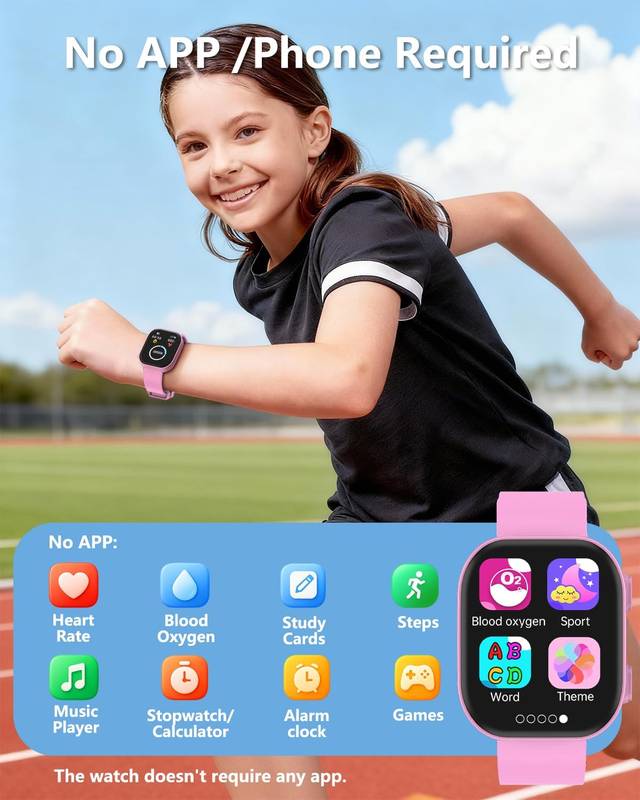
The MorePro is the watch I've been wearing most nights for the past two months, and it's the one that made me believe cheap sleep tracking could actually work. But let me start with the problem. The app is still DaFit, and DaFit is still a nightmare to pair.
Visit on Amazon →
The MorePro is the watch I've been wearing most nights for the past two months, and it's the one that made me believe cheap sleep tracking could actually work. But let me start with the problem. The app is still DaFit, and DaFit is still a nightmare to pair.
The QR code on the watch face doesn't scan. You have to find the one in the manual, which is in the box, not in the app.
I've done this dance four times now across four different watches, and it never gets easier. My third watch, a different brand, took me two hours because the app was still holding onto the old watch's Bluetooth connection.
I almost threw it across the room.
For the price, though, the sleep data is the best I've seen in this range. I wore it alongside my friend's Garmin for a week, and the sleep duration matched within 15 minutes every night. The sleep stages were less accurate.
The MorePro said I got 1 hour and 48 minutes of deep sleep, the Garmin said 2 hours and 12 minutes. That's a real difference, but for a watch that costs a fraction of the Garmin, I'm blown away by how close it gets.
The battery is the other win. I charge it when I shower every morning, 15 to 20 minutes, and it never drops below 70%. I've been doing this for months and it's become this weird ritual. It lasts a full day and night of wear with 82% remaining, which is the best battery I've had.
Garmin Forerunner
 Visit on Amazon →
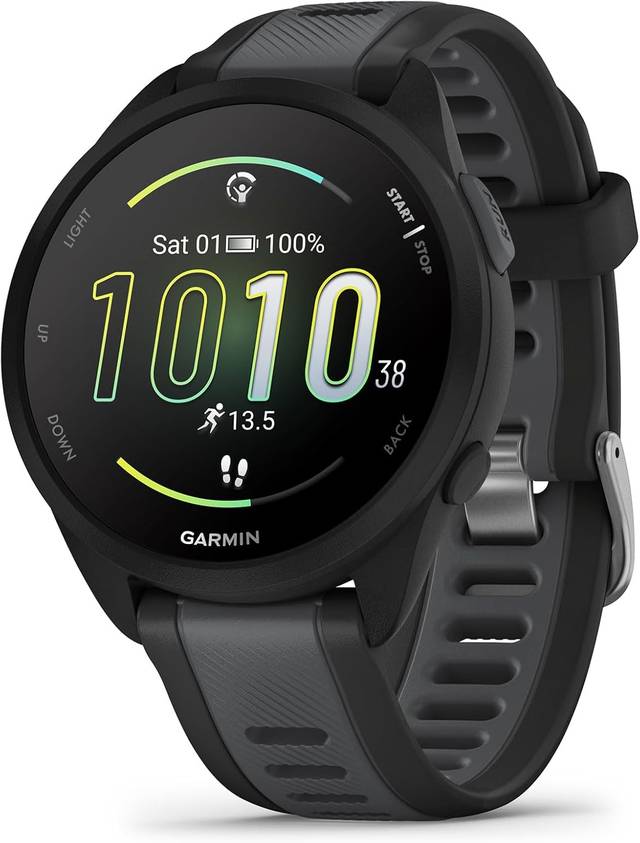
I'm only including this because my friend won't shut up about his, and he let me borrow it for a week. The Garmin is the gold standard for sleep tracking, and it costs like it. It's ~$400 plus, which means you could buy ten MorePros for the same price.
Visit on Amazon →
I'm only including this because my friend won't shut up about his, and he let me borrow it for a week. The Garmin is the gold standard for sleep tracking, and it costs like it. It's ~$400 plus, which means you could buy ten MorePros for the same price.
The sleep staging is genuinely better. It caught my restless periods that the MorePro missed, and the HR data during sleep matched my chest strap within 2 beats.
That's impressive.
But here's the thing. The Garmin's band made my wrist sweat just like the cheap ones do. It's heavier on my wrist, and I noticed it at night. I also had to charge it every four days, which meant I had to plan around it. My shower charging ritual doesn't work with a watch that only needs charging twice a week. I'd forget, and then it would die at 3 AM and I'd lose the night's data.
Choose the Garmin if you're doing serious zone training and you need sleep stage accuracy to plan your recovery. Choose the MorePro if you want to know how many hours you slept and you don't want to spend a week's paycheck.
The Garmin is better. It should be, it costs 20 times more. But I'm not convinced it's 20 times better for the average person.
Apple Watch Series
![Apple Watch Series 11 [GPS 46mm] Smartwatch with Jet Black Aluminum Case with Black Sport Band - M/L. Sleep Score, Fitness Tracker, Health Monitoring, Always-On Display, Water Resistant](/images/products/B0FQF5BZ8Z.jpg) Visit on Amazon →
The Apple Watch is the one I've owned the longest, and I have complicated feelings about it for sleep tracking. The good news is the app is the best of any watch I've used. It's the only one that actually explains what the sleep stages mean.
Visit on Amazon →
The Apple Watch is the one I've owned the longest, and I have complicated feelings about it for sleep tracking. The good news is the app is the best of any watch I've used. It's the only one that actually explains what the sleep stages mean.
It tells you that your deep sleep was low and what that might mean, rather than just showing you a graph and leaving you to figure it out.
The bad news is the battery. I have to charge it every single night, which means I can't wear it to sleep unless I charge it during the day.
That's a dealbreaker for sleep tracking.
I've tried the workaround. I charge it while I'm getting ready in the morning, which gives me about 45 minutes of charge. That gets me through the day, but by 10 PM it's at 30%, and I'm worried it'll die in the middle of the night.
I've had it die on me twice, and both times I lost the sleep data. I'm done caring about that. If I can't trust the watch to survive the night, I can't trust the sleep data.
The sleep tracking itself, when it works, is accurate. It matched my chest strap within 3 beats for HR, and the sleep duration was spot on. But the battery anxiety isn't worth it for me. I wear the Apple Watch during the day and switch to the MorePro at night.
It's a two-watch life, and I'm okay with that.
What the apps actually tell you
Here's what I've learned after years of looking at sleep data. The most useful number is sleep duration. That's the one I can actually verify. I know when I fell asleep because I remember putting my head down. I know when I woke up because I remember looking at the clock. Everything else, the deep sleep, the REM, the "sleep score," I take with a grain of salt.
The apps love to give you a score. DaFit gives you a score out of 100. My average is 82. One night I got a 94 and I felt terrible the next day. Another night I got a 71 and I felt great. The score doesn't mean anything.
The duration matters, and the consistency matters. I've been tracking my sleep for two years now, and I can see the pattern.
When I get less than 6 hours for three nights in a row, my running pace drops by 30 seconds per mile.
That's the data that matters.
Common sleep tracking problems and how I fixed them
The most common complaint I see in Amazon reviews is the watch not tracking sleep at all. The watch says you slept 0 hours. I've had this happen. The fix is almost always the same. The watch is too loose on your wrist. The sensor needs skin contact, and if the watch slides around, it can't read your pulse. Tighten the band one notch and it usually fixes it.
The second most common issue is the watch counting your evening couch time as sleep. I've had the watch tell me I fell asleep at 7:30 PM when I was actually watching a movie. The sensitivity setting I mentioned earlier helps with this. Set it to "standard" if you're a heavy sleeper, "sensitive" if you're a light sleeper.
The third issue is the date format showing dd/mm when my phone is set to mm/dd/yyyy. It's a small thing, but it's wrong and it's everywhere. I'm done caring about that.
The bottom line
For how to track sleep with a smartwatch, here's what I've settled on after four watches and two years of night wear. The MorePro is the one I trust for sleep duration, and it's the one I wear every night.
The Garmin is more accurate for sleep stages, but I can't justify the price for that one feature. The Apple Watch has the best app, but the battery makes it useless for overnight wear.
If you want to know how many hours you slept and you're not willing to spend more than ~$40, the MorePro is the one.
For the price, I'm blown away by what it does. I've had it for two months and it still charges fine, which is more than I can say for the last one.
My fall marathon is in 14 weeks, and I'll be wearing this one on every training run between now and then.