I have run more than 8,000 miles with a watch on my wrist since 2019, and nearly every one of those miles taught me the same lesson: the watch that looks best in a product photo is rarely the watch that gets the distance right. That is the entire tension in the budget smartwatches vs Apple Watch argument, and it is the reason this comparison exists. One side sells you a big screen, call handling, and a sub-hundred-dollar receipt. The other side sells you a platform that a certified course and a chest strap can actually verify.
Related: Why Wrist Heart Rate Lags Behind a Chest Strap
The Apple Watch SE 3 is the only watch in this group I would take to a start line, because it is the one listing here that specifies GPS hardware and an always-on display instead of only promising fitness tracking. The other three, the pink 1.69 inch Smartwatch for Women, the 1.85 inch two-band model, and the 1.83 inch tracker with 110+ sport modes, are built for a different job: calls, notifications, sleep and step data, and a screen you can read at the gym for less than the cost of a decent pair of running shoes. Those are legitimate jobs. They just are not the same job as tracking a marathon build.
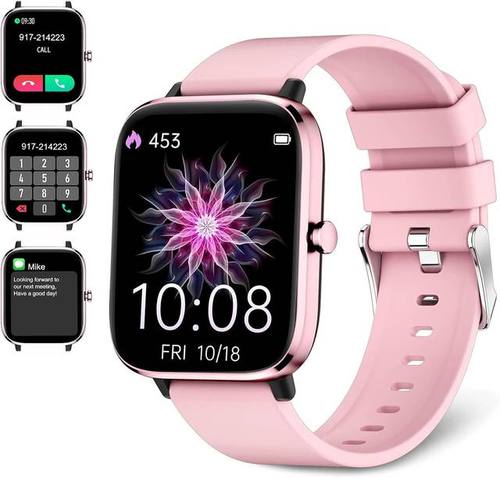
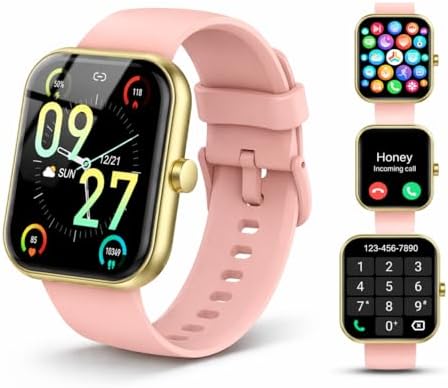
Smartwatch for Women - Call, Fitness Tracker, Heart Rate & Sleep Monitor, 1.69" Touch Screen, Waterproof - For Android & iPhone, Pink
Lightest and smallest of the four, works with both Android and iPhone, calls plus heart rate and sleep in one package
Smallest screen here, and the listing does not specify GPS accuracy figures
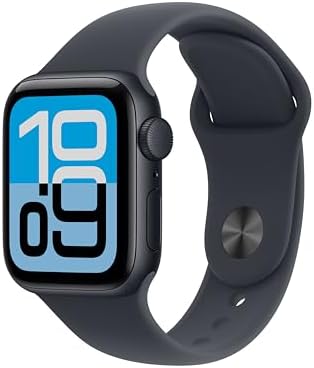
Apple Watch SE 3 [GPS 40mm] Smartwatch with Midnight Aluminum Case with Midnight Sport Band - S/M. Fitness and Sleep Trackers, Heart Rate Monitor, Always-On Display, Water Resistant
The only one with GPS called out in the listing, plus always-on display and the most mature health app ecosystem
Costs the most by a wide margin, and the Apple Watch line has never been a battery champion
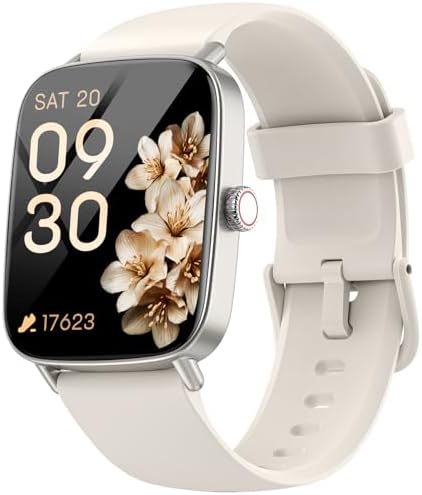
Smart Watch for Men Women, 1.85" HD Smartwatch (Answer/Make Calls), 2 Bands
Largest screen in the group, answers and makes calls, and ships with two bands so you can swap for training and for work
No GPS or sensor specs beyond call handling, so hard training data is a question mark
Smart Watch for Men Women (Answer/Make Call), 1.83" HD Touchscreen Fitness Tracker, 110+ Sport Modes, Fitness Watch with Heart Rate/Sleep Monitor/Step, IP68 Waterproof Smartwatch for iPhone Android
The most specific spec sheet of the budget three: 110+ sport modes and a stated IP68 water resistance rating
110+ sport modes is a long menu, and menus do not tell you whether the heart rate or distance numbers are right
Prices and availability were captured from Amazon Creators API and may change.
How I judge a smartwatch before I trust it
My protocol is boring and it does not change: two weeks of daily wear, a GPS trace against a course whose distance I know to the meter, a heart rate comparison against a chest strap on interval work, and a battery audit with notifications and GPS actually on. Four questions decide everything. Does the GPS match the known course? Does the wrist heart rate match the strap? Does the battery survive real use rather than a marketing scenario? Would I wear it for a marathon?
You can apply the same four questions to anything in this table, and I would encourage you to. What I can tell you from seven years of this is which claims tend to hold and which ones tend to evaporate.
GPS is the first thing to check, and it is the first thing this table exposes. The Apple Watch SE 3 is listed as a GPS model. The budget three describe call handling, heart rate, sleep, steps, sport modes, and water resistance, and none of their listings spell out how their distance tracking behaves. That does not automatically mean the tracking is bad. It means nobody has promised you anything specific, and for a runner, an unpromised number is a number you have to verify yourself.
Wrist heart rate is the second check, and it is where cheap hardware struggles most. A wrist sensor reads blood flow through skin, and it lags during hard efforts and intervals because your wrist is moving. I have watched budget bands report a steady 140 while a chest strap read 172. If you only ever walk and do steady gym work, that gap may never bother you. If you train with intervals, it will.
Apple Watch SE 3: the benchmark in this group
The SE 3 in this comparison is the 40mm GPS configuration with a midnight aluminum case and a midnight Sport Band in size S/M. The listing frames it as a fitness and sleep tracker with a heart rate monitor, an always-on display, and water resistance.
The always-on display is a bigger deal than it sounds. When you are mid-run and your wrist is sweaty, raising your arm to wake a screen is a small annoyance that becomes a large one over 20 miles. A display that stays readable at a glance is worth real money to anyone who checks pace often.
The bigger advantage is the ecosystem. Apple's health and fitness software is the most heavily reviewed and most heavily used in the category, and it is the platform I trust most when I hand someone a watch and tell them to look at their trends a month later. The gaps I keep running into with it are battery life and price. My own history with the Apple Watch line is a nightly charge, and the SE 3 sits at the top of this table's cost range. If you want the number, it is on the product page, and it is worth checking before you commit.
Where I would push back on Apple: the brand does not get a free pass on accuracy just because the software is polished. Run your own certified course test anyway. Every watch lies a little. The SE 3 is the one here I would expect to lie the least, and that is a different statement from trusting it blindly.
The 1.85 inch two-band watch: big screen, low commitment
The 1.85 inch model is the largest display on this list, and it handles calls in both directions. It arrives with two bands, which is a smaller feature than it sounds until you have paid for a second band separately. One strap for training, one for the rest of the day, no extra purchase.
For a gym user or someone who mostly wants notifications and call answering from their wrist, this is the value play in the table. A 1.85 inch panel is genuinely easier to read mid-set than a 40mm screen, and the case size gives it a more substantial feel than its price suggests.
The honest caveat is the spec sheet. Beyond the display size and call handling, the listing does not detail the sensor package, the water resistance rating, or how the distance tracking works. Two bands and a big screen are real, verifiable features. Everything else is a question your own testing has to answer.
The 1.83 inch tracker with 110+ sport modes and IP68
This one has the most specific budget spec sheet in the group: a 1.83 inch HD touchscreen, 110+ sport modes, heart rate, sleep, and step tracking, IP68 water resistance, and call answering on both iPhone and Android.
Two of those specs are worth more than the rest. IP68 is a defined ingress rating, which is a firmer promise than a vague "waterproof" label. For sweat, rain, and handwashing, that rating is the one you want on the box. The step, sleep, and heart rate trio covers the everyday tracking that most people actually look at.
The 110+ sport modes is where I get skeptical. In this price band, sport modes are usually preset label sets with different calorie estimates attached. The run, walk, and bike entries do the real work. The other hundred-plus entries pad the spec sheet. That does not make the watch bad. It means you should judge it on the three modes you will actually use, not the 110 you will not.
The pink 1.69 inch smartwatch: the lightest of the four
The 1.69 inch model is the smallest and lightest watch here, and it is the one that fits a smaller wrist best. It handles calls, tracks heart rate and sleep, offers a touchscreen, lists water resistance, and works with both Android and iPhone, which is not universal in this price band.
The trade-off is screen area. A 1.69 inch display is fine for notifications, sleep scores, and step counts. It is less pleasant for reading pace and heart rate zones mid-effort, where bigger and brighter wins. If you want something that disappears on your wrist and handles the basics, this is the one. If you want a data display you can read at arm's length while breathing hard, the larger panels here are the better call.
Battery life and how to read the claims
Battery claims in this category are written at light use, which generally means no GPS, minimal notifications, and a dim screen. I test at real use, which means GPS on and notifications on, and I have never seen a vendor's number survive that comparison intact.
For the Apple Watch SE 3, plan for a nightly charge based on the line's history. For the budget three, a multi-day claim is plausible because their feature set is lighter, and the honest test is your own week: turn everything on, use it normally, and see when it dies. Whichever watch you pick, ignore the spec sheet number and trust the first week of actual ownership.
The trade-offs, stated plainly
The budget watches win on price, screen size, and band options. The 1.85 inch model gives you the most display and two bands. The 1.83 inch model gives you the most complete listed spec sheet with IP68. The 1.69 inch model gives you the smallest footprint and the widest phone compatibility.
The Apple Watch SE 3 wins on the things I cannot fake: a stated GPS configuration, an always-on display, and the most developed fitness and sleep software in the group. You pay for that.
What every budget watch here asks you to accept is uncertainty about accuracy. You are not buying a bad product. You are buying an unverified one, and verification is your job after it arrives.
Which one should you buy
Buy the Apple Watch SE 3 if you train seriously, want an always-on display, and can live with a nightly charge. It is the only watch in this table I would take to a start line.
Buy the 1.83 inch tracker with IP68 if you want the most specific budget spec sheet and a real water resistance rating, and you are willing to test the heart rate against a strap yourself.
Buy the 1.85 inch two-band model if screen size and call handling matter more to you than sensor detail, and you like the idea of two bands included.
Buy the pink 1.69 inch watch if you want the lightest, smallest option here and you use a watch for calls, sleep, and steps more than for structured training.
What I would test first
Whatever you buy, run the same four checks. Trace a known course and compare distance. Compare wrist heart rate against a chest strap on interval day. Audit the battery with everything on. Then decide whether you would wear it for a long race. That sequence takes two weeks and it will tell you more about your watch than any listing, including this one.