I have logged more than 8,000 miles with a watch on my wrist since 2019, and my inbox keeps asking one version of the same question: does accurate training data require spending real money? This smartwatch comparison for runners puts four very different wearables on the same page, from a GPS watch built for training to an entry-level band that also claims blood pressure readings. Two of them are made for people who run. Two are made for people who want a screen on their wrist that counts steps and shows calls. Knowing which one you are actually buying is the entire decision.
My rubric is boring and it does not change. A GPS trace checked against a certified course. Wrist heart rate compared to a chest strap on the same run. Battery life audited at real use, with GPS and notifications on. Then a software check two weeks in, to see what the last firmware update broke. I have not run all four of these watches through that full protocol, so read this as a comparison of what each watch is built to do, not as a claim about a trace I never recorded. The roles, though, are clear enough to sort right now.
The best pick in this group for most runners is the Amazfit Active Max, because it is the only watch here whose spec sheet names GPS, and distance you cannot verify is distance you cannot train with. The Fitbit Versa 4 is the better pick if you want a mature app and a long support history behind the hardware. The MorePro tracker and the rose gold smartwatch sit at the entry level, and I will be specific about what you give up down there.
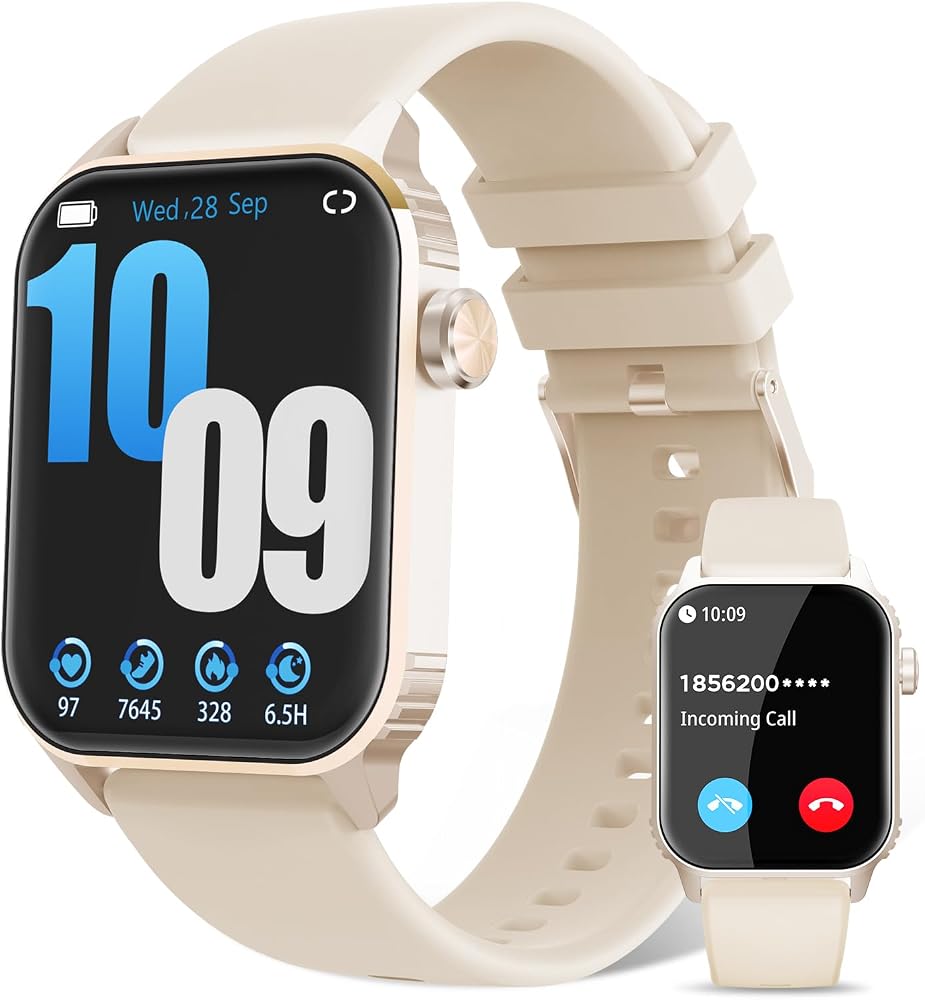
Smart Watches for Women, 120 Sports Modes, 1.83 inch HD Display, Rose Gold
The largest display in the group, Bluetooth calling and music control, and 120 sport modes for people who want a menu of activities
No GPS named anywhere in the listing, IP67 rather than IP68, and 120 modes mean little when the watch cannot measure distance on its own
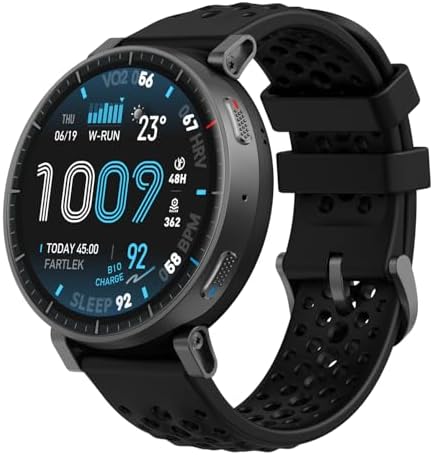
Amazfit Active Max Smart Watch, 1.5 inch AMOLED Display, GPS, iOS/Android
GPS plus an AMOLED panel, which is the combination that makes a watch useful for pace, distance, and outdoor readability
The companion app is less polished than Fitbit's, and running GPS on an AMOLED screen is the fastest way to drain a battery
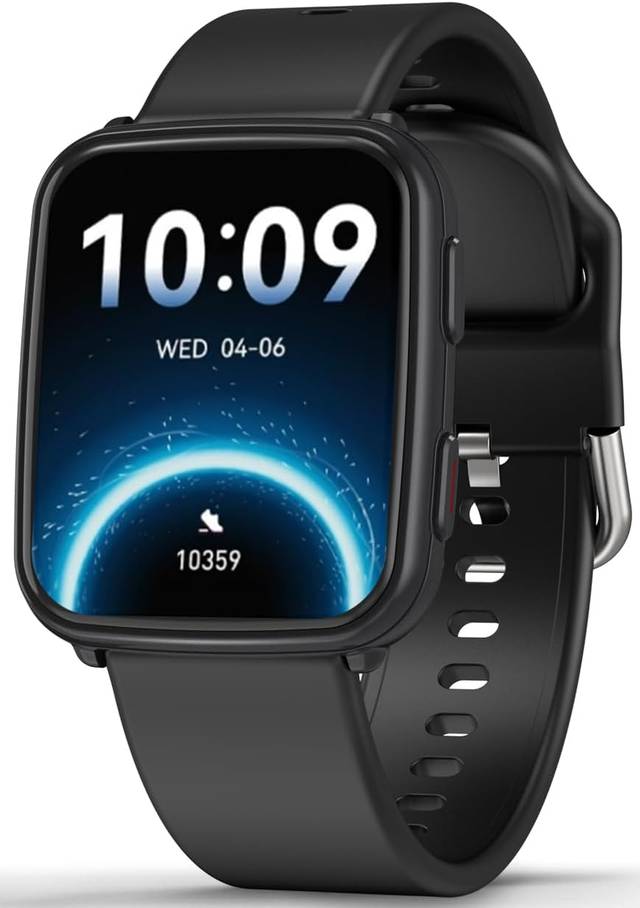
MorePro Fitness Tracker, 24/7 Heart Rate, Blood Pressure, Blood Oxygen, Sleep, IP68
IP68 water resistance, blood oxygen and sleep tracking, and the widest health-sensor list in this group
No GPS, and a wrist blood pressure number is not a cuff reading no matter how the app presents it
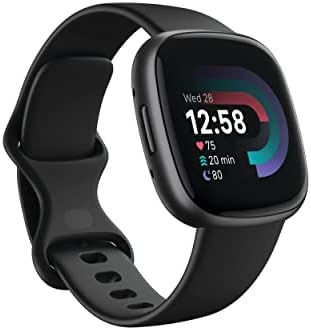
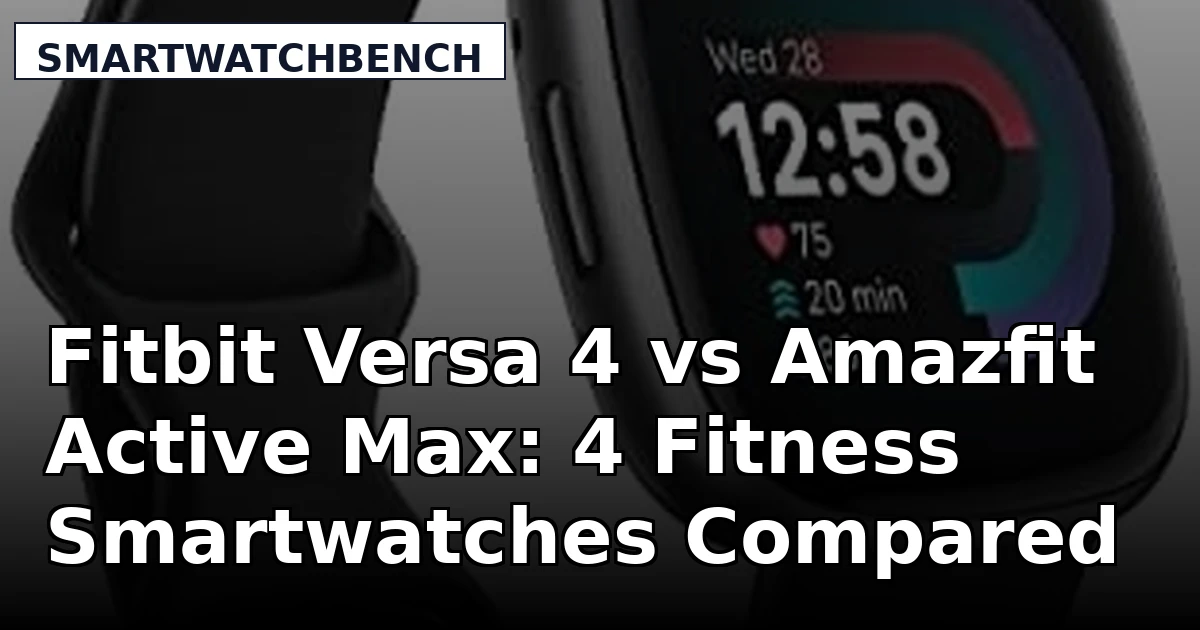
Google Fitbit Versa 4 Fitness Smartwatch, 24/7 Heart Rate, Black/Graphite
The most established software platform of the four, with 24/7 heart rate tracking and years of app development behind it
The fewest named sensors of the two mid-range watches here, and the experience depends heavily on the phone app
Prices and availability were captured from Amazon Creators API and may change.
How I judge a watch
Every watch that gets a recommendation from me has to survive four checks. GPS against a certified course, because a watch that is off by 100 meters is a watch that is lying to you. Wrist heart rate against a chest strap, because a sensor that cannot match a strap during intervals is a toy with a screen. Battery audited at real use, which means GPS on, notifications on, and no helpful interpretation of "light use." And software, watched for two weeks, because a great sensor with buggy firmware is a great sensor you cannot trust.
Those checks are why I care about the boring specs first. A watch that names GPS and an AMOLED display is telling you what it was designed to do. A watch that leads with 120 sport modes and a big screen is telling you something different, and it is not lying, it is just answering a different question.
The GPS problem, and why it decides this comparison
GPS accuracy is the whole game for runners. Pace, distance, splits, and every training load number you build on top of them come from that trace. When GPS drifts, everything downstream is wrong, and you will not notice until race day when your watch tells you that you ran a personal best that you did not run.
Of the four watches here, the Amazfit Active Max is the one whose listing names GPS. That single line changes what the watch is for. A GPS watch measures where you went. A watch without GPS estimates distance from arm movement and step counts, and that estimate drifts on trails, falls apart on hills, and is close to meaningless on a treadmill or a track session with tight turns.
If you are buying for pace and distance, this narrows the field to one. If you are buying for steps, calls, and sleep, the other three are in play, and you should simply stop expecting a reliable pace number from them.
Heart rate, blood oxygen, and blood pressure claims
Wrist heart rate is convenient and it lags. That is not a brand problem, it is optics. The sensor reads blood flow at the wrist, so when you go from easy pace to a hard interval, it takes time to catch up, and it can spike or drop when your arm moves. That is why I compare every watch to a chest strap instead of trusting the number on the screen.
The MorePro tracker lists 24/7 heart rate, blood pressure, blood oxygen, and sleep tracking, which is the longest sensor list in this group. Read it carefully. A wrist blood pressure number is a trend indicator at best, and I would not make a health decision from one. Blood oxygen readings on a fitness band are similarly a rough signal, useful for spotting a pattern over weeks, not for diagnosing anything.
The Fitbit Versa 4 leans on 24/7 heart rate from a platform that has spent years refining how that data is displayed and interpreted, which is a real advantage in the app rather than in the sensor. The rose gold smartwatch covers heart rate and sleep, which is the standard entry-level pairing.
Sleep tracking is where cheaper wearables often surprise people. The staging is not clinical, but the consistency of bedtime and wake time is usually good enough to spot a pattern, and a pattern is what changes behavior.
Displays: AMOLED versus a big LCD
The rose gold watch has the largest screen here at 1.83 inches, and the Amazfit Active Max has the better one at 1.5 inches with an AMOLED panel. Size and quality are different things. AMOLED gives you deep blacks, high contrast, and readability in direct sun, which matters if you run outdoors at noon. A larger lower-contrast panel gives you more room for notifications and bigger text.
For running, contrast beats area. For daily wear, area beats contrast. Pick based on where you will actually look at the thing.
Battery life, tested at real use
Every battery claim in this category is measured at light use, which usually means a watch face that is mostly off and a GPS radio that is mostly asleep. That is not how runners use a watch. Add GPS for an hour and notifications all day and the number drops, sometimes by half.
This is where the specs create a clear split. The Amazfit Active Max has an AMOLED display and GPS, the two biggest power draws you can put in a watch, so expect to charge it more often than the marketing suggests. The entry-level watches here have neither GPS nor a bright AMOLED panel to feed, so they last longer precisely because they do less.
There is nothing wrong with either trade. Just do not compare a GPS watch's real battery life to a step counter's light-use estimate and feel cheated.
Water resistance: IP67 versus IP68
IP67 means the watch survives splashes and brief immersion. IP68 means it handles deeper and longer immersion. Neither is a swim rating, and neither tells you how the buttons and speaker behave in chlorinated water over a season.
The MorePro tracker carries IP68, the rose gold watch carries IP67. For rain, sweat, hand washing, and the occasional dropped-in-the-sink moment, both are fine. For laps, look for an explicit swim rating before you trust either number.
Software is the watch
The software is the watch. A great sensor with buggy firmware is a great sensor you cannot trust, and my least favorite thing in this hobby is a firmware update that quietly breaks a feature that used to work.
Fitbit has the most mature platform of the four, and the Versa 4 benefits from it: data presentation, history, and integrations are the most developed here. Amazfit's app is capable but less polished, and you may notice more manual syncing and fewer third-party connections. The budget watches rely on generic companion apps, which is usually the weakest part of an entry-level package, and it is worth reading recent app store reviews before you buy rather than after.
One habit that saves money: check whether the features you actually want sit behind a subscription. If the coaching and deeper analysis you are paying for live in a paid tier, that changes the real cost of the watch.
The four watches, role by role
Amazfit Active Max. This is the runner's pick in the group and the only one I would take to a start line. GPS for distance and pace, an AMOLED screen you can read in sunlight, and both iOS and Android support. If you train with numbers, start here. Visit on Amazon →
Google Fitbit Versa 4. The ecosystem pick. If you want the most developed app, the longest track record, and 24/7 heart rate data presented well, this is the one. It is a daily-wear watch with fitness features, not a dedicated training tool. Visit on Amazon →
MorePro Fitness Tracker. The health-metrics pick at the entry level. Blood oxygen, sleep tracking, 24/7 heart rate, IP68, and a step and calorie counter. Good for someone who wants trend data and a screen, not pace. Visit on Amazon →
Smart Watches for Women, Rose Gold. The style and connectivity pick. The biggest display here, Bluetooth calling, music control, and 120 sport modes in a finish that looks like jewelry rather than a training tool. Visit on Amazon →
Trade-offs that never make the table
The first is that none of these replaces a chest strap for intervals. If you do structured speed work, budget for a strap regardless of which watch you choose, and treat the wrist number as a secondary signal.
The second is size. A 1.83 inch display is a lot of watch on a small wrist, and a 1.5 inch AMOLED with a slim case wears very differently over 14 hours. Strap comfort decides whether a watch gets worn, and an unworn watch tracks nothing.
The third is that sport mode counts are marketing. A hundred and twenty modes on a watch without GPS is a menu, not a training feature.
The fourth is support. A watch is a two-year relationship with an app, and the app is the part that gets abandoned first.
What I would buy
If you run and you want numbers you can trust, buy the Amazfit Active Max. It is the only watch here built around GPS, and GPS is the sensor that decides whether the rest of the data means anything.
If you want the best app and the most refined daily experience, buy the Fitbit Versa 4 and accept that it is a fitness-forward smartwatch rather than a running instrument.
If you want an entry-level band with the widest health sensor list and IP68, the MorePro is the sensible pick in that tier. If you want a large display, calls on your wrist, and a rose gold finish, the budget smartwatch does exactly that, and you should not expect more from it.
Before you click buy
Check three things. First, whether the watch names GPS, because that one word decides whether it can measure a run or only estimate one. Second, whether the companion app supports your phone properly, since a great watch with a broken app is a paperweight. Third, whether the return window covers a full week of wear, because strap comfort and notification behavior only show up after a few days on your wrist.
Then read the three-star reviews. They are the only ones that tell you what breaks.