Related: Wrist Heart Rate vs a Chest Strap: What Your Watch Gets Wrong
I have worn a smartwatch on every run since 2019, and I have logged more than 8,000 miles with one strapped to my wrist. That is not a brag. It is the reason this fitness smartwatch buying guide exists. A watch is only as good as the two numbers it hands you after a workout: how far you went and how hard you worked. Everything else, the watch faces, the streak badges, the stress scores, is decoration.
So when I line up four watches, I ask the same three questions. Does the distance match a course I already know? Does the heart rate hold steady through intervals instead of spiking when I stop to tie a shoe? Does the battery survive a normal week of training with notifications on, not a week of sitting on a desk? The watches here answer those questions differently, and none of them are the $800 flagship you keep seeing in ads.
This is a guide for the person who wants one watch that does the job. Two of these are Fitbit models that share an app and a history. One is a second colorway of the same watch, which matters more than people admit. One is a budget, call-enabled smartwatch with a bigger screen and a much smaller commitment. Here is how to pick.
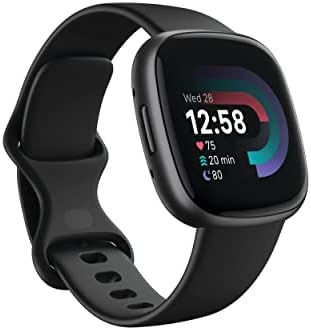
Best Overall: Google Fitbit Versa 4, Black/Graphite
If you want one watch for the gym, the trail, and the office, this is where I would start. The Versa 4 sits in the middle of Fitbit's lineup, and the product name leads with 24/7 heart rate, which tells you exactly where the company thinks the value is. That is the right priority. A watch that tracks your heart rate around the clock can show you resting trends and recovery, and that beats any animated watch face.
Three things to verify on the listing before you commit. First, check whether this version handles GPS on its own or leans on your phone. That single detail decides whether it is a running watch or a gym watch, and it is the most common thing people get wrong when they buy a fitness smartwatch online. Second, check the band sizes offered, because a loose watch gives you bad heart rate data no matter how good the sensor is. Third, check the return window. The first week with a new watch is when you find out whether the software annoys you.
The Versa 4 is not pretending to be a specialty tool. It is a daily wearer that tracks your day. If you are chasing a personal best on a certified course and you plan to compare traces afterward, that is a different category of watch. If you want steps, sleep, heart rate, and a screen that looks fine with a jacket, this is the safest pick of the four.
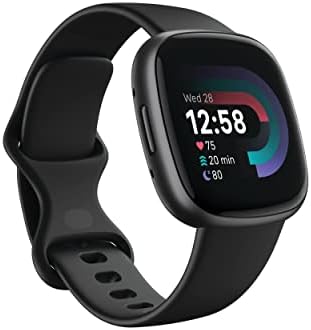
The Same Watch in Pink Sand/Copper Rose
Nobody tells you this part: this is the same watch as the one above. Same model, same sensors, same software, different finish. Pink Sand with a Copper Rose case instead of Black with Graphite.
I list it separately because color is not a cosmetic afterthought when you wear something every day. A watch you like looking at is a watch you keep charged, and a watch you keep charged is a watch that gives you data. I have watched people abandon perfectly good trackers because the band clashed with everything they owned.
The practical advice is boring. Compare the two listings side by side, since colorways do not always sit at the same price, and check which band size ships in the box. If the finish you want costs more, decide whether you actually care. If you do, pay it. If you do not, buy the black one and put the difference toward a second band.
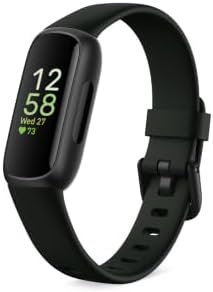
Best for All-Day and Overnight Wear: Google Fitbit Inspire 3
The Inspire 3 is the one I would hand to someone who wants the tracking without the wrist presence. It is a band-style tracker, not a full smartwatch, and that is a feature. It sits flat, it disappears under a sleeve, and it is the kind of thing you forget you are wearing, which is exactly what you want at hour 20 of a long day.
This listing ships with both small and large bands, and that matters more than it sounds. Fit is the most underrated variable in wearable accuracy. A band that slides down your wrist during a run produces heart rate readings that jump around, and the fix is almost always a tighter strap or a smaller size, not a different watch. Getting two sizes in the box means you can test both instead of guessing.
The trade is the display and the feature set. You are not getting a big touchscreen. You are getting a tracker that covers heart rate, sleep, and steps in a package you can wear to bed without noticing. For sleep data specifically, that is the whole game. A watch you take off at night gives you zero sleep data, and most people I know who complain about sleep tracking are really complaining that their watch is uncomfortable.
Best Budget Pick: Smartwatch for Women, 1.69 Inch, Pink
This is the odd one out, and I mean that in a useful way. It is a generic-brand smartwatch rather than a Fitbit, and the listing is unusually specific about what it does: calls, fitness tracking, heart rate and sleep monitoring, a 1.69 inch touch screen, waterproof, and compatibility with both Android and iPhone.
Two things make it worth a look. The screen is the biggest of the four, which matters if you read notifications and workout stats on your wrist instead of pulling out your phone. And the call feature is the one thing the Fitbit models here do not lead with, so if answering a call from your wrist is on your list, this is the listing to read closely.
Read it closely, too. Waterproof is a word with a wide range of meanings in wearable listings. Check whether the rating is written as an IP number or a depth rating in ATM, and treat anything vague as splash resistant rather than swim ready. Check how calls actually work, because some watches have a speaker and microphone built in and some just hand the audio to your phone. And check the companion app, because a budget watch is only as good as the app that stores your history.
The honest summary: this is the lowest-commitment way onto this page. It is not the watch I would trust for interval training. It might be the watch you actually wear every day, and a watch you wear beats a watch in a drawer.
How I judge a fitness watch
I test every watch the same way, and I have for seven years. The method is simple and it is not negotiable.
Distance first. I run a course whose length I already know and compare the trace, because a watch that is off by 100 meters is a watch that is lying to you. Heart rate second, checked against a chest strap, because wrist heart rate is convenient and it lags, and the only way to know how badly it lags on your wrist is to compare the two traces side by side. Battery third, audited at real use with GPS and notifications on, not at the light-use setting that inflates every claim on every box.
Then I live with it. Two weeks of daily wear, worn to bed, worn in the shower if the rating allows, charged when it complains. Software bugs show up in week two, not in the first hour. A feature that breaks after an update is worse than a feature that never existed, because you built a habit around it.
That is the bar. Not every watch on this page is built to clear it, and that is fine, as long as you know which one you are buying and why.
The reference table
This is the same table I keep when I am comparing units, stripped down to what the listings state and what each watch is for. Nothing here is a measurement I took, and nothing here is a promise. It is a starting point, and the listing is the final word.
| Watch | Best for | What the listing states | Price |
|---|---|---|---|
 Visit on Amazon → Visit on Amazon →Google Fitbit Versa 4, Black/Graphite |
One watch for training and daily wear | Fitness smartwatch, 24/7 heart rate | Check current Amazon price |
 Visit on Amazon → Visit on Amazon →Google Fitbit Versa 4, Pink Sand/Copper Rose |
The same watch in the finish you will actually wear | Fitness smartwatch, 24/7 heart rate | Check current Amazon price |
 Visit on Amazon → Visit on Amazon →Google Fitbit Inspire 3, Midnight Zen/Black |
All-day and overnight wear, band style | Includes small and large bands | Check current Amazon price |
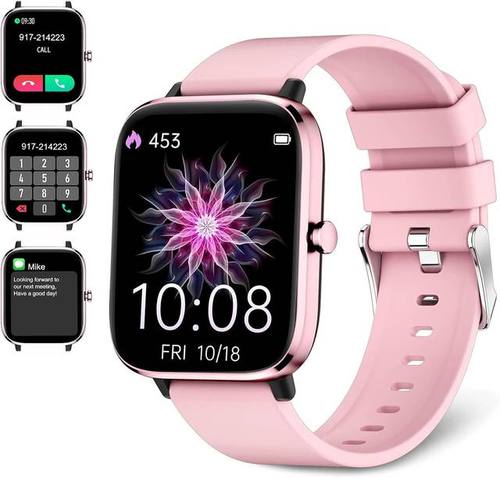 Visit on Amazon → Visit on Amazon →Smartwatch for Women, Pink |
Calls, big screen, lowest commitment | Call, fitness tracker, heart rate and sleep monitor, 1.69 inch touch screen, waterproof, Android and iPhone | $17.99 |
Two notes on reading that table. The two Versa 4 rows are the same hardware, so choosing between them is a decision about color and price only. And the middle column is exactly what the listing states, not what I measured. If a spec is not in that column, I am not going to claim it for you.
What actually separates these four
Software, mostly. Two of these watches run in the Fitbit app, which means your history lives in one place, your sleep and heart rate trends build over months, and the ecosystem does the work of turning raw numbers into something readable. That continuity is worth more than any single sensor, and it is the strongest argument for staying inside one brand.
The budget watch wins on screen size and on calls. It loses on the thing that matters most to me, which is trust in the numbers. That is not a knock on the watch. It is a statement about what it is for. If you want a call-enabled screen on your wrist and a general sense of your day, it does that job. If you want a training log you can look back on in six months, buy into the ecosystem.
Fit is the other separator. The Inspire 3 gives you two band sizes in the box, so you can dial in the snug fit that heart rate data depends on. The Versa 4 gives you a proper screen, so you will actually read the data instead of ignoring it. Pick the compromise you can live with.
One last thing, because I say it to everyone who asks: you do not need an $800 watch. You need one that tracks your sport accurately and that you will still wear tomorrow. Know what you are buying, check the fine print on GPS and water resistance, and spend the rest on shoes.
Should you buy the Google Fitbit Versa 4?
Yes, if you want one watch that covers training and daily life without a flagship price. Start with the Black/Graphite version, confirm whether the model you are buying handles GPS on its own, and check the band size before you order. The 24/7 heart rate tracking is the headline for a reason, and if you are going to use one number from a watch, resting heart rate trend is a good one.
Skip it if you are chasing accuracy on a certified course and you already know you will compare traces. That is a different category of watch.
Should you buy the Google Fitbit Inspire 3?
Yes, if you want to wear something to bed. The band-style design and the two included band sizes make it the easiest of the four to fit properly, and fit is what makes heart rate and sleep data usable. It is also the one I would recommend to someone who has never worn a tracker and does not want to feel like they are wearing a computer.
Skip it if you need a big screen or you want your watch to feel like a watch.
Should you buy the budget smartwatch for women?
Yes, if calls and a 1.69 inch screen are what you actually want, and you are comfortable treating the waterproof claim and the call feature as things to verify in the listing rather than guarantees. It is the cheapest way onto this page and the least intimidating to wear.
Skip it if your training data matters more than your notifications. For that, buy into the Fitbit ecosystem and accept the smaller screen.