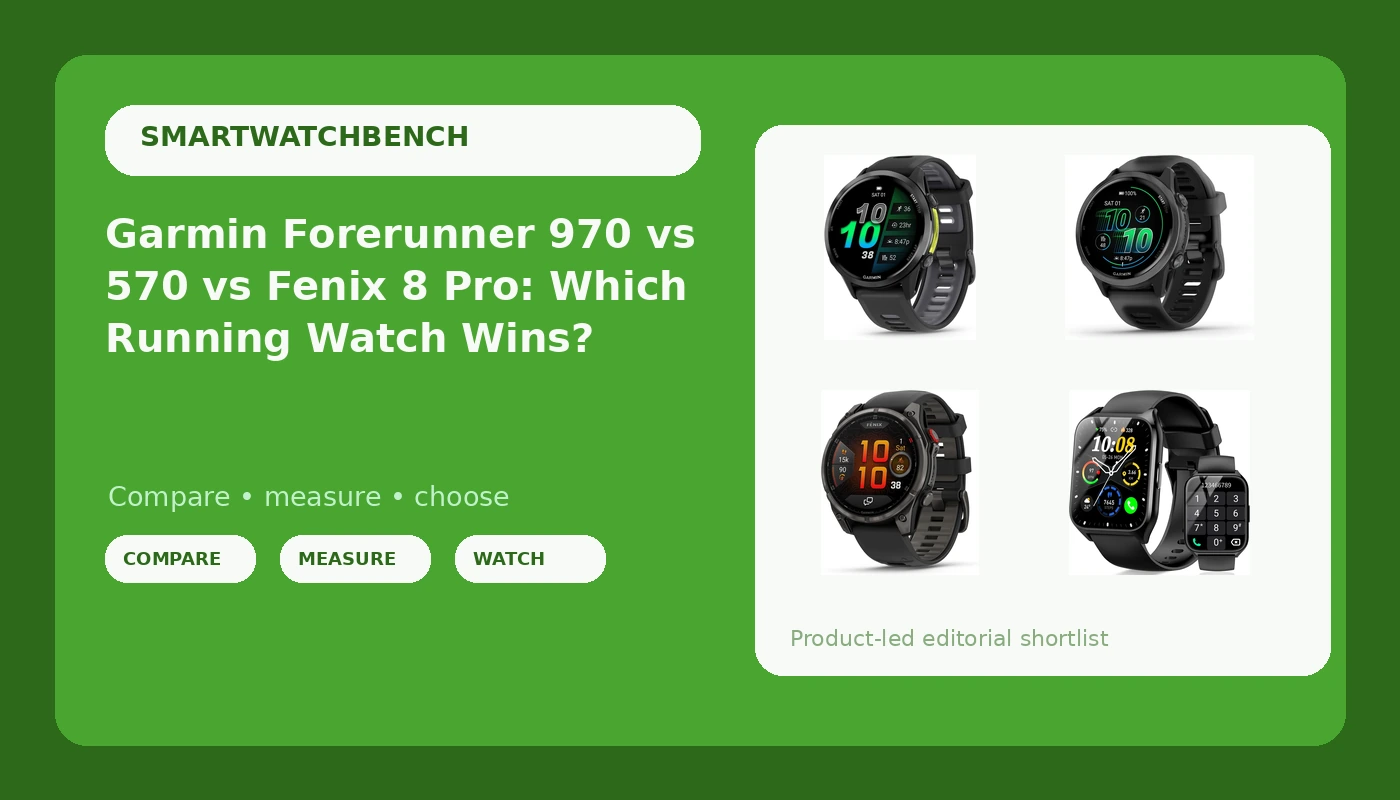
I have worn a smartwatch on every run, ride, and race since 2019, which is somewhere past 8,000 logged miles, and the lesson has never changed: the spec sheet is the least interesting part of a wearable. This Garmin running watch comparison exists because three of the four watches below are serious training tools and one of them is not a training tool at all, and the product listing will not tell you which is which. A GPS trace will.
My protocol is boring and repeatable. Two weeks of daily wear, sleep and notifications included. A GPS accuracy test on a certified course. A heart rate check against a chest strap on every run, intervals included. A battery audit at real use, with GPS and notifications on, because "up to" battery numbers are written in a lab and read on a long run. If a watch cannot survive those four checks, I do not care how good its screen looks.
The short version: the Garmin Forerunner 570 is the watch most runners should buy, the Forerunner 970 is the race day upgrade, the fenix 8 Pro is the one watch for everything if your wrist can carry it, and the budget smartwatch on this list is a phone companion, not a training partner. The table is the summary. Everything after it is the reasoning.
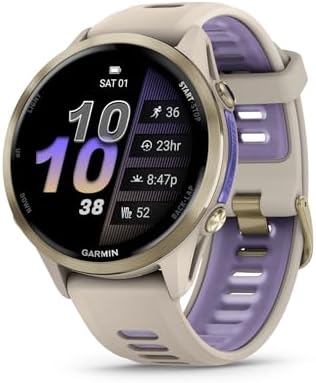
Garmin Forerunner 970, 47mm, Carbon Gray DLC Titanium
Top of the Forerunner line, titanium bezel with a DLC coating, the middle case size of the three Garmins here
Titanium is a luxury, not a pace gain, and the price reflects that
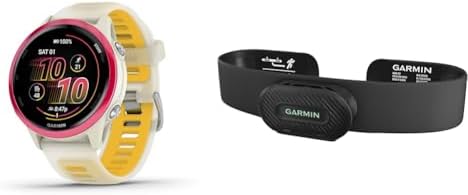
Garmin Forerunner 570, 42mm, Aluminum
The lightest and least intrusive of the three, sized for small wrists and sleep tracking
Less screen and less material than its siblings, so it feels like the value tier
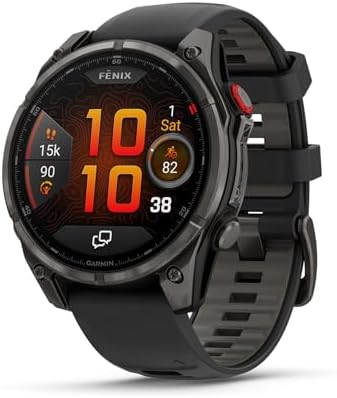
Garmin fēnix 8 Pro, 51mm, Sapphire, DLC Titanium
Sapphire crystal and titanium in one case, built to be abused on rock and trail
A 51mm case is a lot of watch, and it is the most expensive pick here
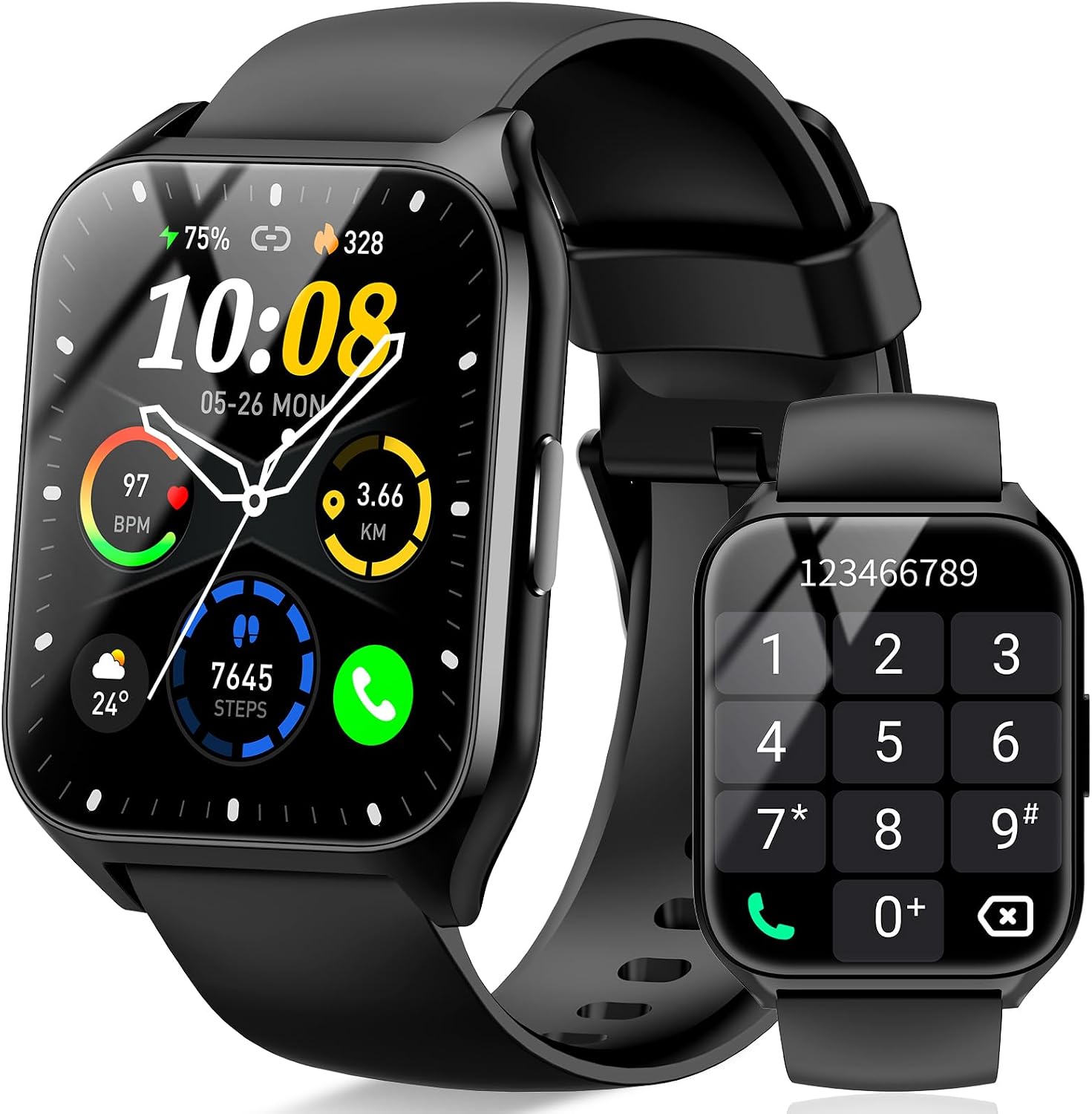
Smart Watch for Men Women (Answer/Make Calls), 1.85" HD Fitness Smartwatch
Big screen, calls on the wrist, the lowest barrier to entry on this list
Steps and wrist heart rate are guesses, not measurements, and there is no real GPS story
Prices and availability were captured from Amazon Creators API and may change.
How I test a running watch
Every watch that earns a recommendation from me goes through the same four gates, in the same order, and the order matters.
Gate one is the GPS trace. I run a certified course, usually a measured loop I have run hundreds of times, and I overlay the watch's track on the known distance. Corners are where cheap receivers give themselves away. A watch that cuts the inside of every turn on a wooded trail will hand you a pace that looks heroic and a race result that does not match it. The trace is the review.
Gate two is wrist heart rate against a chest strap. I wear both on every run for two weeks. Easy runs are where wrist sensors look fine. Intervals are where they fall apart, lagging the strap on the way up and hanging on too long on the way down. If the wrist number cannot follow a chest strap through a set of 400s, it is a convenience feature, not a training metric.
Gate three is battery at real use. GPS on, notifications on, sleep tracking on, no airplane mode tricks. This is the number that matters to anyone training for a marathon, because a watch that dies at mile 20 of a long run is a watch you stop trusting.
Gate four is two weeks of daily wear, which is where the boring problems show up. Straps that irritate. Software updates that break a screen you used daily. Notifications that arrive twice. Nobody puts that in a review, and it is the part you live with.
Garmin Forerunner 970: the race day tool
The Forerunner 970 is the top of the Forerunner family, and the name tells you most of what you need. A 47mm case, a carbon gray titanium bezel with a DLC coating, and a black and whitestone finish. Titanium with a diamond-like carbon coating is the combination you want if you care about a watch staying handsome after a year of sunscreen, sweat, and the occasional doorframe. It is lighter than a steel case and harder to scratch than a bare metal one, and neither of those things will make you faster.
That is the honest tension with this watch. It sits in the middle of the three Garmin case sizes here, which makes it the Goldilocks pick for a lot of runners: bigger and easier to read at pace than the 42mm 570, more wearable on a daily basis than the 51mm fenix 8 Pro. The Forerunner line is the line Garmin builds for people who run first and do everything else second, and the 970 is where that line gets the premium materials.
If you race, the case size and the screen are the reasons to look here. A 47mm display is readable mid-interval without breaking stride. If you have a small wrist, it is also a lot of watch to sleep in, and sleep is where a third of your training data comes from.
Garmin Forerunner 570: the pick for most runners
The Forerunner 570 is the one I would hand to a friend who is training for their first half marathon and does not want to think about their watch. A 42mm aluminum case in black, which means it is light on the wrist, unobtrusive under a jacket sleeve, and comfortable enough to sleep in without noticing it. Aluminum is lighter than titanium and it will pick up scratches that titanium shrugs off. That is the trade, and for most runners it is the right trade.
The smaller case is the whole story. A 42mm watch on a 15cm wrist looks like a watch. A 51mm watch on the same wrist looks like a billboard. If you have spent years wearing an oversized watch because it was the only one with the features you wanted, the 570 is the correction. It also sits flat enough that wrist heart rate has a better chance of staying in contact through a full run, which matters more than any sensor name on a box.
What you give up is screen real estate and materials. Maps on a 42mm display require more scrolling than maps on a 47mm or 51mm display. If you run road races and care about pace, distance, and heart rate, that is a non-issue. If you navigate technical trails with a watch face as your only map, it is a real limitation.
Garmin fenix 8 Pro: one watch for everything
The fenix 8 Pro is the watch for the person who wants one device for the gym, the trail, the office, and the flight. A 51mm case, sapphire crystal, DLC coated titanium, in black and pebble gray. Sapphire is the detail that separates it from the rest of this list. It is the material you want when your wrist regularly meets granite, and it is the reason fenix buyers keep the same watch for years instead of replacing a scratched one.
The 51mm case is the catch, and it is not a small one. This is a large watch on any wrist, and on a smaller wrist it becomes a decision you feel every run. Bigger cases have room for bigger batteries, which is part of why the fenix line has the reputation it has among ultra runners and multi-day hikers. If your longest event is a marathon, you are paying for durability and battery headroom you may never use.
The other thing to be honest about: the fenix line is Garmin's everything watch. It handles swimming, cycling, hiking, skiing, and the gym, and the software depth that comes with that is genuinely useful if you do more than one sport. If you only run, you are buying a tool built for a life you do not live. That is not a criticism of the watch. It is a note about your money.
The budget smartwatch: calls, not credibility
The Smart Watch for Men Women with answer and make calls and a 1.85" HD screen is the outlier here, and I want to be fair to it before I am blunt about it. As a notification and call device, it does a job. You can take a call from your wrist, read a message, and see the time on a big bright display. For someone who wants a phone companion and does not run, that is a legitimate purchase.
As a training tool, it is not one. A 1.85" fitness smartwatch in this bracket counts steps and estimates wrist heart rate, and it does not carry the GPS hardware that makes a trace trustworthy. That means the distance you see is derived, not measured, and the pace you see follows from that distance. My rule with any wearable is simple: if the numbers are guesses, the training load built from them is garbage in, garbage out. You will not pace a marathon off a watch that estimates your route.
If you want calls on your wrist and nothing else, buy it and enjoy it. If you are a runner, this is not a budget entry into running watches. It is a different product category wearing the same word on the box.
The trade-offs nobody puts on the box
Every tier on this list buys you something and costs you something else, and the marketing never says the second half.
Materials are the easiest to see and the least important to your training. Titanium and sapphire make a watch survive a decade of abuse and look good doing it. Aluminum and glass make a watch lighter and cheaper. Neither choice changes your GPS trace by a meter. Buy materials for your lifestyle, not for your splits.
Case size is the trade-off that actually changes your data. A bigger case holds a bigger battery and a bigger screen, and a smaller case sits more securely for wrist heart rate and sleep tracking. That is the real 42mm versus 51mm argument, and it is why I do not tell people to buy the biggest watch they can afford.
Software is the third thing. The software is the watch. A great sensor running buggy firmware is a great sensor you cannot trust, and every brand on this list has shipped an update that broke a feature people used daily. This is the argument for buying into a mature ecosystem: when something breaks, it gets fixed, and the fix does not arrive in a new model year.
Finally, there is the honest question of what your sport requires. A road runner needs accurate distance, a reliable heart rate signal, and battery that covers the long run. A trail runner needs navigation and durability. A multi-sport athlete needs one watch that does all of it. Paying for capabilities you never touch is the most common mistake I see, and I have made it myself more than once.
Which watch should you buy?
If you run roads and want one watch that does the job without drama, buy the Garmin Forerunner 570 in 42mm. It is the smallest, lightest, and most comfortable of the three Garmins here, and comfort is what keeps a watch on your wrist at 6 a.m. on a cold morning.
If you race, read your watch at pace, and want the best materials Garmin puts on a running first watch, buy the Garmin Forerunner 970. The 47mm case and titanium bezel are the reasons, and you should be honest with yourself about whether you will notice them.
If you want one watch for trail, gym, water, and work, and you have the wrist for a 51mm case, the Garmin fēnix 8 Pro with sapphire is the last watch you will buy for a long time. Check the size on your wrist before you commit, because that is the one spec you cannot fix later.
If you want calls and notifications on your wrist and you do not train, the budget smartwatch is fine. If you run, skip it. A watch that guesses your distance will eventually cost you a race, and that is a more expensive mistake than buying the right tool once.
What I am watching next
I do not publish a GPS claim without a certified course test, and I do not publish a battery claim without a real-use audit, which means the watches on this list stay on my wrist for weeks after a review goes live. The thing I am watching hardest right now is wrist heart rate during interval sessions, because that is where the gap between a chest strap and a wrist sensor is widest, and it is the single number most runners overtrust.
The other thing I keep coming back to: you do not need the most expensive watch on this list to train well. You need one that measures your actual route and your actual effort, and then you need to leave it alone and run. Three of the four watches here can do that. One of them cannot, and now you know which.