Related: Best GPS Running Watch for Distance and Pace: What to Check Before You Buy
There are two very different kinds of watch in this guide, and the gap between them is the whole decision. On one side sits a budget GPS running watch built to do one job: tell you how far and how fast. On the other sits the Samsung Galaxy Watch 8, a flagship Android smartwatch that treats running as one feature among many. Both are worth owning. Neither is worth owning blindly.
I have worn a watch on every run, ride, and race since 2019, and I have logged more than 8,000 miles with a GPS trace on my wrist. That experience taught me the thing that matters more than any spec sheet: the numbers have to be true. A watch that reads 6.2 miles when the certified course says 6.0 is not a training tool. It is a random number generator with a strap. So when I compare a cheap GPS watch against a flagship, I am not really comparing features. I am comparing trust.
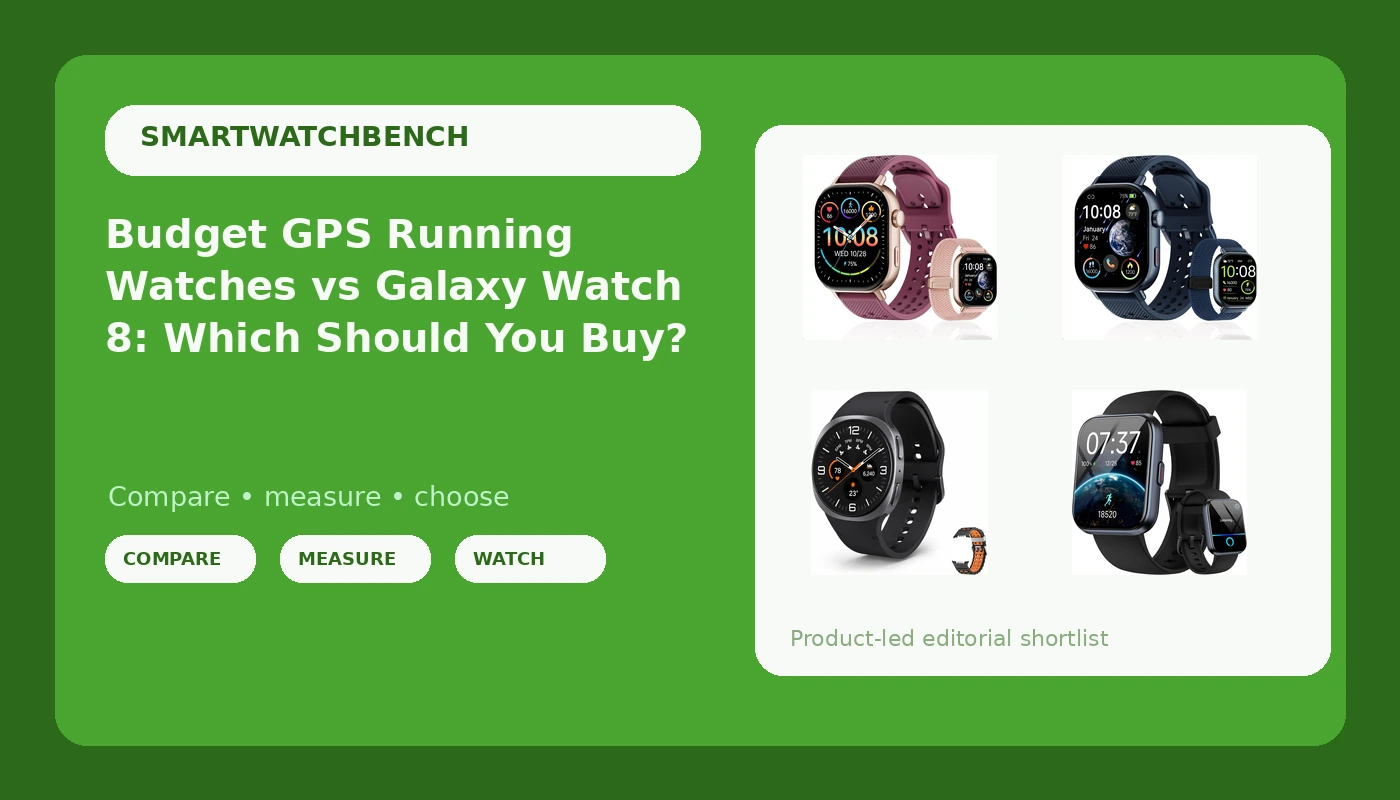
The four watches here cover the realistic range. Two colorways of the same budget GPS running watch, one cross platform smartwatch with a big screen and Alexa, and the Galaxy Watch 8 for Android owners who want a real smartwatch. Here is how to work out which one belongs on your wrist.
Best All-Rounder: Samsung Galaxy Watch 8 (40mm, Graphite)
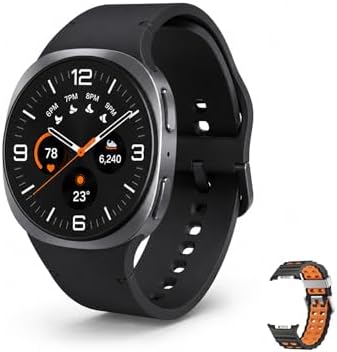
The Galaxy Watch 8 is the most complete device in this guide. The 40mm case is the smaller option, which suits narrow wrists and anyone who does not want a dinner plate strapped to their arm. This is the US version with Bluetooth, so there is no LTE and calls route through your paired phone. It tracks fitness and sleep, produces an Energy Score, and monitors heart rate. It ships with an extra sport band in the box, which is a genuinely useful inclusion, because the band is always the first part of a watch to get gross.
Here is the honest caveat, the same one I give every Android user. Samsung's fitness accuracy trails the dedicated running brands. Wrist heart rate is convenient, and it lags a chest strap, especially during intervals. That is a limitation of sensor placement more than of the brand. If you want a smartwatch that tracks your day, shows notifications, and looks appropriate at dinner, this is the pick. If you want the most trustworthy GPS trace in the group, keep reading.
Android only, and that is a hard line. The Galaxy Watch 8 does not work with iOS. If you carry an iPhone, skip it and look at the 1.85 inch watch below.
Best Budget Running Watch: 2026 Distance & Pace GPS Running Watch (Gold)
This is the watch I would hand to someone who wants distance and pace and nothing else. The name says the job out loud: distance and pace, from GPS. It takes calls and texts, which matters more than people admit on a long run, and the AMOLED screen is large and bright, which is the difference between reading your pace at arm's length and squinting at it.
The 50m water rating means pool swimming is on the table, not just splashes at the sink. It counts calories and steps, it arrives with two bands, and the battery is advertised as long. Treat that battery claim the way you should treat every battery claim: the number on the box was measured at light use. Turn on GPS, turn on notifications, and the real number shows up.
Two things to know before you buy. First, this is not a smartwatch in the Galaxy Watch sense. It will not run an app store, and the software is simple by design, which is either the entire point or a dealbreaker depending on what you want from your wrist. Second, wrist heart rate during hard intervals will lag. If you train by heart rate zones, budget for a chest strap and let this watch handle the GPS work.
The gold finish is the louder of the two colorways. It reads well against skin in sunlight and it looks less like a fitness gadget than the blue version.
The Blue Version: Same Watch, Different Colorway
Everything above applies here, because this is the same 2026 Distance and Pace GPS running watch in blue. Same AMOLED screen, same 50m water rating, same two bands in the box, same call and text support, same calorie and step counting. The only difference is the color of the case, and color is not a spec. It is a preference.
So treat this as a color note rather than a second review. If you run before sunrise or after dark, the lighter gold case is easier to find on a nightstand in a dark room. If you want a watch that disappears into business casual, blue is the safer choice. If you are buying two, one for yourself and one for a parent, order one of each and you will never mix them up.
One practical tip that applies to both finishes: order a spare set of quick release bands in your size while you are at it. The watch ships with two bands, and two bands is not the same as the right two bands.
Best for Notifications and Alexa: Smart Watch for Men and Women, 1.85 Inch
This is the cross platform option, and for a lot of people it is the right one. The 1.85 inch screen is the largest in this group, and the watch pairs with iPhone, Samsung, and Android phones. That compatibility is the headline. It is one of the few watches in this bracket that will answer and make calls from an iPhone without pretending to be an Apple Watch.
The sensor list covers heart rate, sleep, and SpO2, and there are more than 120 sport modes, which is more than any human needs and exactly what you want if your sport is something odd like rowing or pickleball. Alexa is built in, so weather, timers, and smart home commands come from your wrist.
The water rating is 3ATM. Read that one carefully. 3ATM is rated for splashes, rain, and hand washing. It is not the same promise as the 50m rating on the running watches above, so do not take it lap swimming just because a product photo shows a pool. If your priority is notifications, calls, and a big readable screen on any phone, this is the pick. If your priority is a GPS trace you can trust on a certified course, buy the running watch instead.
How I judge a watch
I run every watch through the same four checks, in the same order, and I do not form an opinion until all four are done. If you are shopping, this is also the checklist worth running yourself before you commit.
- GPS accuracy against a known course. Not a map that looks roughly right. A certified distance, run twice, compared trace to trace. If the watch cuts corners on tree cover, you will see it in the trace before you see it in the total.
- Heart rate against a chest strap. Wrist optical sensors are convenient, and convenience is not accuracy. Intervals expose the lag faster than any steady run will.
- Battery at real use. GPS on, notifications on, always on display if the watch has one. The advertised figure was measured at light use, and light use is not your Tuesday.
- Would I wear it for a marathon? That is the final filter. If a watch is uncomfortable at mile three, no sensor on earth saves it.
Analysis: what the spec sheets leave out
Every watch here lists a screen, a water rating, and a battery claim. Almost none of that tells you whether the watch is any good at being a watch.
GPS is the whole game for runners. Distance and pace drive every training decision you make, from whether you hit your splits to whether you earned a rest day. A watch that is off by 100 meters over a 10K is a watch that is lying to you, and no amount of bright AMOLED screen fixes it.
Wrist heart rate is a convenience sensor. It is fine at rest and fine on an easy jog. It lags during intervals, and that lag is physics, not a firmware bug. If you train by zones, pair any of these watches with a chest strap. The 1.85 inch watch and the Galaxy Watch 8 both read heart rate from the wrist, and so do the running watches.
Battery claims deserve a translation. Every manufacturer measures at light use, which usually means notifications on and GPS off. Turn the GPS on for a long run and the number drops. This is not dishonesty, it is optimism.
Water ratings are not interchangeable. The running watches carry a 50m rating, which covers pool swimming. The 1.85 inch watch carries 3ATM, which covers rain and hand washing. Those two numbers get printed in the same font size on the same kind of box, and they mean very different things.
The software is the watch. A great sensor with buggy firmware is a great sensor you cannot trust. This is why I care about update history as much as hardware, and why I get annoyed when a software update breaks a feature that used to work.
Screen type is a tradeoff, not a feature. AMOLED looks better and reads better in direct sun. It also draws more power. That is the trade, and you should know which side of it you want.
Smartwatch comparison table
This is the same comparison I keep in my own notes. Prices move and listings get revised, so check the current page before you buy. Every row links straight to the product.
| Watch | Display | Water rating | Standout feature | Price |
|---|---|---|---|---|
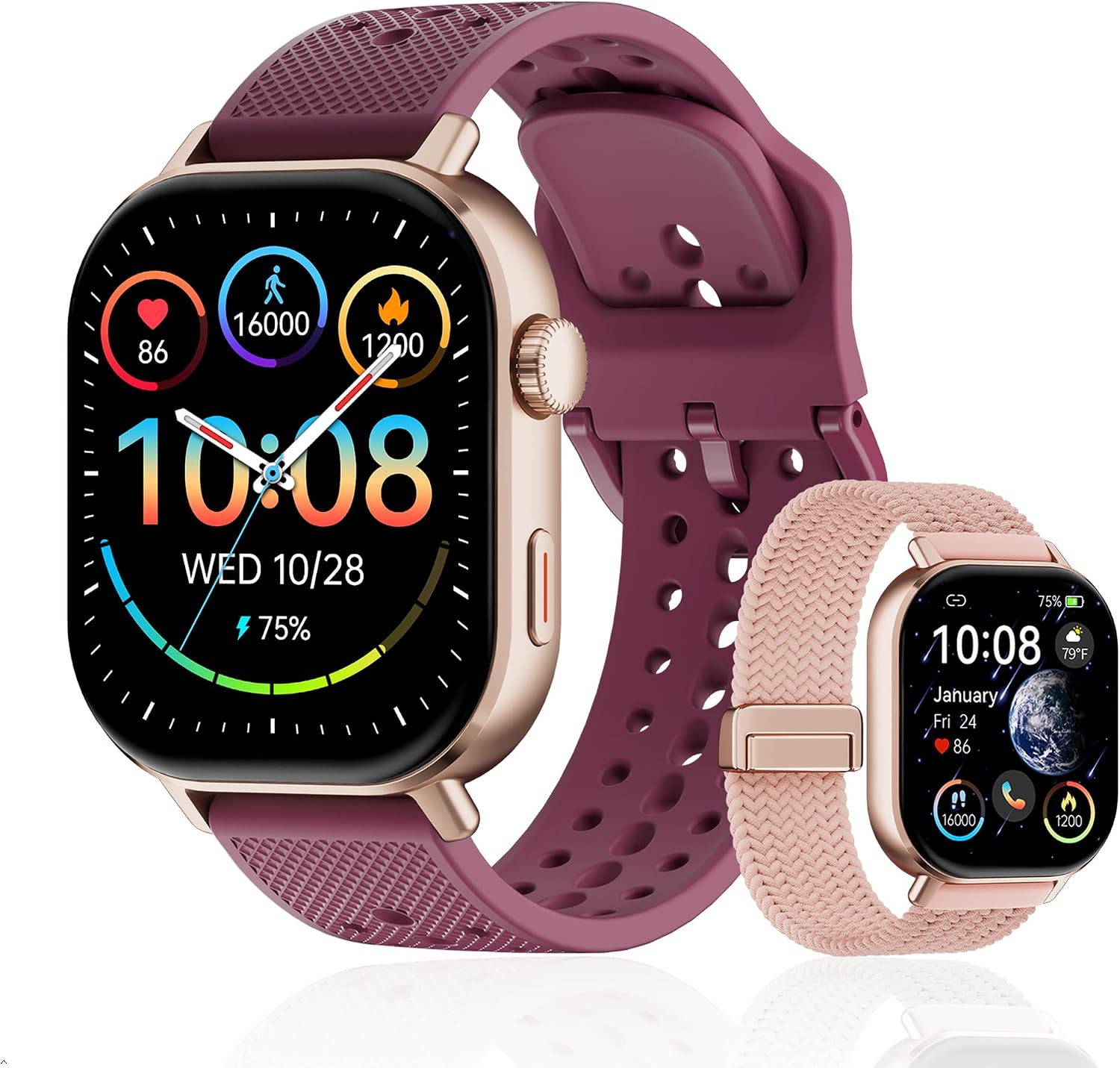 Visit on Amazon → 2026 Distance & Pace GPS Running Watch (Gold) |
AMOLED, large | 50m, pool swimming | GPS distance and pace, 2 bands included | $41.99 |
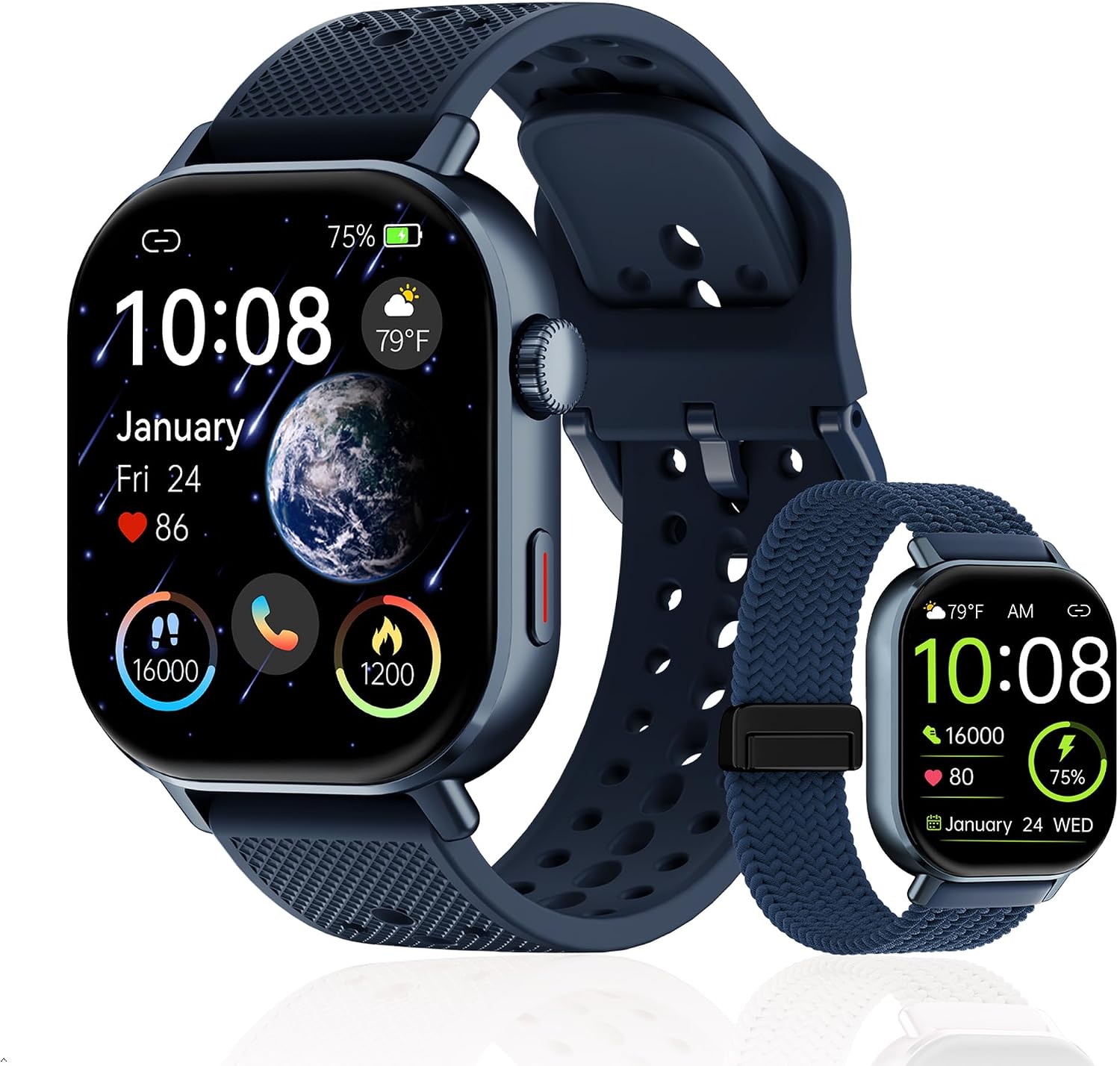 Visit on Amazon → 2026 Distance & Pace GPS Running Watch (Blue) |
AMOLED, large | 50m, pool swimming | Same watch, blue colorway | $41.99 |
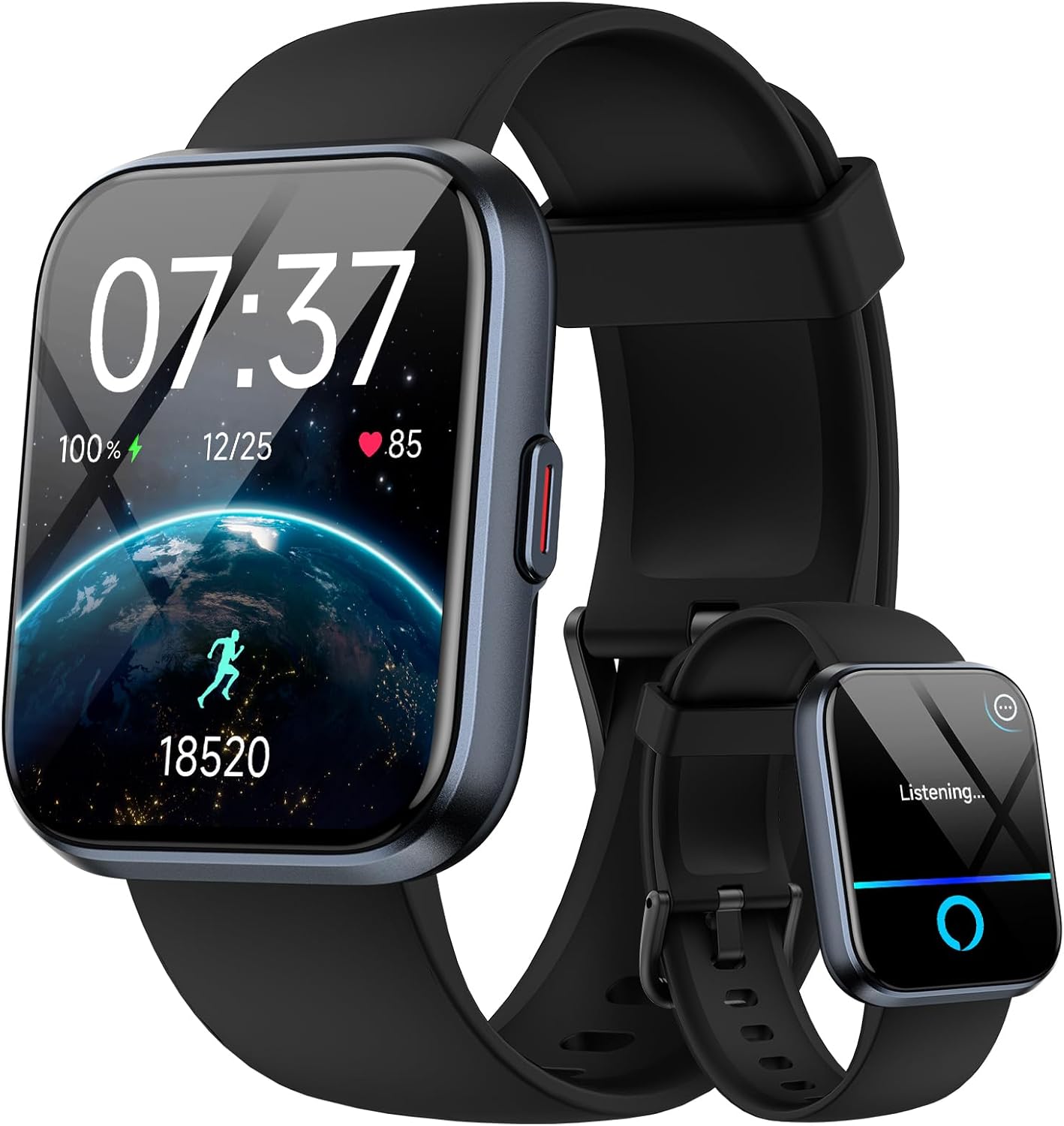 Visit on Amazon → Smart Watch for Men and Women, 1.85 inch |
1.85 inch, largest here | 3ATM, splashes only | Alexa built in, iPhone and Android | $59.25 |
 Visit on Amazon → Samsung Galaxy Watch 8, 40mm, Graphite |
40mm case | Not specified in listing | Sleep and fitness tracking, Energy Score, Android only | Check current Amazon price |
Which colorway should you pick?
Functionally, nothing changes between the gold and blue running watches. Pick by lifestyle. Gold is easier to spot in a dark drawer and reads more like jewelry. Blue is more conservative and hides scuffs from daily wear a little better. If you swim, note that both carry the same 50m rating, so the pool does not care which one you chose.
What about phone first smartwatches?
The 1.85 inch watch and the Galaxy Watch 8 are both phone first devices. They are excellent at notifications, calls, and daily tracking, and both are honest about what they are. Neither will give you the cleanest GPS trace in this guide, and that is fine, because neither is pretending to be a running tool. The mistake is buying a notification machine and expecting certified course accuracy from it.
Should you buy the Samsung Galaxy Watch 8?
Yes, if you carry an Android phone and you want a real smartwatch first and a fitness tracker second. The 40mm case suits smaller wrists, the sleep and fitness tracking plus the Energy Score cover daily wear, and the extra sport band in the box is a nice touch. It is the watch here that will look right at a dinner table and still log your day.
Know the two limits before you commit. It does not work with iOS at all, so iPhone owners are out. And its fitness accuracy trails the dedicated running brands, which matters if your training depends on precise splits. Buy it for the Android integration and the smartwatch features, and let a running watch handle the race day math.
Should you buy the budget GPS running watch?
Yes, if distance and pace are what you actually care about. The AMOLED screen is large and readable in sunlight, the 50m rating covers pool swimming, calls and texts come through, and two bands ship in the box. It is the cheapest honest answer to the question every runner asks: how far and how fast.
The tradeoffs are just as honest. There is no app ecosystem, the software is simple, and wrist heart rate will lag a chest strap during intervals. If you want notifications and apps on any phone, buy the 1.85 inch watch instead. If you want a GPS trace without flagship money, this is the one to order, and the color is the only real decision left.