Related: How to Test Smartwatch GPS Accuracy on a Known Course
Most smartwatch shopping starts with a feature list, and that is backwards. A smartwatch buying guide should start with one question: does this thing tell the truth about the numbers you use every day?
For me there are three numbers. Distance, from GPS. Heart rate, from the wrist sensor. And battery, which is the spec every maker inflates by testing at light use with notifications off. A watch that is off by 100 meters on a certified course is a watch that is lying to you. A wrist sensor that cannot hang with a chest strap through an interval session is a toy with a nice screen.
The four watches below cover the whole spread: a $400 flagship, an $80 watch with built-in GPS, and two trackers under $60 that do more than most people expect. I am not going to tell you the expensive one is always the right answer. I am going to tell you what each one is actually for, and which specs to verify before you trust them with a training block.
Best All-Rounder: Apple Watch Series 10
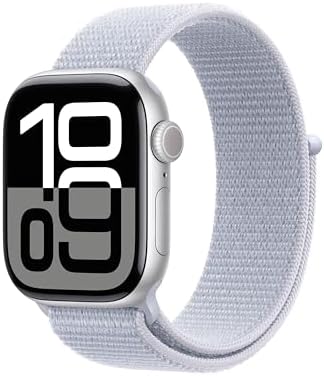
The Apple Watch Series 10 is the best all-rounder you can buy, and I say that as someone who would rather race with something else on my wrist. The 42mm GPS model with the Silver Aluminum case and the Blue Cloud Sport Loop is the version most people should look at. You get the Always-On Retina display, the ECG app, and fitness tracking that Apple has spent a decade refining.
Where it wins is everything that is not a hard training session. The health features are excellent. The software is the most polished in the category, and the ECG app is the kind of thing you use once, get an odd reading from, and then show your doctor. That is real value, not a bullet point.
Where it loses is battery. This is the daily chore of Apple Watch ownership: you charge it every night, which means you either carve out a charging window or you give up sleep tracking, and sleep tracking is one of the more useful things a wearable does. If you are training for a marathon, you will also notice that a watch you charge daily is a watch you have to plan around.
Buy it if you want the best smartwatch rather than the best training tool, and if you carry an iPhone. Do not buy it because some list called it the best running watch.
Best Budget GPS: Military Smart Watch for Men
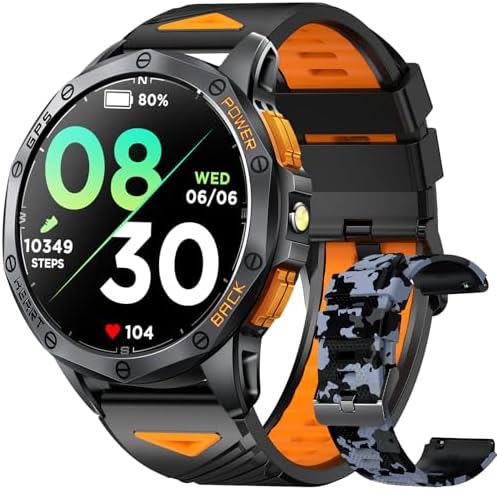
Built-in GPS at this price is the whole story. A watch that carries its own GPS module can log a run without your phone, and if you are a runner who does not want a phone bouncing in a pocket, that single feature is worth more than a dozen watch faces. The 1.43 inch AMOLED panel is the size most people picture when they hear "smartwatch," and the rugged case is aimed at people who are hard on their gear.
The spec sheet lists a 30-day standby. Read that word carefully. Standby means the watch is sitting there with the screen off and nothing being tracked. Real use, with GPS running and notifications arriving, will be a fraction of that number. That is not a knock on this watch specifically, it is how every standby claim in this category works.
The other thing to know is that built-in GPS is only half the equation. The antenna and the software decide whether your trace is clean or whether it cuts corners every time you pass under trees. That is the part no listing can tell you, and it is the part that separates a cheap GPS watch from a good one.
Best Battery: XIAOMI Mi Smart Band 10
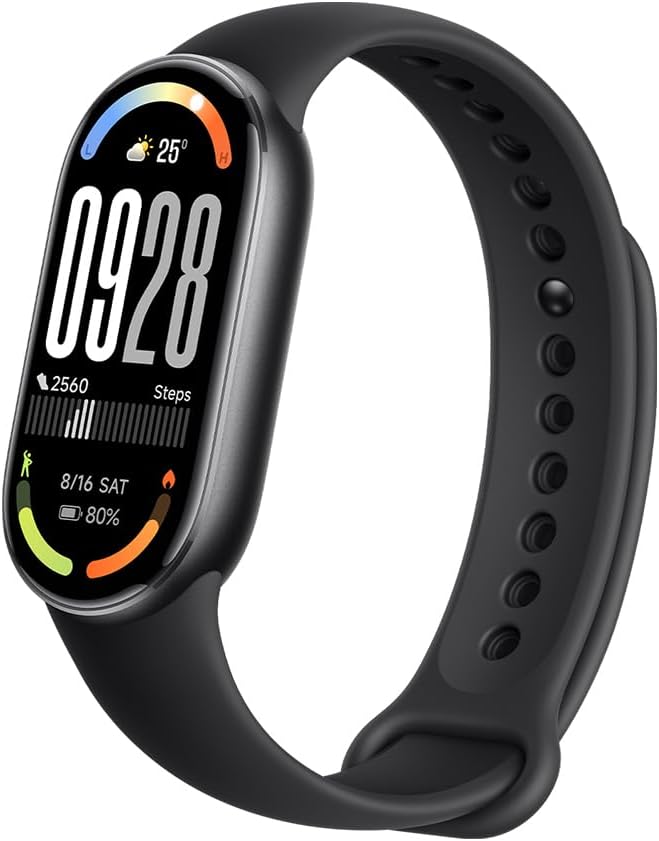
The 21-day battery claim is the number that gets attention, and unlike most claims in this category it is not absurd. The Mi Band line has always been the exception to my rule that cheap fitness bands are step counters with a heart rate guess. The 1.72 inch AMOLED display is the biggest screen in this group, Bluetooth 5.4 keeps the connection stable, and the Midnight Black finish disappears on a wrist.
The trade-off is GPS. There is not any. It borrows your phone's location for outdoor runs. If you already carry a phone on every run, that is not a compromise at all, it is exactly how you get three weeks between charges. If you do not, it is a dealbreaker, and you should be looking at the watch above instead.
The second trade-off is depth. There is no ECG, no serious training load analysis, and the multi-sport modes are broad rather than deep. This is the wearable for someone who wants steps, sleep, resting heart rate, and a screen they check a few times a day, without a charging cable living on the nightstand.
Best for Everyday Wear: Fitpolo Smart Watch for Women
This one is a smartwatch first and a fitness tracker second, which is the right framing. The 1.3 inch AMOLED touchscreen, the ability to make and answer calls from your wrist, and the heart rate and SpO2 sensors cover the everyday basics, and it works with both Android phones and iPhone. The 3ATM waterproof rating is more than most watches at this price bother with, though 3ATM means splash and swim-adjacent resistance, not dive-watch territory.
Bluetooth calling is the feature that makes it feel like a watch rather than a band. Taking a call on your wrist while your hands are full is a genuinely useful thing, and it is the reason someone picks this over the Mi Band.
Where it fits: sleep tracking, steps, resting heart rate, and calls. Where it does not: intervals, trail runs, or anything that depends on a budget optical sensor being precise during hard efforts. Treat the SpO2 and heart rate numbers as directional.
How I check a watch before I trust it
Same protocol every time. Two weeks of daily wear. A GPS accuracy test against a known course, comparing the recorded distance to the real distance. A heart rate check against a chest strap, with special attention to intervals, where wrist HR is at its worst. And a battery audit at real use: GPS on, notifications on, no light-use fantasy.
I keep a spreadsheet of which watches lie about their metrics, and most of them lie in the same two places: distance on tree-covered trails, and heart rate during hard efforts. Wrist optical sensors are usually fine at a steady pace and usually wrong the moment you surge.
For this round I am working from the published specs, because those are the claims you will be comparing in the listing. What I can tell you is which claims to treat as verified and which to treat as aspirational. GPS and step counts are usually close. Battery at "typical use" is usually optimistic. Heart rate is the one where the software matters as much as the sensor, and the software is the part you cannot evaluate from a spec sheet.
Analysis: what the specs actually tell you
Display size runs from 1.3 inches on the Fitpolo to 1.72 inches on the Mi Band 10, with the Apple Watch and the military watch in between. Bigger is easier to read mid-run, but it is also more watch on your wrist at 2 a.m.
Battery is where the language gets slippery. The Mi Band 10 lists 21 days of battery life. The military watch lists 30 days of standby. The Apple Watch does not put a days figure in its listing at all. Battery life and standby are not the same promise: one is how long the thing runs, the other is how long it sits still.
GPS is the real dividing line. Only the Apple Watch and the military watch carry their own GPS. The Mi Band 10 and the Fitpolo both lean on your phone for outdoor distance, which is fine if you carry one and a problem if you do not.
Water resistance shows up once, as 3ATM on the Fitpolo. Health sensors are spread out too: ECG on the Apple Watch, SpO2 on the Fitpolo, heart rate on all four.
Smartwatch comparison table
| Watch | Display | Battery as listed | Standalone GPS | Best for |
|---|---|---|---|---|
 Visit on Amazon → Apple Watch Series 10 |
42mm Always-On Retina | Not listed in days | Yes | Health features, iPhone users |
 Visit on Amazon → Military Smart Watch for Men |
1.43 inch AMOLED | 30-day standby | Yes | Rugged wear, phone-free runs |
 Visit on Amazon → XIAOMI Mi Smart Band 10 |
1.72 inch AMOLED | 21 days | No | Battery life, everyday tracking |
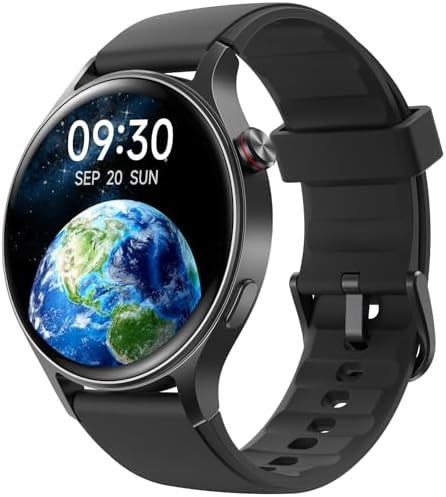 Visit on Amazon → Fitpolo Smart Watch for Women |
1.3 inch AMOLED | Not listed in days | No | Calls, sleep and activity tracking |
The cheap band question
My default position is that cheap fitness bands are step counters with a heart rate guess. The Mi Band 10 is the exception worth considering, because that line has years of iteration behind it and the display is genuinely good. The Fitpolo is a different animal: it is a watch that makes calls and tracks sleep, and the health numbers are best treated as directional rather than clinical.
The battery claim problem
Every maker tests battery at light use, which means the number on the box describes a watch that is not doing much. The only figure that matters is the one you get with GPS on and notifications arriving. If you are choosing between two watches on battery alone, pick the one whose claim is written as plain battery life rather than standby.
Should you buy the Apple Watch Series 10?
Yes, if you want the best all-round smartwatch and you carry an iPhone. The health features are excellent, the display is the best here, and the ECG app is a real tool rather than a gimmick. No, if battery life and training accuracy are your top two priorities. You will charge it every night, and a watch that lives on a charger is a watch you plan your day around.
Should you buy the XIAOMI Mi Smart Band 10?
Yes, if you already run with your phone and you want the longest gap between charges in this group. The 21-day battery claim, the 1.72 inch AMOLED display, and Bluetooth 5.4 make it the easiest of the four to live with. No, if you want standalone GPS or deep training metrics, because it borrows your phone for distance and the software stays shallow.
Which one I would pick
For most people, the Apple Watch Series 10 is the right answer, and it is the one I would hand to a friend who wants a smartwatch rather than a training tool. For a runner who refuses to carry a phone, the military watch with built-in GPS is the interesting budget pick, as long as you treat the standby claim as marketing. For everyone else, the Mi Band 10 is the value play, and the Fitpolo is the pick if wrist calls matter more than battery.