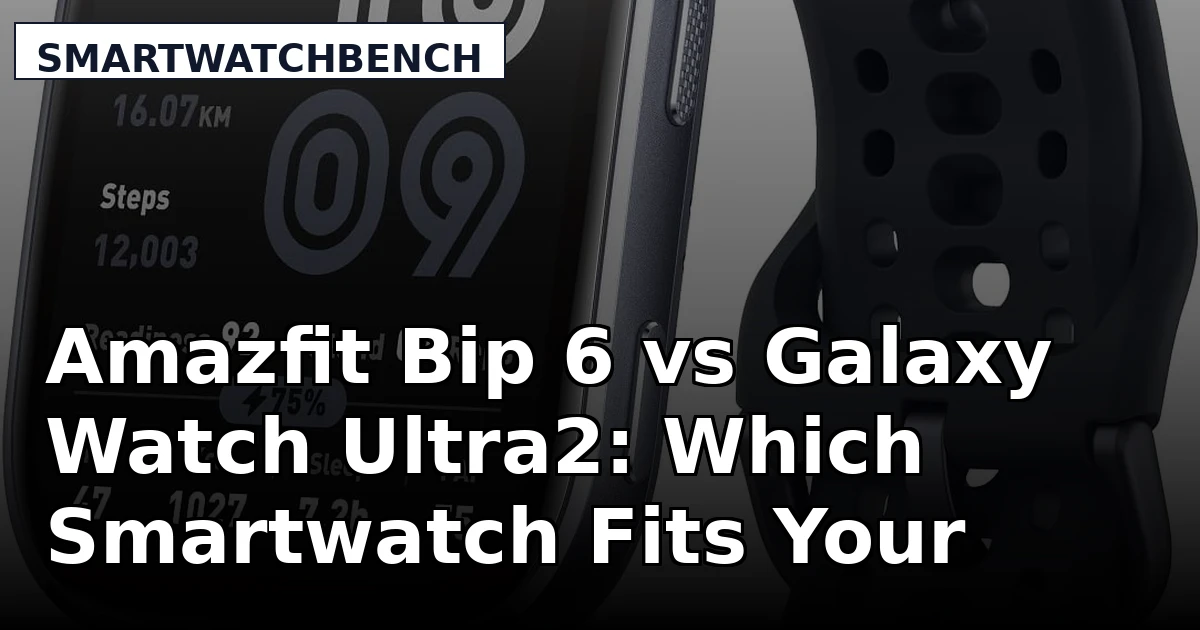
I bought my first GPS watch in 2019 because a training partner told me I was pacing by feel, and that my feel was wrong. He was right, and I have spent the years since logging runs, rides, and races with a watch on my wrist and a spreadsheet of which ones told the truth. That habit is the reason this smartwatch comparison exists. Four listings, three very different buyers, and one question that decides all of it: does the watch measure your effort accurately, or does it just look like it does?
Related: GPS Accuracy For Runners: Why Your Watch Cuts Corners On Trails
The Amazfit Bip 6 is the watch I would recommend to most runners and most casual athletes, because it is the only listing in this group that pairs a real GPS radio with a price that does not require a family meeting. The rest of this article explains why the cheapest tracker here fails that test for anyone who trains, and why the two Samsung Galaxy Watch Ultra2 listings are not really two different watches at all.
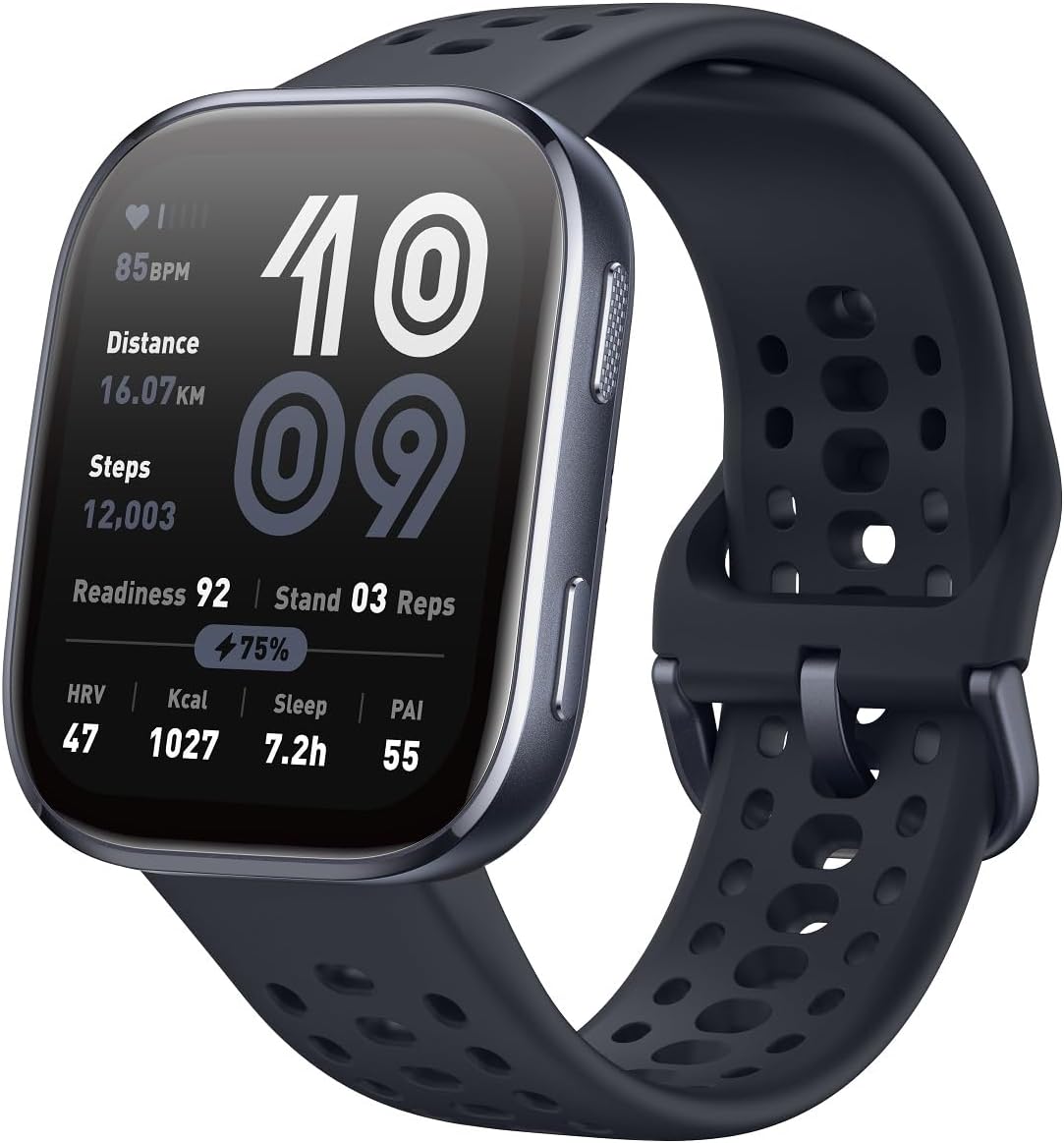
Amazfit Bip 6 Smart Watch, 1.97" AMOLED Display, GPS, iOS/Android
Built-in GPS at the lowest price in this comparison, a large AMOLED display, and it works with both iOS and Android
Not a premium build, and the listing does not advertise cellular calling
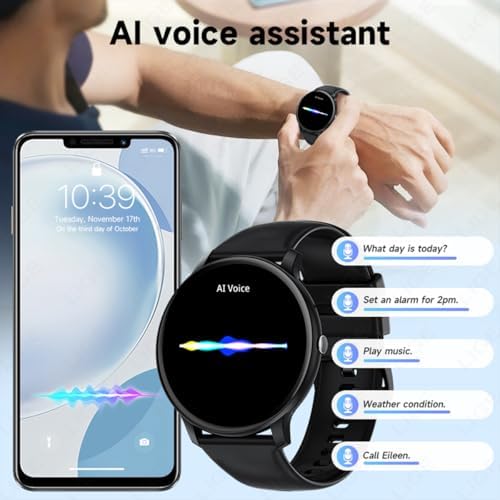
Smart Watch HD Touch Screen Custom Watch Faces Multilple Sports Mode Activity Tracker IP68 Waterproof Long Battery Life Black Silicone Strap Smartwatches for Android and iOS
IP68 water resistance, custom watch faces, and a price low enough to buy without thinking
No GPS named anywhere in the spec list, so pace and distance are guesses
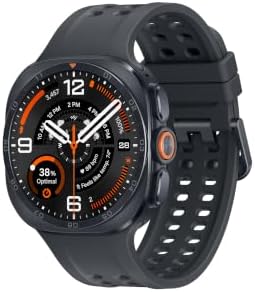
Samsung Galaxy Watch Ultra2, Titanium Gray, 47mm LTE Smartwatch
Titanium case, LTE connectivity, and the deepest app and notification ecosystem here
47mm is a lot of watch, and the fitness side trails dedicated running brands
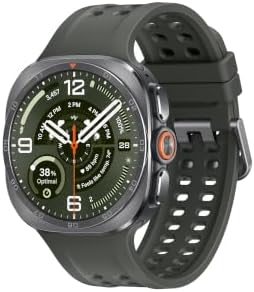
Samsung Galaxy Watch Ultra2, Titanium Silver, 47mm LTE Smartwatch
Identical hardware to the gray version, in a brighter finish that pairs with more straps
Same 47mm footprint, and the same ecosystem question if you carry an iPhone
Prices and availability were captured from Amazon Creators API and may change.
How I judge a smartwatch
Every watch I put on gets the same four questions, and not one of them is about screen brightness.
Does the GPS match a known course? For a runner, this is the whole game. A watch that cuts the corner on a switchback or drifts through tree cover is a watch that lies to you, and the lie compounds over a marathon block. I compare the recorded trace against a certified course, not against the watch's own summary screen.
Does the wrist heart rate match a chest strap? Wrist HR is convenient, and it lags. That lag is survivable on an easy run and useless during intervals, when your heart rate is moving fast in both directions. If a watch cannot stay close to a chest strap on a set of 800s, its training load number is decoration.
Does the battery survive real use? Every brand quotes battery life at light use, with notifications off and the screen dim. Nobody trains at light use. I care about days per charge with GPS running and notifications arriving.
Does the software stay out of the way? The software is the watch. A great sensor with buggy firmware is a great sensor you cannot trust, and a single bad update can turn a reliable training partner into a mystery box.
Sensors first, software second, screen third, price tag last. That is the order.
Amazfit Bip 6: the value pick with real GPS
The Amazfit Bip 6 reads like a runner's checklist on paper. A 1.97-inch AMOLED display is big enough to read mid-run without breaking stride, and AMOLED means it stays legible in direct Colorado sun instead of washing out to gray. GPS is built in, which is the line that separates a training tool from a notification machine. And it works with both iOS and Android, which matters more than people admit, because phones change and watches should survive that.
The honest caveats are about build and ecosystem rather than accuracy. This is not a titanium flagship, and it does not pretend to be. The listing does not advertise cellular connectivity, so if you want to take calls from your wrist with the phone left at home, settle that question before you buy rather than after. Expect a simpler app ecosystem than Samsung's, fewer third-party apps, and a health platform that is good rather than enormous.
What you get in exchange is the thing that actually matters on a Tuesday morning: a watch that records where you went and how hard you worked, at a price that leaves room in the budget for shoes. For a first GPS watch, a second watch for the gym, or a gift for someone starting to run, this is the pick.
The budget activity tracker: what a very low price really buys
Now the other end of the market. This listing promises an HD touch screen, custom watch faces, multiple sports modes, an IP68 waterproof rating, long battery life, and a black silicone strap, and it works with both Android and iOS.
Some of that is genuinely useful. IP68 means rain, sweat, and hand washing are non-issues, which is more than a lot of cheap bands manage. Custom watch faces are the feature buyers actually use every day. Multiple sports modes give you a way to label a walk versus a ride, and a silicone strap is the correct strap for something you are going to sweat on.
Here is the problem for anyone who trains. The spec list never mentions GPS. That single omission is the dividing line in this comparison. Without a GPS radio, distance and pace come from your phone, or from motion estimation that turns arm swing into a number. Motion estimation is a guess wearing a confident expression, and it is exactly how you end up with a run that the watch says was 6.2 miles and the course says was 5.9.
The second thing to notice is "long battery life." That is a claim, not a specification. Every brand inflates it, and none of them tell you the conditions behind the number. Treat it as a promise to be tested, not a fact.
So who is this for? Someone who wants notifications on their wrist, a step count, a waterproof band they never have to think about, and a watch face they can change on a whim. That is a legitimate set of wants. It is just not a training tool, and buying it expecting training accuracy is how people end up disappointed in wearables as a category.
Samsung Galaxy Watch Ultra2: the flagship, twice over
The two Samsung listings here are the same watch. Titanium Gray, 47mm, LTE. Titanium Silver, 47mm, LTE. Identical hardware, identical sensors, identical software, two finishes.
What LTE buys you is real: leaving the phone at home and still getting calls and messages. On a greenway run with no pockets, that is both a convenience argument and a safety one, and it is the feature that separates this watch from everything else in this comparison.
The titanium case is the other headline. Titanium is light for its strength, and it shrugs off the kind of contact that dents softer finishes. The trade-off is the 47mm size. That is a large watch on a large wrist and a billboard on a small one, so try to see one in person or measure your wrist before committing to a two-year relationship with it.
My read on the ecosystem is straightforward. Samsung's Galaxy Watch line is at its best when it is paired with a Samsung Android phone, where the health and notification integrations run deepest. If you carry an iPhone, you are paying flagship money to live at the edge of the ecosystem, and that is a bad trade.
On the fitness side, my honest expectation is that this watch is good at the general picture and behind the dedicated running brands on the details. Samsung has closed the gap over the years, but if you are doing structured intervals, I would want to see GPS traces compared against a certified course and wrist HR compared against a chest strap before I trusted a pace zone on a hard session. That is a verification step, not a verdict, and it is the same standard I apply to every watch.
Who is it for? The person who wants one watch to do everything: calls without a phone, apps, notifications, a premium case, and training data that is good enough. If that is your list, the Ultra2 delivers it.
Titanium Gray versus Titanium Silver
Because these two listings are the same watch, the decision comes down to finish, and finish is a real decision even though it changes nothing the watch records.
Gray titanium reads darker and more technical, and in my experience darker finishes hide the small scuffs that accumulate on a watch you wear daily. Silver titanium looks brighter, shows more of the surface, and tends to pair with a wider range of band colors, especially lighter ones. Neither is more durable in any way I would defend with a number, because the case material and the sensor package are the same.
So ask yourself two questions. Which finish do you want to look at forty times a day, and which one do you mind scratching? If you swap bands often, the silver gives you more room to play. If you want the watch to look new for longer, the gray is the safer call. That is the entire difference between the two listings.
The trade-offs that actually matter
Strip away the marketing and four real trade-offs decide this comparison.
GPS or no GPS. This is the biggest fork in the road. Two of these watches can record a route by satellite; the budget tracker cannot, and no amount of sports modes fixes that. If you run, ride, hike, or walk routes you care about, this decides it.
Cellular or tethered. LTE on the Galaxy Watch Ultra2 means the phone stays home. The Amazfit Bip 6 keeps you tethered, and for a lot of runners that is completely fine, since the phone is in a belt or a pocket anyway.
Ecosystem fit. Samsung's watch rewards Samsung phone owners. The Bip 6 is platform-agnostic. The budget tracker claims both platforms and delivers the shallowest integration on either. Your phone should drive this choice more than the watch spec sheet does.
Build versus budget. Titanium and a premium case cost money. AMOLED and GPS at a modest price cost you polish. A very cheap tracker costs you the sensor you actually wanted. There is no free lunch in any of these three directions.
Which one should you buy?
Buy the Amazfit Bip 6 if you train. It has the GPS radio, the display size, and the cross-platform support that make it useful on day one, and it leaves money in the budget for everything else running costs.
Buy the budget activity tracker if you want a wrist notification center and nothing more. It is water resistant, it is customizable, and it will count your steps. Just do not ask it for a pace.
Buy the Galaxy Watch Ultra2 if you want one watch for everything and you carry an Android phone, ideally a Samsung one. Pick the gray if you want the finish to age quietly, the silver if you want it to stand out. Then verify the GPS and heart rate against your own known standards during the return window, because that is the only test that counts.
What I would verify before you click buy
Specs are the start of a purchase decision, not the end of one. Whatever you choose here, put it through three checks in the first two weeks. Record a route you know the exact distance of and compare the trace. Wear a chest strap for one hard session and compare the heart rate graph. And run the battery down with GPS and notifications on, at real use, before you decide whether the claimed battery life is true.
A watch earns trust the same way a training plan does. Slowly, and by being right when it matters.