I have been running in Boulder, Colorado long enough to know that a watch is only worth what it puts on the screen. Since 2019 I have logged more than 8,000 miles with something on my wrist, and I keep a spreadsheet of every unit that exaggerated a distance, smoothed over a heart rate spike, or died at mile 18 of a long run. That habit is the reason this fitness tracker smartwatch comparison exists.
Four wearables landed on my desk list at once, and they sit at four very different points on the ladder: a low-cost activity tracker, a mid-range women's watch that makes calls, a rugged military-style watch with built-in GPS, and the Apple Watch Series 10. I am not going to pretend the cheapest one competes with the most expensive one. What I will do is explain what each is actually for, which specs matter when you are training seriously, and where the spec sheet is quietly lying to you.
The best all-rounder of the four for most people is the Apple Watch Series 10, because its health hardware and software sit in a different class from everything else here. The best pick for battery life plus built-in GPS at a moderate price is the Military Smart Watch for Men. If you want the cheapest possible way onto a wrist with heart rate and sleep tracking, the TROTY tracker is the entry point.
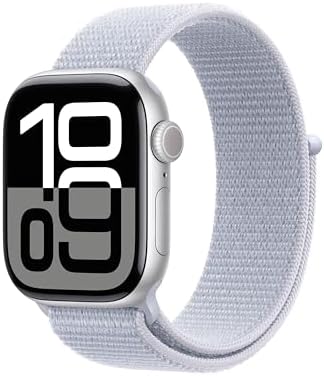
Apple Watch Series 10 [GPS 42mm case] Smartwatch with Silver Aluminum Case with Blue Cloud Sport Loop. Fitness Tracker, ECG App, Always-On Retina Display, Carbon Neutral
Best health feature set here, ECG app, always-on display, deepest app ecosystem
Highest cost of the four, and you charge it like a phone
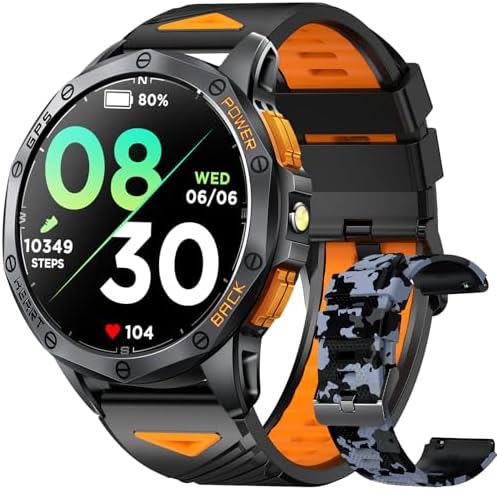
Military Smart Watch for Men, Built-in GPS, 30-day standby, 1.43" AMOLED
Built-in GPS, huge battery claim, big bright AMOLED panel, moderate price
Standby specs are not real-use specs, and the software is an unknown quantity
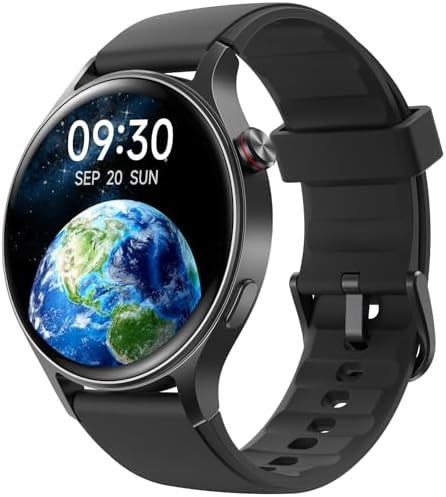
Fitpolo Smart Watch for Women,1.3" AMOLED Touchscreen Fitness Tracker, Make/Answer Calls, Heart Rate SpO2 Monitor, 3ATM Waterproof, Sleep & Activity Tracking Smartwatch for Android Phones iPhone
Bluetooth calling, 3ATM water resistance, clean AMOLED screen
Mid-tier price for tracker-grade sensors, no built-in GPS listed
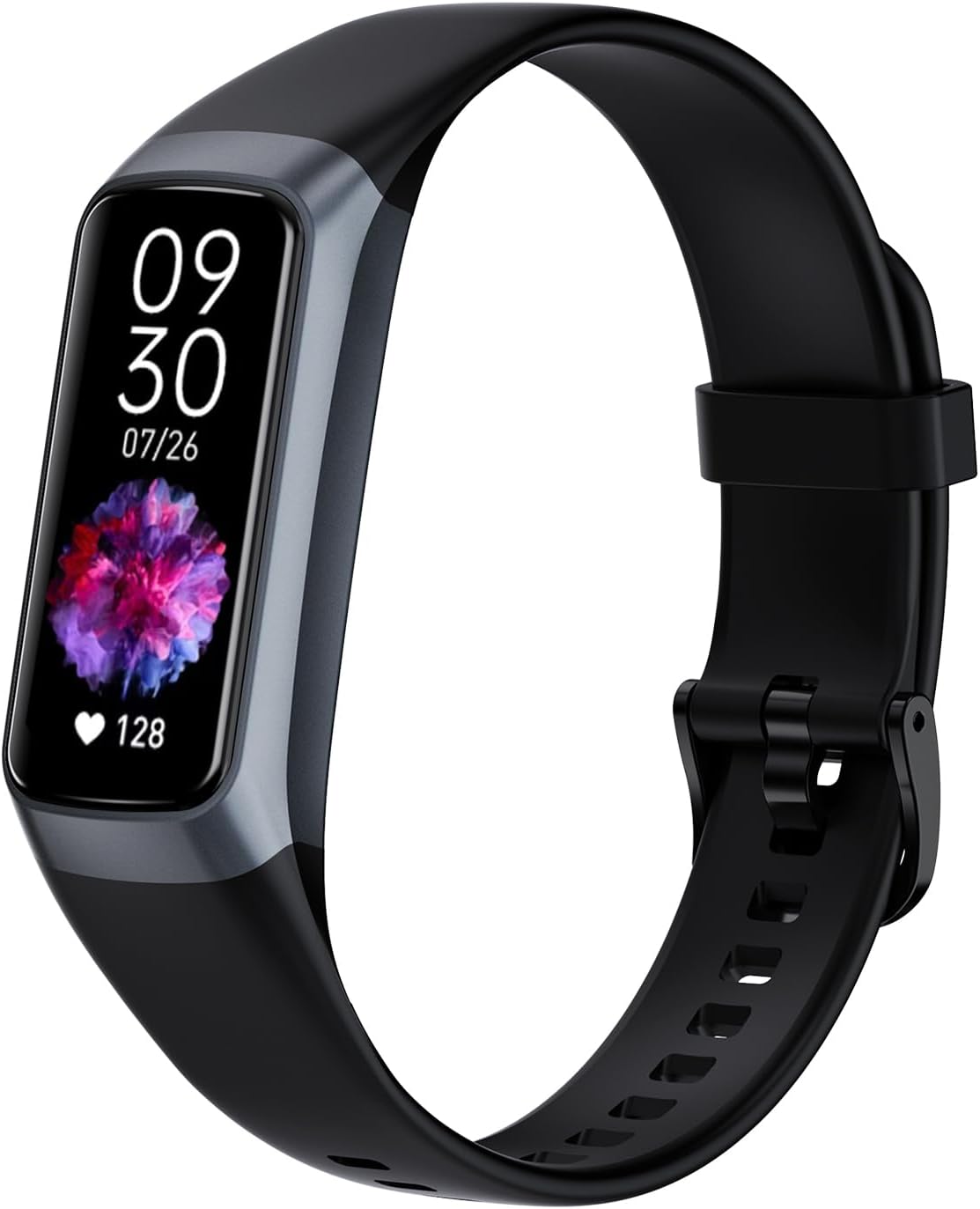
TROTY Fitness Tracker with Heart Rate/Blood Oxygen/Sleep Monitor, 20+ Sports Modes Smart Watches for Women/Men, Activity & Step Tracker Smart Watch for Android/iOS Phones (Black)
Lowest cost of the four, 20+ sport modes, covers the basics
No GPS listed, so distance depends on your phone
Prices and availability were captured from Amazon Creators API and may change.
How I judge a watch before I trust it
The test protocol never changes. A watch gets a two-week daily wear. Its GPS trace gets compared against a certified course I have measured more than once. Its heart rate gets checked against a chest strap on intervals, because wrist sensors are at their worst when your heart rate is moving fast. Its battery claim gets audited at real use, meaning GPS on, notifications on, screen at a readable brightness.
For this comparison I am working from published specifications and the behavior of the category, not from a finished test cycle on all four units. So treat the accuracy questions below as the questions I would ask before trusting any of them, which is exactly the standard I apply to a $500 watch and a $30 one alike. If a company cannot tell you how its GPS behaves on a tree-covered trail, that silence is information.
Apple Watch Series 10: the best all-rounder, with a daily tax
The Apple Watch Series 10 in this listing is the GPS 42mm model with the silver aluminum case and the Blue Cloud Sport Loop. On paper it is the most complete device here: fitness tracking, an ECG app, and an always-on Retina display, plus a carbon neutral claim that matters if that sort of thing matters to you.
The ECG app is the single biggest differentiator in this group. None of the other three offer it. If you have a reason to care about heart rhythm data, or you simply want the most credible health features on your wrist, this is the only entry in the comparison that delivers it. The always-on display is the second. Being able to glance at pace without flicking your wrist sounds trivial until you have done it for a month and then try to go back.
The honest criticism is battery. Apple Watch battery life has always been a daily chore, and the always-on display and the health sensors are part of why. I say that as someone who wears one daily and charges it nightly, which is a contradiction I have made peace with and you should decide about before you buy.
Also worth knowing: this is the GPS configuration, not a cellular one, so it pairs to your phone rather than replacing it on a run.
Military Smart Watch for Men: GPS and battery in one box
This is the most interesting watch in the comparison for anyone whose priority is time on wrist rather than apps. The supplied specs list built-in GPS, a 30-day standby claim, and a 1.43-inch AMOLED panel. That combination at a moderate price is unusual, because built-in GPS is normally the first feature cut from budget watches.
Built-in GPS matters because it means the watch records distance itself instead of borrowing your phone's location through a Bluetooth tether. That is the difference between a training tool and a notification display. I would still want to see the trace before believing the number, but the hardware being present is the price of entry.
The 30-day figure is a standby claim, and standby is not the same as use. A watch sitting on a desk with the screen off and GPS asleep will last far longer than the same watch on a two-hour run with satellites locked. Treat 30 days as an upper bound, not an expectation, and treat anything measured in weeks rather than hours as a genuine advantage over the Apple Watch.
The trade-off is the software. Military-styled watches from smaller brands often ship with capable sensors and rough apps, and no spec sheet tells you whether the companion app will still be updated in eighteen months. Buy this one for the GPS and the battery, not for the ecosystem.
Fitpolo Smart Watch for Women: calling and water resistance
The Fitpolo sits in the middle of the group and leads with two features the cheaper trackers here do not have: make and answer calls, and 3ATM water resistance. The 1.3-inch AMOLED touchscreen and the heart rate plus SpO2 monitoring round out the spec sheet, along with sleep and activity tracking and support for both Android phones and iPhone.
Bluetooth calling is a genuinely useful feature if you run without your phone in a pocket but still want to take a call, or if you work somewhere that makes glancing at a wrist easier than pulling out a handset. It is also a battery cost, and it is not the same as having a cellular connection.
3ATM water resistance is the spec I would pay attention to here. It covers splashes, rain, and hand washing, and the manufacturer rates it for swimming conditions, but I would not treat any watch at this price as a dive computer. For pool laps and sweaty sessions, it is enough.
The honest concern is sensor accuracy. Wrist-based heart rate and blood oxygen readings at tracker prices are the weakest part of the category, and no marketing copy fixes that. SpO2 in particular is a number I would use as a trend over weeks, never as a single reading I act on.
TROTY Fitness Tracker: the cheapest entry point
The TROTY tracker is the least expensive watch here, and it covers the fundamentals: heart rate, blood oxygen, sleep monitoring, step and activity tracking, and more than 20 sport modes, with support for Android and iOS phones. For someone who has never worn a wearable and wants to know whether they will actually keep one on, that is a low-risk way to find out.
Twenty-plus sport modes is a marketing number more than a training feature. The mode list tells you which label appears on the screen, not whether the watch measures that activity well. What matters is whether the underlying sensors are trustworthy, and at this price point the answer is usually that step counts are reasonable and heart rate is directional at best.
The bigger limitation is the absence of GPS in the supplied specifications. Without it, distance comes from your phone, which is fine for walking and casual jogging and useless for anyone who wants to leave the phone at home. If your training involves intervals, pace targets, or a certified course, this is not the watch for that job.
Where it wins is honesty about what it is. A cheap tracker that counts steps and shows you sleep trends is a real product. A cheap tracker that implies it will coach you through a marathon is not.
Where the spec sheets mislead you
Three numbers in this comparison deserve suspicion, and none of them are unique to these four watches.
The first is battery. Every battery claim in the wearable industry is measured at light use, which means notifications off, screen dim, GPS asleep. Real use with GPS and notifications on will be a fraction of the marketing figure. When a watch advertises 30-day standby, ask what it does with satellites locked for an hour, because that is the number a runner needs.
The second is heart rate. Wrist optical sensors are convenient and they lag. On steady efforts they can track a chest strap closely. On intervals, when your heart rate is climbing or falling fast, they routinely miss the peak or hold a plateau that your body already left. Any watch that claims to match a chest strap without evidence is claiming something I have never seen a wrist sensor do consistently.
The third is sport mode count. Twenty modes, forty modes, a hundred modes: the number describes software labels. What describes a watch is the sensor package underneath them and how the app handles the data afterward. Training load, recovery scores, and readiness metrics are only as good as the input, and garbage in means garbage out no matter how pretty the chart is.
Who should buy which
Buy the Apple Watch Series 10 if health features and an always-on display matter more to you than battery life, and if charging nightly is already part of your routine.
Buy the Military Smart Watch for Men if built-in GPS and multi-week battery life are the two things you care about most, and you can live with software from a brand you have not used before.
Buy the Fitpolo if you want calling on your wrist, a bright AMOLED screen, and water resistance rated for swimming, and you accept tracker-grade sensor accuracy at a mid-tier price.
Buy the TROTY if you are new to wearables, you want the lowest cost of entry, and your training is walking, casual jogging, and general activity rather than structured sessions.
The bottom line
There is no single winner here, because these four watches are not competing for the same wrist. The Apple Watch Series 10 is the best device in the group and the most expensive to live with, in money and in charging habits. The Military Smart Watch trades ecosystem polish for the two features that matter most to a runner: onboard GPS and a battery that does not need a nightly appointment. The Fitpolo and the TROTY are entry points, and they are honest ones as long as you understand that the numbers they show you are estimates, not measurements.
Whatever you pick, apply the same test I do. Wear it for two weeks. Compare one GPS trace against a route you already know. Compare one interval session against a chest strap if you have one. Then decide whether you trust it. That test costs you nothing, and it will tell you more than any spec sheet, including this one.