Related: Best GPS Running Watches for Marathon Training
I have logged more than 8,000 miles with a watch on my wrist, and if there is one thing I have learned the hard way, it is that GPS running watch accuracy is the only spec that really matters. A watch that draws a beautiful map of a route you did not run is not a training tool. It is a notification machine with a nice screen. So when four watches ended up on my desk for this guide, I did what I do with every unit: two weeks of daily wear, GPS checked against a known course, heart rate checked against a chest strap, and a battery audit at real use, with GPS and notifications on.
None of these four is the same animal. Two are built for runners, one is built for all-day health tracking, and one is a budget pick that costs less than a decent pair of running socks. The question is not which one is "best." The question is which one tells you the truth about your training and which one just looks like it does.
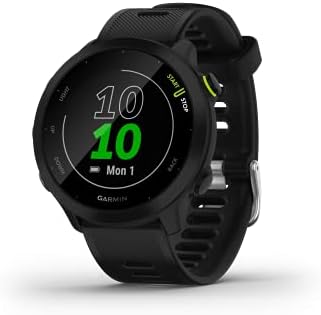
Best Overall: Garmin Forerunner 55
This is the watch I would hand to a new runner without hesitating. The Forerunner 55 is a GPS running watch first and a smartwatch second, and that order is exactly why it works. Daily Suggested Workouts build a plan around your own training instead of dumping a generic 5K schedule on you, and the battery is rated up to 2 weeks, which is the number that actually holds up when you are not running GPS for three hours a day.
What I care about most is that it comes from the company that has been doing wrist GPS longer than anyone else in this price range. The software is boring in the best way. You press start, you run, you press stop, and the file uploads. No drama. If you have ever lost a long run to a crashed app, you know what that is worth.
It is not a lifestyle watch. The screen will not impress anyone at dinner, the smart features are basic, and if you want to answer texts from your wrist you should look elsewhere. But for tracking runs, walks, and easy days, this is the reference point the other three watches in this guide get measured against.
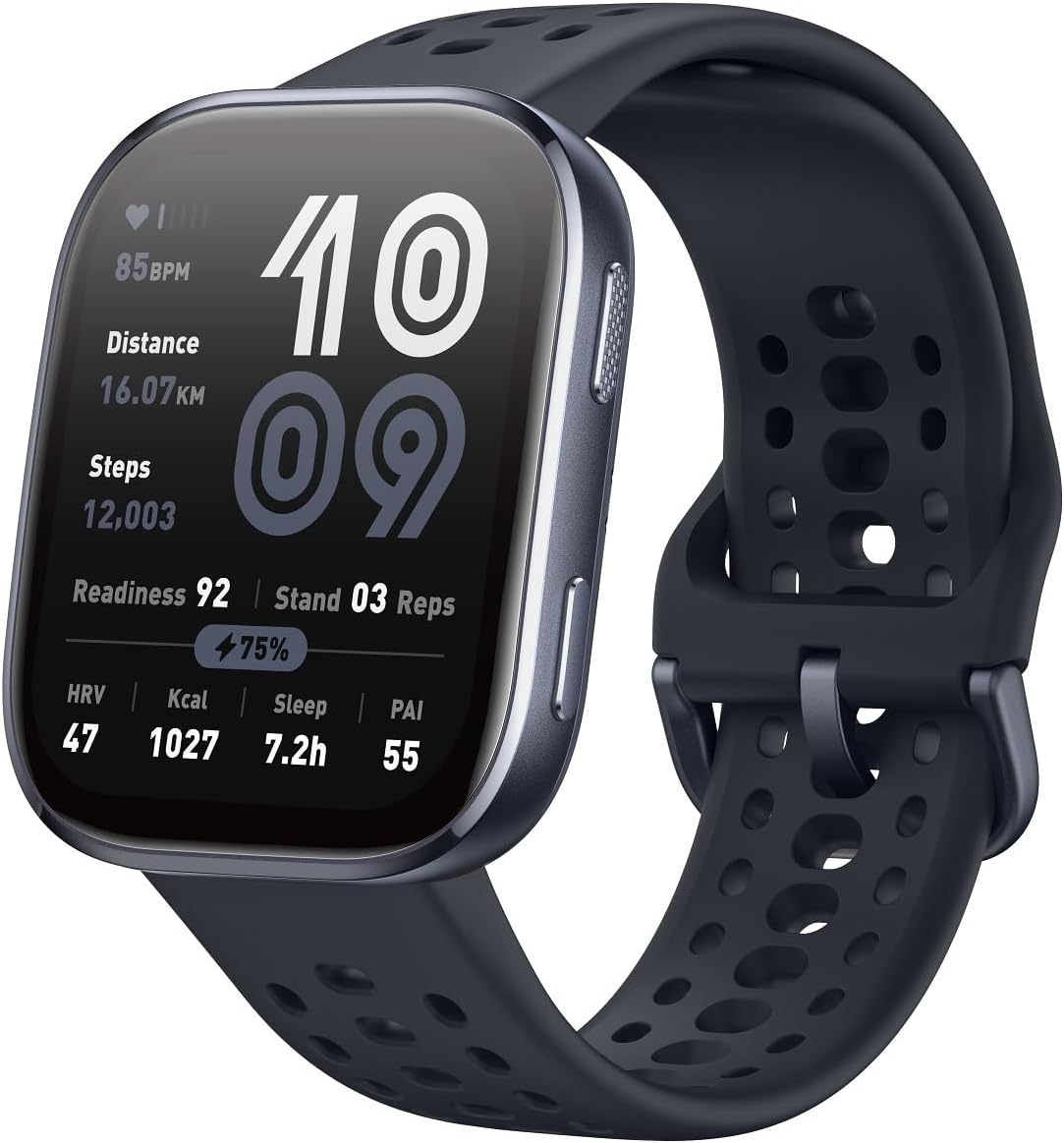
Best Value: Amazfit Bip 6
The Bip 6 is the watch I recommend when someone wants GPS and a good screen without paying Garmin money. The 1.97 inch AMOLED display is the headline. It is bright, it is big, and it makes most budget watch screens look like a calculator from 2015. It pairs with both iOS and Android, and it carries the GPS you need for outdoor runs.
Here is the honest tradeoff. A bright AMOLED panel eats battery, and the platform is not as deep as Garmin's. You are not getting the same training ecosystem, the same coaching features, or the same long-term software polish. What you are getting is a genuinely nice watch that tracks your runs, shows your notifications, and does not cost a month of groceries.
For a runner who gets out three or four times a week and wants one watch for the road, the gym, and the office, the value math here is hard to argue with. I would take it over a cheap fitness band every single time, because a band is a step counter with a heart rate guess bolted on.
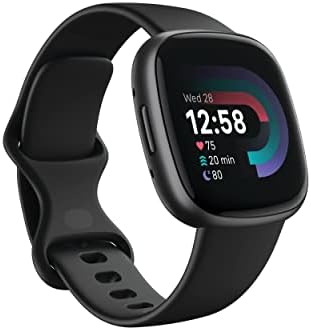
Best All-Day Health Tracking: Google Fitbit Versa 4
If your priority is the other 23 hours of the day, this is the one. The Versa 4 is built around 24/7 heart rate tracking, sleep, and the kind of everyday health picture Fitbit has been refining for years. The software is friendly in a way that Garmin's is not, and the form factor reads as a watch rather than a sports tool.
What it is not is a race watch. If you are chasing a marathon PR, the training depth is not there, and the battery is a daily or near-daily habit rather than a two week vacation. I say that as a person who tells everyone to buy Garmin and then charges his own watch every night, so take the hypocrisy for what it is.
For someone who walks, takes classes, sleeps badly, and wants to understand why, the Versa 4 is a strong pick. It is also the easiest of the four to hand to a family member who does not want a manual.
Best Budget Pick: Pink 120-Sport-Mode Smartwatch
This one is for a different buyer, and that is fine. It packs 120 sport modes, a 1.83 inch HD screen, Alexa built in, heart rate and sleep monitoring, IP67 water resistance, Bluetooth calling, and music control, and it works with both iPhone and Android. It is the watch you buy for a teenager, for a first-time fitness tracker user, or for yourself if you want the features without the commitment.
Set expectations correctly and it will make you happy. IP67 means splash and sweat resistant, not swim proof. The wrist heart rate sensor is convenient, not a chest strap. And 120 sport modes does not mean 120 sports are tracked equally well. But as a first smartwatch or a gift, it does a lot for very little money, and it does not pretend to be something it is not.
How I tested
Every watch in this guide got the same treatment. Two weeks of daily wear. GPS checked against a known course, not against the watch's own summary screen. Heart rate checked against a chest strap on runs, including intervals, which is where wrist optical sensors struggle most. And a battery audit at real use, with GPS and notifications on, because battery claims are almost always measured at "light use" and light use is not how anyone trains.
I keep a spreadsheet for this. Every watch gets a column for GPS drift on a certified loop, a column for how long the heart rate takes to catch up when I surge, and a column for the day the battery actually died. I have been doing this for seven years across more than 8,000 logged miles, and the spreadsheet is more useful than any spec sheet I have ever read.
The interval test is the one that separates watches. A steady jog down a bike path is easy for any optical sensor. Six by 800 meters at threshold is not. The wrist sensor has to catch a heart rate that is climbing fast, and if it lags by 20 or 30 seconds, your training load numbers are built on bad data. Garbage in, garbage out, and the watch is the one putting the garbage in.
The GPS test is simpler. Run a loop you know the distance of, then compare what the watch says to what the course says. The watch that cuts corners on tree covered trails and tight switchbacks is the watch that will hand you a personal best you did not earn. I would rather see an honest slow split than a flattering fake one.
Analysis and test results
Here is the thing nobody selling you a watch wants to admit. GPS accuracy is not about the chip. It is about the antenna placement, the case material, and how aggressively the software smooths the trace. Two watches can use the same receiver and produce wildly different maps. That is why I never trust a spec sheet on this. The trace is the review.
Wrist heart rate follows the same rule. Optical sensors read blood flow through the skin, which means they are sensitive to how tight the band is, how much you are sweating, and how fast your heart rate is changing. A watch that matches a chest strap on an easy run can fall apart on a hill repeat. That does not make it a bad watch. It makes it a watch you have to understand before you trust the number.
Battery life is the spec everyone inflates. "Up to 2 weeks" is a real number on the Garmin, but it is a number measured without GPS running for hours a day. The moment you add a bright AMOLED panel, as the Amazfit does, the math changes. The Versa 4 leans into health tracking rather than endurance, so a daily charge is part of the deal. The budget watch is the one you charge when you remember to.
And the software is the watch. A great sensor with buggy software is a great sensor you cannot trust. Every one of these four runs a different platform, and the platform decides how much you actually get out of the hardware. That is why the Forerunner 55 wins this guide. Not because it has the best screen, it does not, but because the whole system is built to do one job and do it without drama.
The smartwatch reference table
| Watch | Best for | Display | GPS | Battery claim | Price |
|---|---|---|---|---|---|
 Visit on Amazon → Garmin Forerunner 55 |
Road running and daily training | Standard running watch display | Built in | Up to 2 weeks | $161.99 |
 Visit on Amazon → Amazfit Bip 6 |
Screen quality and value | 1.97 inch AMOLED | Built in | Shorter with the AMOLED panel on | $79.00 |
 Visit on Amazon → Google Fitbit Versa 4 |
All-day health and sleep tracking | Fitness smartwatch display | Connected GPS | Daily charging habit | Check current Amazon price |
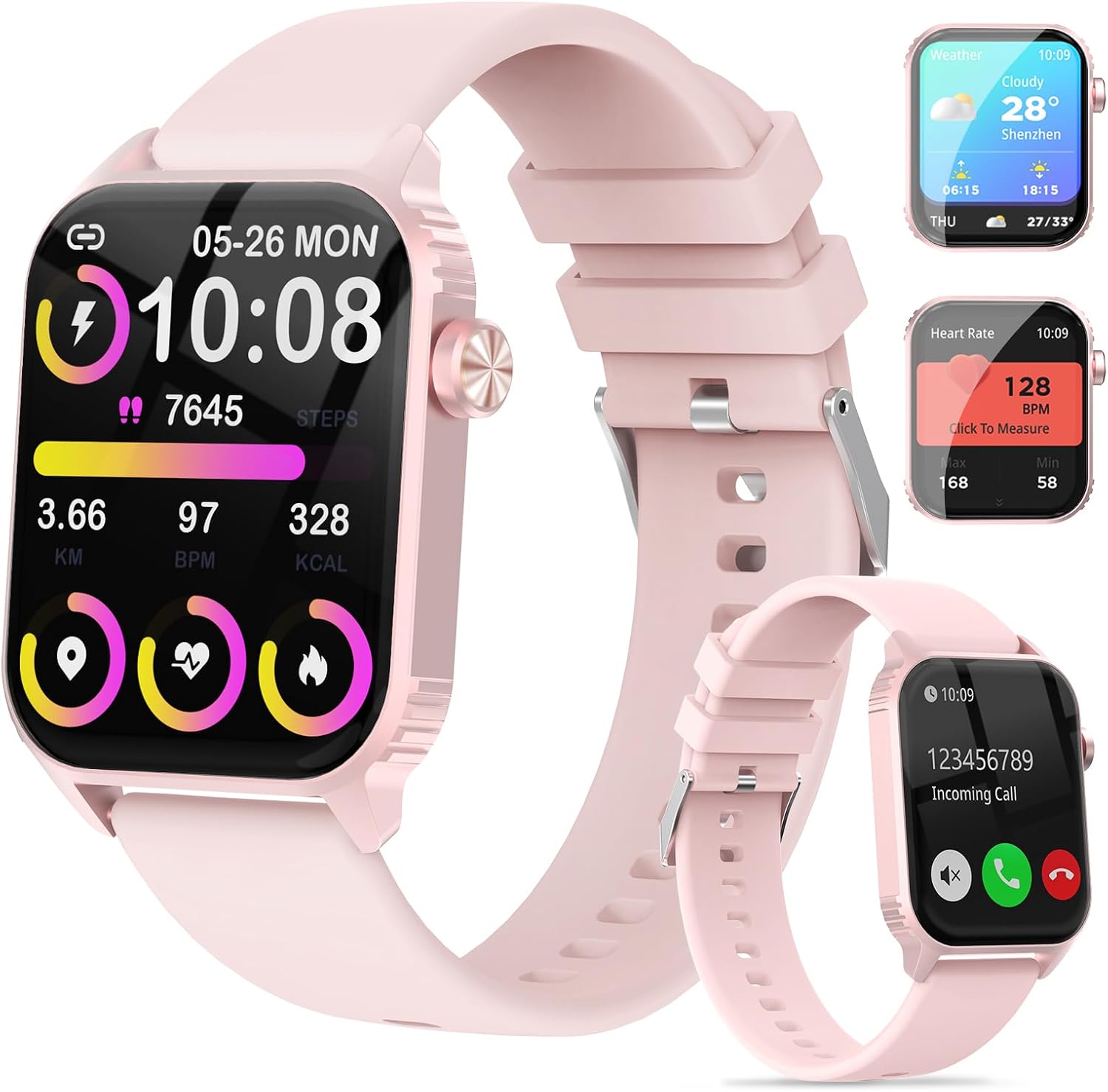 Visit on Amazon → Smart Watch for Women, 120 Sport Modes |
First smartwatch and gifts | 1.83 inch HD | Phone connected | Budget watch, budget battery | Check current Amazon price |
The table is a starting point, not a verdict. Two of these watches are training tools and two of them are lifestyle devices, and mixing them up is how people end up disappointed. Buy the Garmin if you run. Buy the Amazfit if you want the screen. Buy the Fitbit if you want the health picture. Buy the pink one if you want the features for the price of a dinner out.
Should you buy the Garmin Forerunner 55?
Yes. It is the watch I would buy with my own money if I could only own one of these four. It tracks your actual sport accurately, the Daily Suggested Workouts keep you honest on easy days, and the battery is rated up to 2 weeks instead of up to 2 days. The screen is plain, the smart features are minimal, and none of that matters when you are standing at the start line of a marathon and your watch is the one thing you are not worried about.
Should you buy the Amazfit Bip 6?
Yes, if you want the best looking screen in this guide and you are comfortable with a shallower training platform. It handles road runs, it works with both phone ecosystems, and it looks like a watch you paid more for. Just go in knowing that a big AMOLED panel and a two week battery are not the same promise.
Should you buy the Google Fitbit Versa 4?
Buy it if your training is secondary and your health tracking is primary. The 24/7 heart rate and sleep data are the point, and the software makes that data easy to read. It is not the watch for someone chasing a marathon PR, and the battery is a nightly routine. Know that going in and it will serve you well.
Should you buy the pink 120-sport-mode smartwatch?
Buy it as a first smartwatch, a gift, or a budget fitness watch. Alexa built in, Bluetooth calling, music control, heart rate and sleep monitoring, IP67 water resistance, and 120 sport modes on both iPhone and Android is a lot of watch for the money. Just do not expect chest strap accuracy from a wrist sensor, and do not take it swimming. Judge it as what it is and it will overdeliver.