Related: Wrist Heart Rate vs a Chest Strap: Why the Gap Matters
I have worn a watch on every run, ride, and race since 2019. That is more than 8,000 logged miles and a lot of bad data. Somewhere along the way I stopped caring about watch faces and started caring about one question: are the numbers true? Budget smartwatches for fitness have crossed a real line in the last few years. The question is no longer whether a cheap watch can count your steps, because it can. The question is whether anything it tells you is worth acting on.
The four watches in this guide are not interchangeable. One is the most complete package of the group, one is built around a battery claim and a flashlight, one is a two-band calling watch aimed at smaller wrists, and one is the known-name fitness band that has been sitting on wrists for years. I will tell you what each one is actually for, and where the spec sheet is doing the selling instead of the hardware.
Everything here comes down to four questions I ask before I trust any watch: does the GPS match a known course, does the heart rate match a chest strap, does the battery survive real use with tracking and notifications on, and would I wear it for a marathon. The first three are hardware questions. The fourth is a software question, and it is the one that sinks most cheap watches.
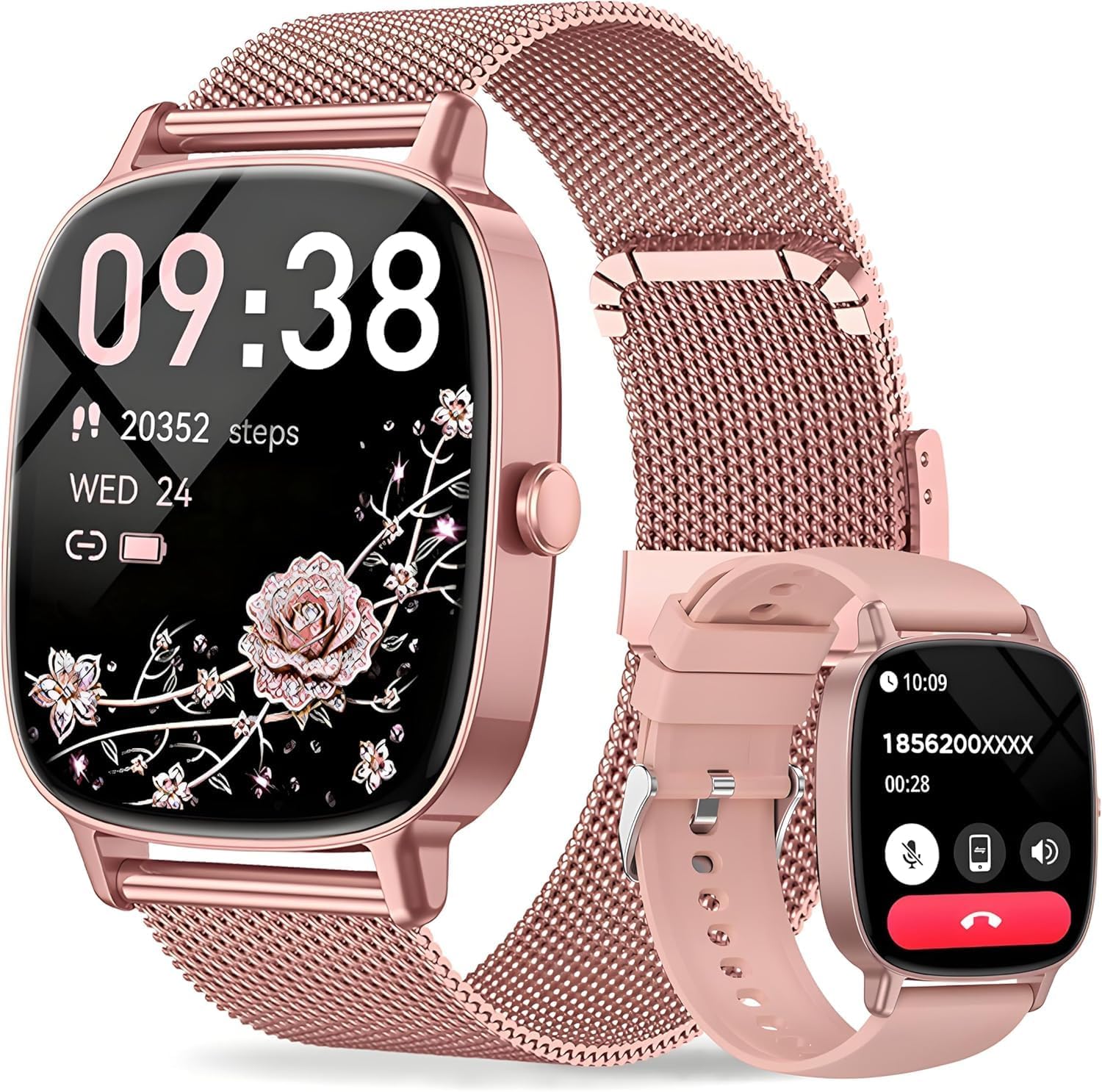
Best Overall: The 1.85-Inch Fitness Smartwatch
This is the one I would hand to most people first. The spec sheet covers the ground that actually matters: heart rate, sleep, and SpO2 monitoring, more than 120 sport modes, an IP68 water rating, and a 1.85-inch ultra-clear screen. It answers calls over Bluetooth and pairs with iPhone, Samsung, and Android phones, which matters more than it should, because a lot of cheap watches quietly drop features depending on which phone you carry.
Two bands in the box is a small detail that turns into a big one. A band sized for a 6-inch wrist will not fit an 8-inch wrist, and most budget watches make you buy the second band separately. Getting both means you can run in one and wear the other to work without paying again.
The SpO2 sensor is the feature I would treat with the most caution. Wrist blood oxygen is the least reliable number a watch can hand you, and no budget watch is a medical device. Heart rate is the sensor to care about. What I like here is that nothing on the sheet is pretending to be something it is not. It is a fitness tracker with calling and a good screen, and it is built for that job.
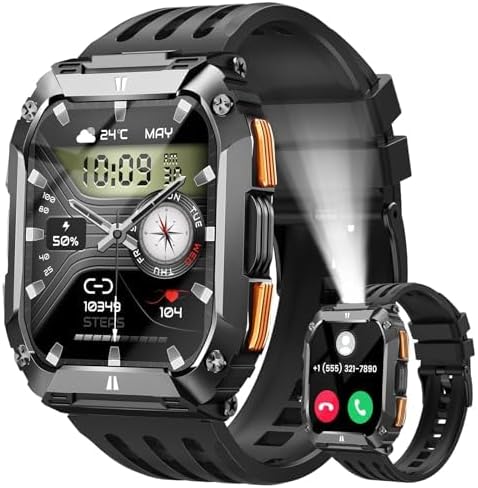
Best Battery Claim: FOSMET 1.95-Inch Smart Watch for Men
FOSMET's pitch is a flashlight and a 100-day battery life claim. Read that claim the way you read every battery claim on a watch: the number describes the best case, not your case. A watch with the screen off, notifications off, and no workout tracking can go a very long time. The moment you add continuous heart rate, raise-to-wake, and a daily run, the math changes. That is not a knock on FOSMET specifically. It is how the whole category writes that number, and it is the most inflated spec in wearables.
What I do like is the flashlight. It sounds like a gimmick until you are running before sunrise on a road with no shoulder, or hunting for your keys in a dark gym bag. It is a genuinely useful thing to have on your wrist, and it costs the watch nothing in terms of its main job.
The 1.95-inch display is the largest here, which makes it the easiest to read at arm's length mid-run and the hardest to fit under a jacket sleeve. If you have a larger wrist and want a big, legible screen with the longest stretch between charges in this group, this is the one to look at.
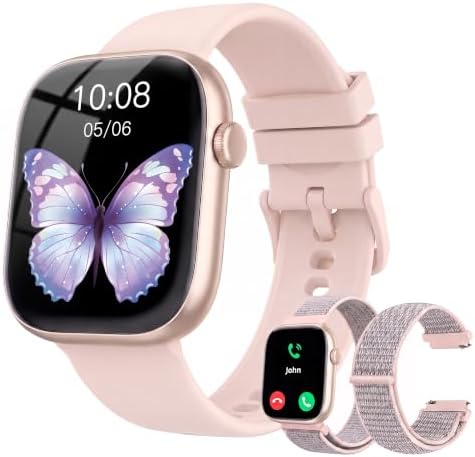
Best Two-Band Pick: 1.83-Inch Smart Watch for Women
This one is a Bluetooth calling watch with a 1.83-inch HD screen and two bands in the box. The smaller display and the calling feature point at the same buyer: someone who wants a watch that looks like a watch, takes a call when the phone is buried in a bag, and does not need a tablet strapped to their wrist.
The two-band setup matters for the same reason it matters on the 1.85-inch model. You get a training band and a going-out band without paying extra. The screen is a step down in size from the FOSMET but a step up in sharpness compared with most watches at this level, and HD resolution on a smaller panel usually looks better than a bigger panel with the same pixel count.
Where I would set expectations is the training side. Calling watches tend to put their money into the microphone, the speaker, and the display, and less into the sensor stack. If your sport is walking, hiking, or general fitness, that trade is fine. If you are chasing a marathon personal best, you want the data-first watch, not the calling watch. Buy this one for the wrist feel and the calls.
Best Known Name: Fitbit Inspire HR Fitness Tracker
The Fitbit Inspire HR is the odd one out here, and that is the point. It is a band, not a watch. It tracks heart rate and fitness, and it ships with small and large bands in the box so you can size it without a second purchase. There is no Bluetooth calling, no flashlight, and no big screen.
What you get instead is an established name in fitness tracking. Fitbit has been building activity trackers for a long time, and for plenty of buyers that history is worth more than a larger display. The band form factor is also the right answer if you wear a regular watch on your other wrist, or if you want something that disappears under a shirt cuff.
The trade is features. Everything the other three offer on paper, this one offers less of, and in exchange you get the smallest footprint and the most settled software in the group. If you want a tracker that tells you about your day rather than a screen that tells you about your notifications, this is the one.
How I judge a fitness watch
Four checks, every time, in this order.
GPS accuracy comes first. I take a watch to a known course and compare the trace to the real distance. A watch that is off by 100 meters on a 10K is a watch that is lying to you about your pace, your splits, and your training load. Everything downstream of a bad GPS trace is fiction. On trails, watch for a watch that cuts corners on switchbacks, because that is where cheap GPS falls apart first.
Heart rate comes second. Wrist optical heart rate lags behind a chest strap, and it struggles most during intervals, which is exactly when you want it to work. That is not a reason to skip wrist heart rate. It is a reason to know what you are looking at when the graph spikes for no reason at mile four.
Battery comes third, and it gets tested at real use. Not light use, not standby, not a manufacturer's best case. Real use means tracking on, notifications on, raise-to-wake on. That is the number that decides whether a watch is a daily charge or a weekly one, and it is the number almost nobody publishes.
Software comes last, and it is the one that decides whether I keep wearing a watch. A great sensor with buggy software is a great sensor you cannot trust. Firmware updates that break features you already paid for are the fastest route from wrist to drawer.
The comparison table
Here is the same group in one place. No prices, because prices on Amazon move constantly, and no star ratings, because an average tells you nothing about whether a heart rate sensor works.
| Watch | Best for | What it offers | Notes |
|---|---|---|---|
 Visit on Amazon → 1.85-inch fitness smartwatch |
Most people | Heart rate, sleep and SpO2 sensors, 120+ sport modes, IP68, Bluetooth calling, two bands | The most complete spec sheet in the group |
 Visit on Amazon → FOSMET 1.95-inch watch |
Big screen and long battery | 1.95-inch display, built-in flashlight, 100-day battery claim | The battery figure is a best-case number, not a training number |
 Visit on Amazon → 1.83-inch calling watch |
Calls and a clean look | 1.83-inch HD screen, Bluetooth calling, two bands | Smaller screen, sharper panel, calling first |
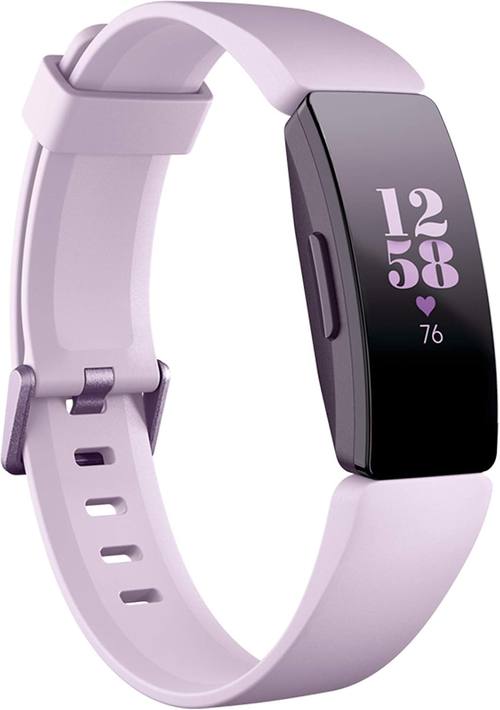 Visit on Amazon → Fitbit Inspire HR |
A tracker, not a screen | Heart rate and fitness tracking, small and large bands included | No calling, no flashlight, smallest footprint |
The pattern in that table is simple. The watches that give you the biggest screen and the loudest battery number are not the watches that give you the best sensor stack. Decide which of those two things you actually want before you add anything to a cart.
What the spec sheets leave out
None of these four watches publishes a GPS accuracy figure, and that should tell you something. GPS is expensive to do well, and a spec sheet that lists 120 sport modes while saying nothing about satellite accuracy is a spec sheet aimed at features, not at runners. If you run on roads in open sky, most watches will do fine. If you run trails, under trees, or between buildings, the trace quality is the whole review, and you will not find it in a bullet list.
Heart rate is the second gap. Every one of these watches lists a heart rate sensor. None of them tells you how it behaves during intervals, which is the only test that matters. Wrist optical sensors read changes in blood volume under the skin, and when your arm is swinging and your heart rate is moving fast, that reading gets noisy. A watch can be perfectly accurate at rest and useless at 6:00 pace.
The last gap is the software. Sleep staging, training load, recovery scores: these are the features that get marketed hardest and verified least. A recovery score built on a bad heart rate reading is a confident number built on nothing. Trust the sensors you can check against a known reference, and treat the scores as entertainment until you have a reason to believe otherwise.
Should you buy the 1.85-inch fitness smartwatch?
For most people, yes. It has the widest feature set here, it covers the sensors that matter for general fitness, it takes calls, and it comes with two bands so sizing is not an extra purchase. If you want one watch for training, work, and everything between, start here.
Should you buy the FOSMET?
Yes, if you want the biggest screen and the longest time between charges, and you understand that the 100-day figure is a standby-style number. The flashlight is the sleeper feature. Just do not buy it expecting marathon-grade GPS data, because nothing on the sheet promises that.
Should you buy the 1.83-inch calling watch?
Yes, if calls and wrist feel come before training data. It is the better-looking option of the two calling watches here, and the smaller HD screen is easier to live with day to day. If your workouts are walks, hikes, and gym sessions, you will never miss what it does not have.
Should you buy the Fitbit Inspire HR?
Yes, if you want a band rather than a watch, and you would rather have an established tracking name than a bigger display. It is the least feature-dense option here and the easiest one to forget you are wearing, which for a lot of people is exactly the point.