Related: Best Fitness Tracker for Steps and Sleep: Honest Picks
I have worn a watch on every run, ride, and race since 2019, and the thing I trust least in this hobby is a spec sheet. Wrist heart rate is convenient, but it lags a chest strap during intervals. Battery life is quoted at light use, which is not how anyone I know uses a watch. And GPS accuracy is the whole game, because a watch that cuts a corner on a trail loop is a watch that is lying to you about your pace.
So this budget smartwatch and fitness tracker guide is built the way I look at every wearable: does it track your actual activity accurately, and does it do that at a price that makes sense? Four devices, four different jobs, from a full GPS smartwatch down to a fifteen dollar band.
Here is how I separate the ones that track from the ones that just count.
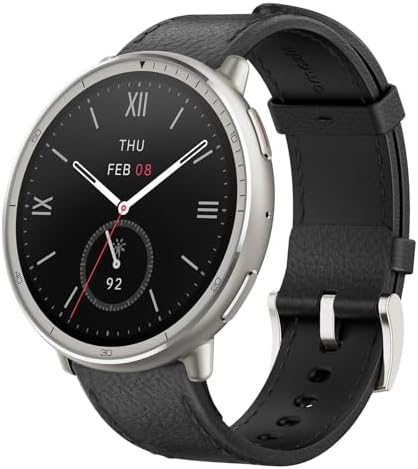
Best Overall: Amazfit Active 2 Premium Smart Watch
This is the pick for anyone whose workouts happen away from a phone. Built-in GPS is the headline, and it is the reason this watch sits at the top of the list rather than the bottom. When you leave your phone at home, a watch without GPS either guesses your distance or gives you nothing. A watch with GPS writes a trace you can look at afterward and compare against a course you already know.
The 1.32 inch sapphire glass display matters more than people expect. Sapphire resists the scratches that come from doorframes, gravel, and the inside of a gym bag. A scratched screen is not a cosmetic problem, it is a readability problem in bright sun, which is exactly when you need to read it.
It also lists iOS and Android support, which means you are not buying into a phone ecosystem to get your data. That is a bigger deal than it sounds. Plenty of good watches become frustrating the day you switch phones, and this one is designed not to.
What I would check before trusting it: a GPS trace against a course you know, a heart rate comparison against a chest strap on an interval session, and a battery audit at real use, meaning GPS on and notifications on. The specs look right. The trace is the review.
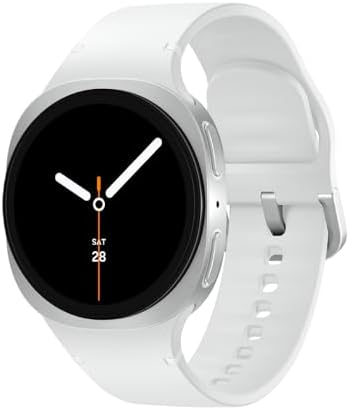
Best for Android: Samsung Galaxy Watch 8 (2025)
If you carry an Android phone and you want the watch to feel like part of the phone, this is the one. The 40mm case in silver is the size I would put on a smaller wrist, and the 2025 model is the current generation of the Galaxy Watch line, so you are buying into a platform that gets updates rather than a device that quietly stops getting them.
The honest tradeoff is that this listing is a Bluetooth watch. That means it leans on your phone for the connected features, and it is built around being a smartwatch first: notifications, apps, payments, the daily stuff. Samsung's fitness accuracy has improved, but if you are chasing a certified-course GPS trace for interval work, a dedicated GPS watch still has the edge.
That is not a knock. Most people are not running intervals on a certified course. Most people want a watch that tells them a call is coming in, tracks a walk, watches their sleep, and looks like a real watch while doing it. On Android, this is the cleanest version of that.
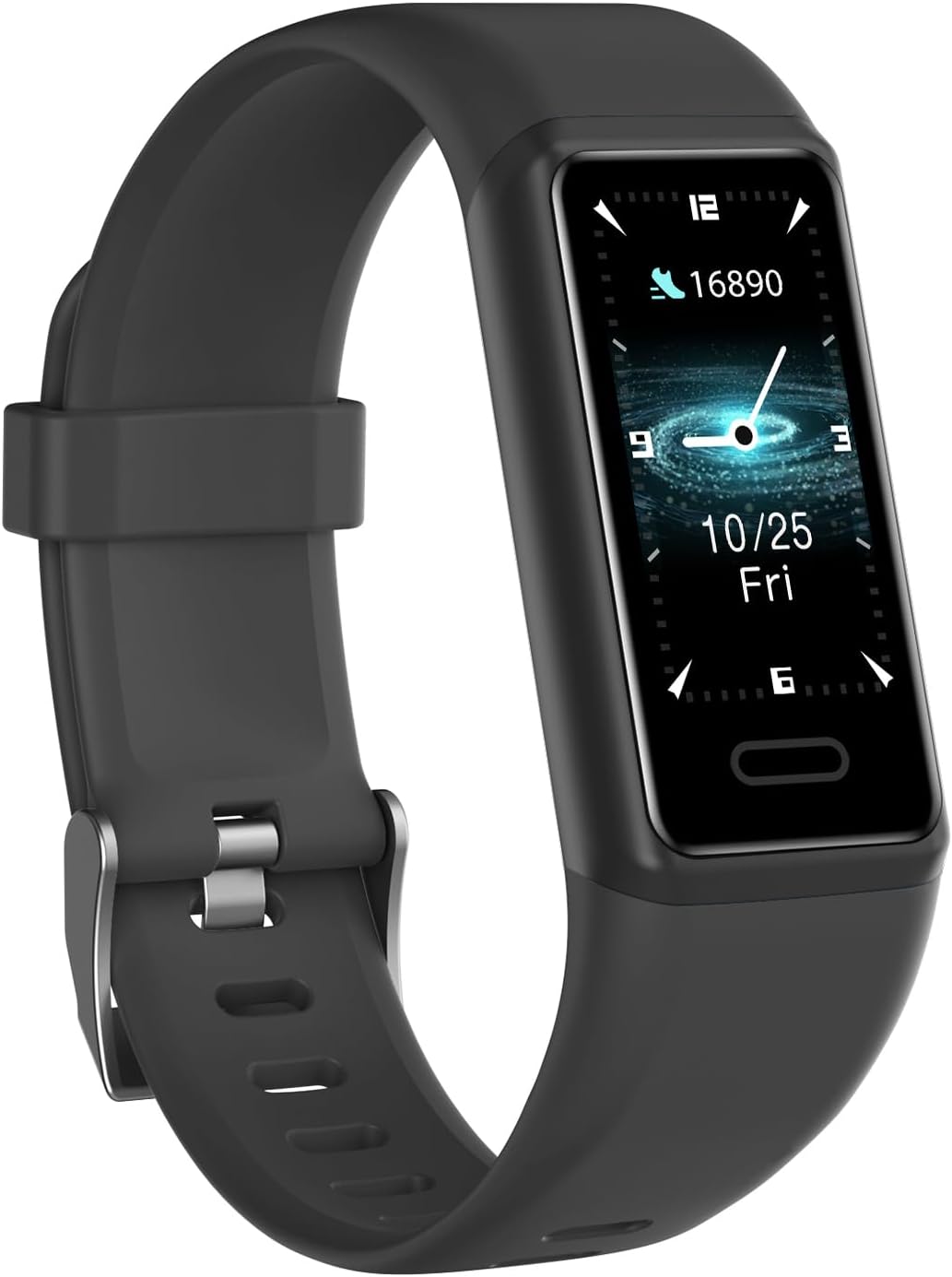
Best Budget Pick: Cloudpoem Fitness Tracker
This is the band I would hand to someone who wants to know whether they are moving enough. The feature list is the honest, useful short list: 24/7 heart rate, sleep tracking, step and calorie counting, a stopwatch, and a pedometer. The IP68 rating means sweat, rain, and hand washing are not a problem.
What it is not is a training tool. There is no GPS in this listing, so distance comes from arm movement, which is a guess. A step counter is not a pace clock. The heart rate sensor will give you a daily curve, and that curve is useful for spotting trends, but it will lag when you surge.
That is fine, because that is not the job. The job is a wearable you will actually keep wearing, with a screen you can read, that survives water, and that nudges you off the couch. The dark black band goes with anything. If you have never worn a tracker and you want to find out whether you like the habit, this is the low-risk way to find out.
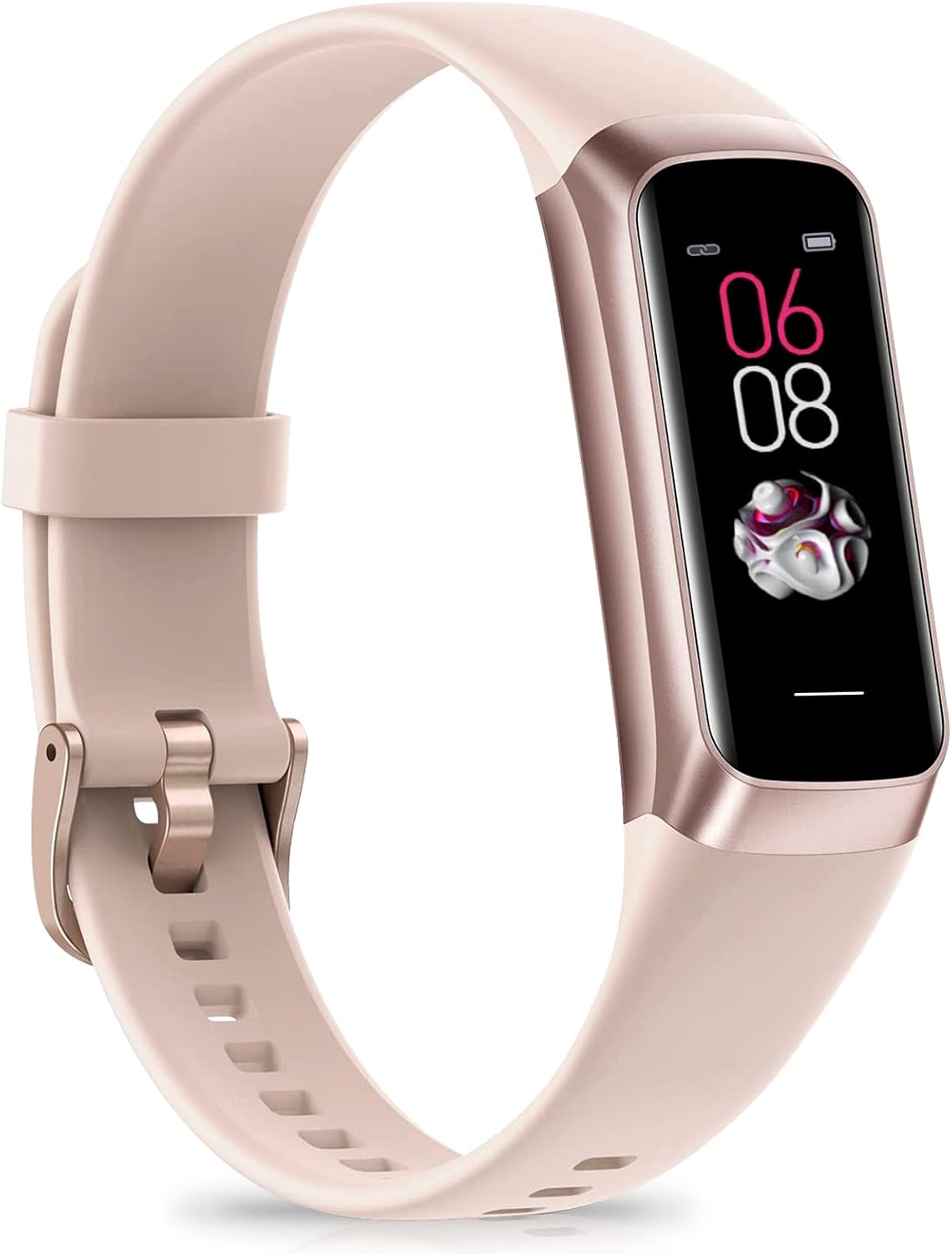
Best for the Basics: Fitness Tracker with 24/7 Heart Rate
This one leans harder into the health-tracking angle: 24/7 heart rate, sleep monitoring, a blood pressure reading, and a 1.10 inch AMOLED screen. AMOLED is the right call at this price point, because it is bright and readable outdoors where cheaper LCD screens wash out.
A word on the blood pressure feature, because it is the line item that sells this tracker and the one most likely to mislead you. A wrist device reading blood pressure through the skin is a trend indicator, not a medical measurement. Use it to see whether your numbers are drifting in one direction over weeks. Do not use it to make a decision about medication, and do not compare it to a cuff reading and assume one of them is wrong.
Where it earns its place: it is unisex, it is waterproof, and it covers the basics without asking you to learn a new ecosystem. Steps, sleep, a heart rate curve, a stopwatch. Same story as the Cloudpoem, different screen and a slightly different health focus.
How I judge a wearable
Four checks, in this order, every time.
Does the GPS match a course I know? I run a loop I have measured, and I compare the trace. Watches that cut corners on switchbacks and trail turns fail here, and they fail silently, because the numbers still look plausible.
Does the heart rate match a chest strap? Wrist heart rate is convenient and it lags, especially during intervals, when the sensor is chasing a heart rate that is changing faster than it can track. I wear both and compare the shape of the curve, not just the average. A watch that spikes randomly during a hard session is a watch I will not use for training.
Does the battery survive real use? Real use means GPS on and notifications on, not airplane mode on a shelf. The gap between a quoted figure and a real-use figure is where most disappointment lives.
Does the software hold up? The software is the watch. A great sensor with buggy firmware is a great sensor you cannot trust, and an update that breaks a feature you rely on is worse than a feature that was never there.
What the specs actually mean
Sapphire glass is a durability spec, not a luxury spec. It is the difference between a screen that stays readable after a year of daily wear and one that collects a haze of micro-scratches. The Amazfit Active 2 Premium lists it, and on a watch you plan to keep, it is worth more than a slightly bigger screen.
AMOLED is a readability spec. It is why the 1.10 inch tracker here can show you a bright, legible face in direct sun. Screen size matters less than brightness and contrast when you are squinting at your wrist mid-run.
IP68 is a survivability spec. It means the Cloudpoem band handles sweat and rain and a rinse at the sink. It does not mean you should take it to the bottom of a pool and start counting laps as training data.
Bluetooth versus GPS is the biggest fork in this whole guide. The Galaxy Watch 8 is a Bluetooth watch built around your phone. The Amazfit Active 2 Premium carries its own GPS. If you always have your phone with you, that difference is small. If you do not, it is the entire purchase.
The wearable reference table
This is the table I keep when I am comparing wearables. Match the row to the job you actually need done, not the row with the longest feature list.
| Device | Best for | GPS | Water rating | Price |
|---|---|---|---|---|
 Visit on Amazon → Amazfit Active 2 Premium |
Training without your phone | Built-in | Not specified in this listing | Check current Amazon price |
 Visit on Amazon → Samsung Galaxy Watch 8 (2025) |
Android daily wear | Not specified in this listing | Not specified in this listing | $276.65 |
 Visit on Amazon → Cloudpoem Fitness Tracker |
Steps, sleep, and a habit | Not specified in this listing | IP68 | $12.99 |
 Visit on Amazon → Fitness Tracker with 24/7 Heart Rate |
Bright screen, health basics | Not specified in this listing | Waterproof (per listing) | $28.99 |
The pattern in that table is the whole argument. One device in this group is built to record where you went. Three are built to tell you how your day went. Those are different products, and the price difference between them is not an accident.
Wrist heart rate: the sensor everyone trusts too much
Wrist heart rate is an optical sensor reading blood flow through your skin. It works well at steady effort and struggles when your heart rate changes quickly. That is not a flaw in one watch, it is the physics of the method. When you do intervals, the sensor is always a few seconds behind. If you train by heart rate zones, this matters, and it is why I compare against a chest strap instead of trusting the number on the screen.
GPS: the only spec a runner cannot forgive
Distance is the number you build your training on. If it is wrong, your pace is wrong, your weekly volume is wrong, and the training load metric built on top of it is garbage in, garbage out. That is why the GPS row is the first row I check, and why the watch that lists built-in GPS gets the top spot in this guide.
Should you buy the Amazfit Active 2 Premium?
Yes, if your workouts take you away from your phone. It is the only watch here with built-in GPS, it has sapphire glass that should hold up to daily abuse, and it works with both iOS and Android so your data does not get trapped. It is the pick for runners, riders, and hikers who want a trace they can trust. Check current Amazon price and compare it against what you would spend on a watch plus a phone mount.
Should you buy the Samsung Galaxy Watch 8?
Yes, if you are on Android and you want a smartwatch rather than a training computer. The 40mm case suits smaller wrists, the 2025 model is current, and the phone integration is the point. Just go in knowing it is a Bluetooth watch built around your phone, not a standalone GPS logger. If your priority is a certified-course trace, buy the Amazfit instead.
Should you buy a cheap fitness tracker?
Yes, if the goal is a habit and not a training plan. The Cloudpoem band and the 1.10 inch AMOLED tracker both cover steps, sleep, heart rate, and water resistance for the price of a couple of takeout dinners. They will not pace your marathon, and the blood pressure feature on the second one is a trend, not a diagnosis. But a tracker you actually wear beats a watch you left on the charger, and that is the honest case for starting cheap.