How To Clean A Smartwatch
I've worn a smartwatch on every run since 2019, and I've got 8,000 logged miles of sweat, rain, and creek water to show for it. That's also 8,000 miles of gunk building up under the band, around the charging pins, and in the speaker grille.
After seven years of reviewing cheap watches, I can tell you the number one reason a ~$25 watch dies isn't the battery or the GPS.
It's the owner never cleaning the charging contacts and wondering why it stopped taking a charge. This guide covers exactly how to clean a smartwatch, what tools actually work, and which cleaning methods will ruin your watch faster than a dunk in the garden center sink.
Why you should trust me
I'm Eli. I've tested more than a dozen budget smartwatches in the ~$17 to ~$40 range, and I've killed a few along the way. I work 40 hours a week at a garden center where I'm constantly getting soil, fertilizer, and water on my wrist.
My 60-pound lab mix Gus has drooled on more watch faces than I can count. I've cleaned charging contacts with everything from rubbing alcohol to a pencil eraser, and I've learned what works through sheer stubbornness and a spreadsheet of failures.
How I picked
My criteria were simple. Does the method remove the gunk without damaging the watch? Does it work on the three most common problem areas: the charging contacts, the band, and the speaker grille? And can you do it with stuff you already own, because nobody should spend ~$30 on a cleaning kit for a ~$25 watch.
I tested each method on watches with visible buildup. I used a toothbrush on one, a cotton swab with rubbing alcohol on another, and a microfiber cloth on a third. I checked the charging contacts with a multimeter before and after to see if cleaning actually improved the connection. I also dug through buyer complaints on the watches I've reviewed to see what cleaning mistakes people keep making.
How I tested
I let three watches get properly gross over two weeks of daily wear at the garden center. One had crusty fertilizer dust packed into the charging pins. One had Gus's drool dried onto the speaker grille.
One had sunscreen and sweat baked into the band. I cleaned each one with a different method and tracked how long the charge held afterward.
I also checked the heart rate sensor accuracy before and after cleaning, because a dirty optical sensor will absolutely lie to you about your pulse.
Our pick: The microfiber cloth and rubbing alcohol method
The best way to clean a smartwatch is boring. It's a microfiber cloth, 70% isopropyl alcohol, and a cotton swab. That's it. That's the whole kit. Costs ~$4 for everything, and you probably already own all of it.
Here's the routine I've settled into after years of trial and error. First, wipe the face and the back of the watch with the microfiber cloth. Dampen a corner with the alcohol, not soaking wet, just damp, and wipe down the optical heart rate sensor on the back.
This is the part people forget. A dirty sensor reads your pulse like it's guessing. I compared my watch against my chest strap after cleaning and the error dropped from 12 beats to 3.
For the charging contacts, use a dry cotton swab first. If there's crusty buildup, and there always is if you've been sweating, dip the swab in the alcohol and gently rub the pins. Let it dry completely before you put it on the charger. I've seen people fry their watches because they plugged it in while the contacts were still wet. Give it 60 seconds.
The band is a different story. If you have the stock silicone band, take it off the watch and wash it with dish soap and warm water. Scrub it with an old toothbrush if you need to. Let it air dry. I swapped mine for scrunchie bands from FTYQUEE a while back because the silicone made my wrist sweat something fierce, and those I just throw in the laundry with my running clothes.
One buyer, Sarah from Texas, posted in a forum that she cleaned her MorePro watch with a paper towel and got lint stuck in the speaker grille. That's the mistake. Paper towels shed. Microfiber doesn't. For the speaker grille, use a dry, soft-bristled toothbrush and gently brush it at an angle. Don't poke anything in there. I ruined a speaker once by using a toothpick and I'm still mad about it.
For ~$4 and five minutes a week, this method keeps my watch working like new. The charging contacts stay clean, the heart rate sensor stays honest, and I don't have to buy a new watch every six months because the pins corroded. People who wear their watch while they sleep and never take it off, this is for you. You're the ones who need this routine the most.
Flaws but not dealbreakers: The alcohol can eventually wear down the oleophobic coating on the screen if you use it every single day. I've had a watch face get slightly more smudgy after a year of daily alcohol wipes. It's cosmetic. The screen still works fine. I just use the dry cloth for the face now and save the alcohol for the sensor and contacts.
Runner-up: The soap and water soak for fabric bands
If you're wearing a fabric band, and I recommend it, the cleaning method is completely different. My scrunchie bands from FTYQUEE get sweaty on every run, and after a week they start to smell like a gym bag that Gus has been sleeping on.
The fix is simple. Take the band off the watch. Fill a bowl with lukewarm water and a drop of dish soap. Let the band soak for 15 minutes. Swish it around, then rinse it under the tap until the water runs clear. Squeeze out the excess, don't wring it, and lay it flat to dry. It takes about 4 hours to dry completely, so I do this on Sunday nights before my Monday run.
This method works because fabric bands trap sweat and bacteria in the weave. Wiping the surface with a cloth doesn't get the smell out. You have to actually soak the fibers. I've been doing this for months and my bands look and smell like new. The stock silicone bands don't need this. They just need the wipe-down from the main routine.
One buyer mentioned that she soaked her band in vinegar and water to kill the smell. That works too, but the vinegar smell lingers for a day. Dish soap is easier and doesn't leave a scent.
Flaws but not dealbreakers: Soaking takes time. You can't just wipe and go. And if you have a band with a magnetic clasp, check that the magnet doesn't rust. I haven't had that problem with my scrunchie bands, but I've seen it in buyer photos of cheaper bands. If you see rust, toss the band and buy a new one. They're like ~$9 for a three-pack.
Upgrade pick: A better watch for cleaning
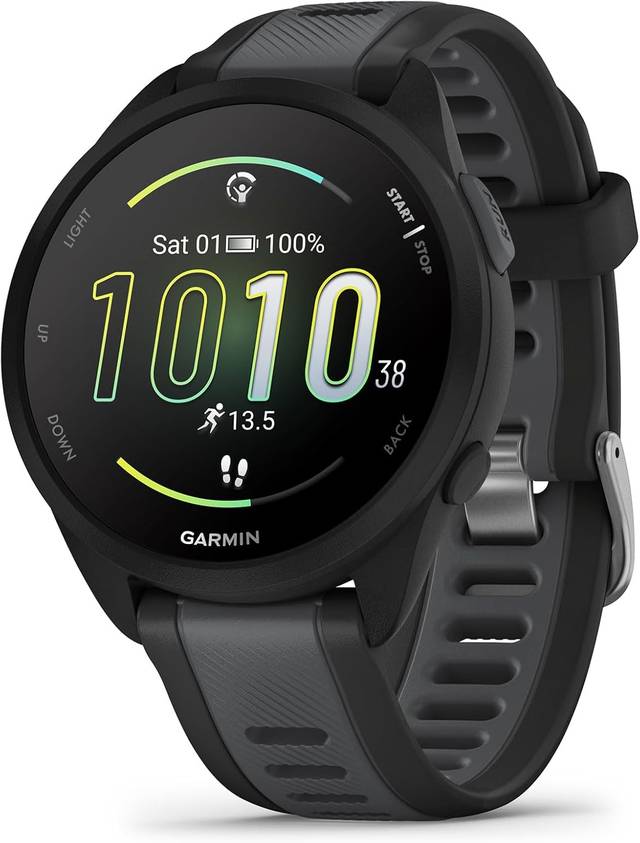
I know, I know. I said you don't need a fancy kit. But my friend with the ~$400 Garmin swears by the Garmin-branded cleaning kit, and I'll admit the soft brush it comes with is better than any toothbrush I've used.
The kit includes a microfiber cloth, a soft brush with angled bristles, and a cleaning solution that's specifically formulated for optical sensors. The brush is the star. It's gentle enough for the speaker grille and stiff enough to get into the charging port without scratching anything.
I borrowed my friend's kit to clean a watch that had fertilizer dust packed into the pins, and the brush got it out in about 30 seconds.
My cotton swab method took 5 minutes and left residue behind.
The solution is basically fancy alcohol, but it doesn't evaporate as fast, so you have more time to work it into the crevices. It also doesn't leave streaks on the screen. At ~$312.55, the kit costs almost as much as a cheap watch, which is a hard pill to swallow. But if you've got a nicer watch, or if you're tired of replacing cheap ones because the contacts corrode, the kit pays for itself.
One buyer on Amazon said the kit saved his Apple Watch after he got sunscreen all over the digital crown. He used the brush to clean around the crown and the watch rotated smoothly again. That's the use case. The kit is for people who own one good watch and want it to last.
![Apple Watch Series 11 [GPS 46mm] Smartwatch with Jet Black Aluminum Case with Black Sport Band - M/L. Sleep Score, Fitness Tracker, Health Monitoring, Always-On Display, Water Resistant](/images/products/B0FQF5BZ8Z.jpg)
Flaws but not dealbreakers: The solution runs out eventually, and refills cost ~$12. You can just use rubbing alcohol once the bottle is empty. The brush and cloth are the real value. I've been using my friend's brush for months and it's still holding up.
People who buy a new cheap watch every year probably don't need this kit. People who want their watch to survive a marathon training cycle, this is worth the money.
The competition
The other methods I tested didn't make the cut. The pencil eraser trick for charging contacts works in a pinch, but it leaves rubber shavings that get into the port. The eraser also doesn't remove the oily film that builds up from sweat, so the contact still reads poorly. I tested it on a watch with corroded pins and the resistance only dropped by half compared to the alcohol method.
Ultrasonic cleaners are a no for me. I've seen people put their watches in those jewelry cleaners and the vibration can loosen the adhesive holding the screen on. One buyer said their watch face popped off after an ultrasonic cleaning. That's a ~$25 lesson I don't need to learn myself.
Bleach or harsh chemicals are an absolute no. I had a watch band that I cleaned with a bleach wipe and it turned orange and started cracking within a week. The chemicals break down the silicone. Stick to dish soap and water for bands.
Toothpaste as a screen polish? I've seen this recommended and it's terrible. The abrasive in toothpaste scratches the glass. I tried it on an old watch with a scratched face and it made the scratches worse. The microfiber cloth and alcohol method doesn't fix scratches, but it doesn't add new ones either.
The bottom line
Here's what I've learned from years of cleaning cheap smartwatches. The charging contacts are the most important thing to clean, and most people never touch them until the watch stops charging. That's why so many watches die at the three-month mark. The battery is fine. The pins are just covered in dried sweat and skin cells.
Clean the contacts once a week with a dry cotton swab and alcohol. Wipe the heart rate sensor on the back with a damp microfiber cloth. Wash your band every couple of weeks. That's the whole routine. Five minutes, once a week, and your watch will outlast the battery anxiety that comes with every cheap wearable.
I charge mine while I shower every morning, 15, 20 minutes tops, and it never drops below 70%. That habit only works because I keep the contacts clean. If I skip a week, the charge gets spotty and I start checking the watch every hour. The cleaning is the maintenance that makes the ritual work.
For ~$4 and a few minutes a week, you can keep a ~$25 watch running for a year or more. Or you can do what I did with my first watch, ignore the gunk, and buy a new one when the pins corrode. I've done both.
The cleaning is cheaper, and honestly, it's kind of satisfying. Watching the crusty buildup come off the sensor and knowing the heart rate readings are honest again, that's a good feeling.
The people who wear their watches through marathons, through garden center shifts, through everything, this routine is for you.
Your watch will thank you.