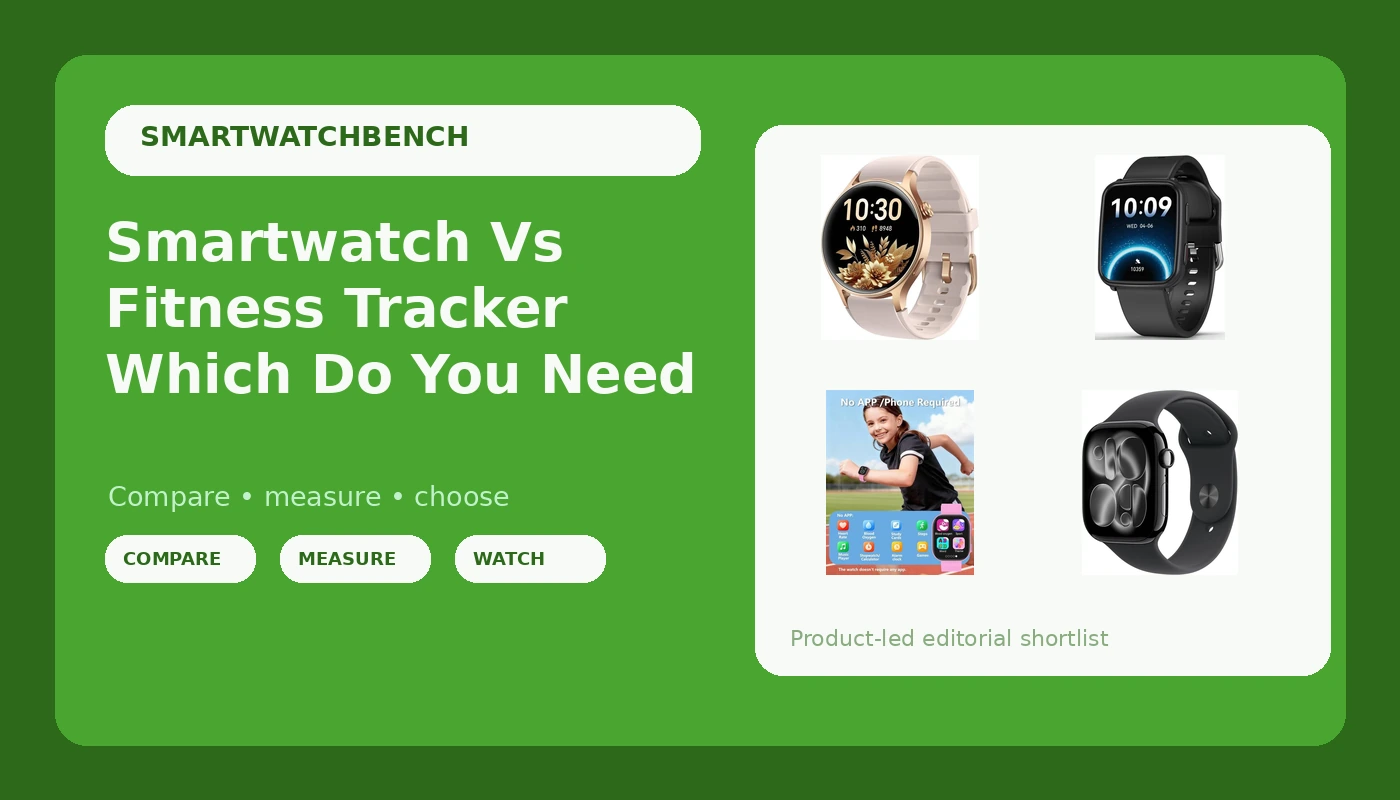
The ~$64.98 smartwatch I'm wearing right now tracks my steps, reads my heart rate, shows me texts, and lasts three days on a charge. My friend's Garmin does all that too, plus it costs thirty times more and still can't tell me why my sleep score was 62 instead of 74.
Related: Best Apple Watch: Series vs Ultra, Which One Is for You?
The difference between a smartwatch and a fitness tracker isn't the hardware, it's about how much of your life you want strapped to your wrist.
The smartwatch vs fitness tracker question comes down to one thing: whether you want a tiny phone on your wrist or a tiny coach. Most people need the coach, not the phone.
Pros of a smartwatch
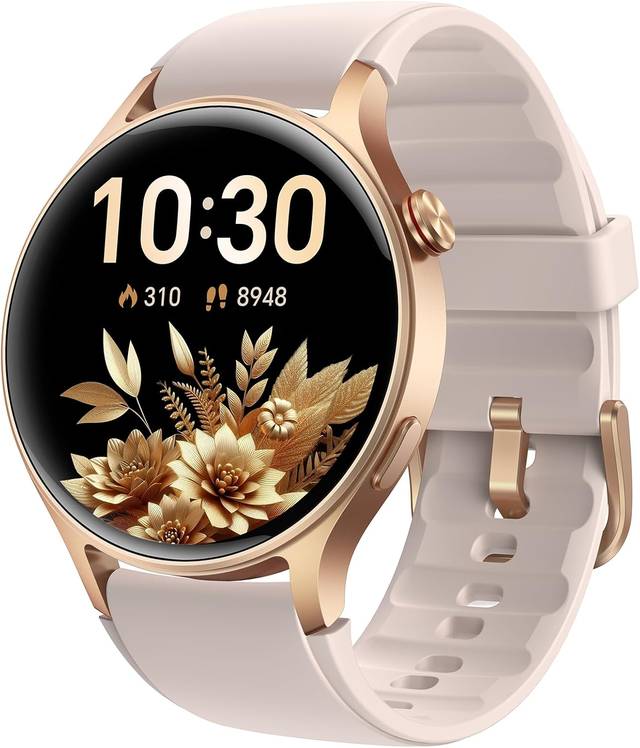
- Takes calls and texts without digging your phone out of your apron pocket
- Stores music for runs when you don't want to carry your phone
- Usually has a bigger, brighter screen you can actually read outside
Cons of a smartwatch
- Charges every day or two, and that's if you're lucky
- Costs more, and the expensive ones still lie about your heart rate
- More apps and notifications that buzz you out of a training run
Pros of a fitness tracker
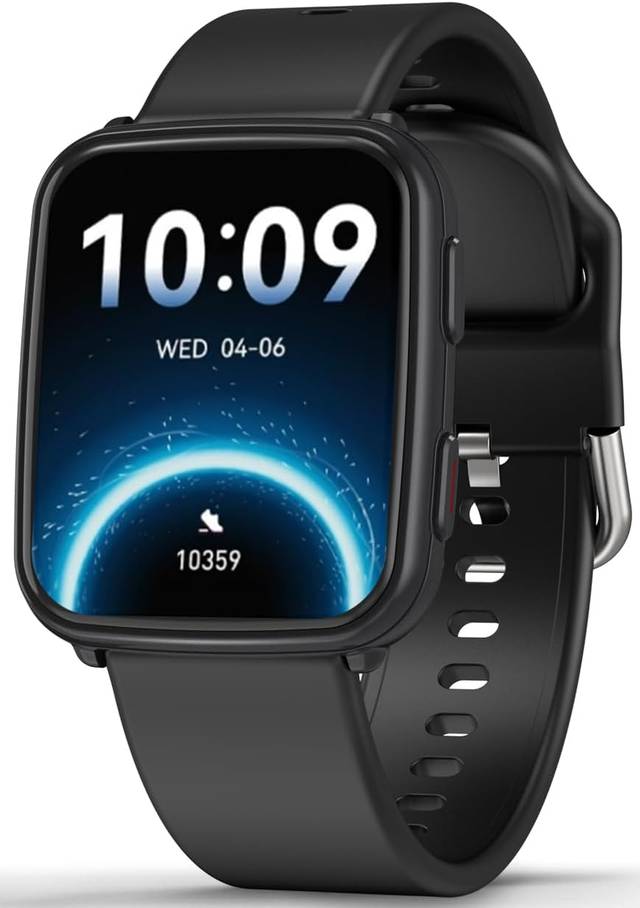
- Battery lasts days, sometimes weeks
- Cheaper, way cheaper, and you can replace it when you sit on it
- Fewer distractions, more focus on the metrics that matter
Cons of a fitness tracker
- Can't take calls or reply to texts from your wrist
- Smaller screens, less readable in direct sun
- Some have apps that make you want to throw the watch across the room
Compared to the expensive options
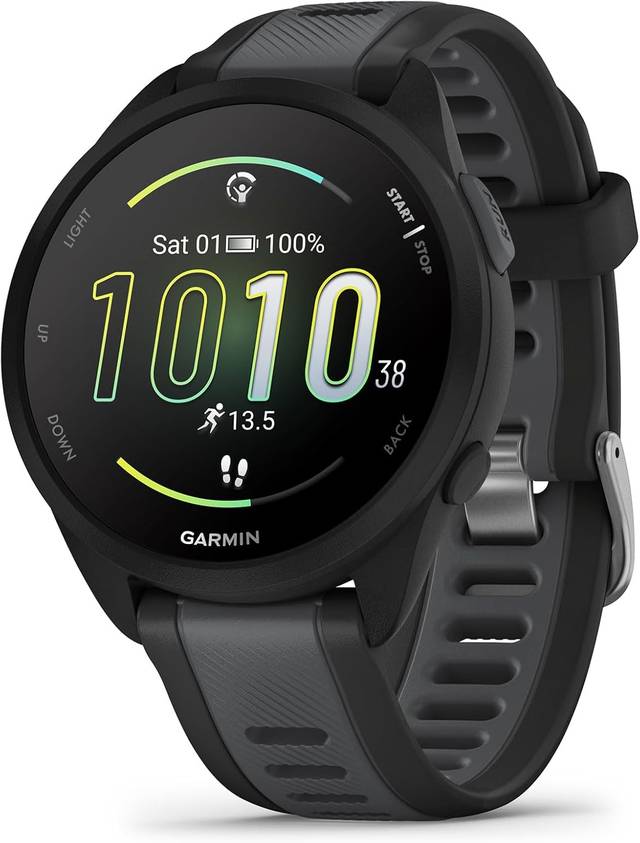
I wore a friend's Garmin for a week. It's a lovely piece of hardware, the GPS is genuinely accurate, and the training metrics made me feel like a professional athlete. It's also ~$400 plus, and the app is so deep I needed a map.
Meanwhile, the MorePro I've been wearing for three months does 80% of what the Garmin does for less than 10% of the price.
The Apple Watch is the other end of the spectrum, it's a brilliant smartwatch but it's a phone-first device, not a training tool.
I've had runners tell me their Apple Watch dies before mile 20 of a marathon. That's not a fitness tracker, that's a liability.
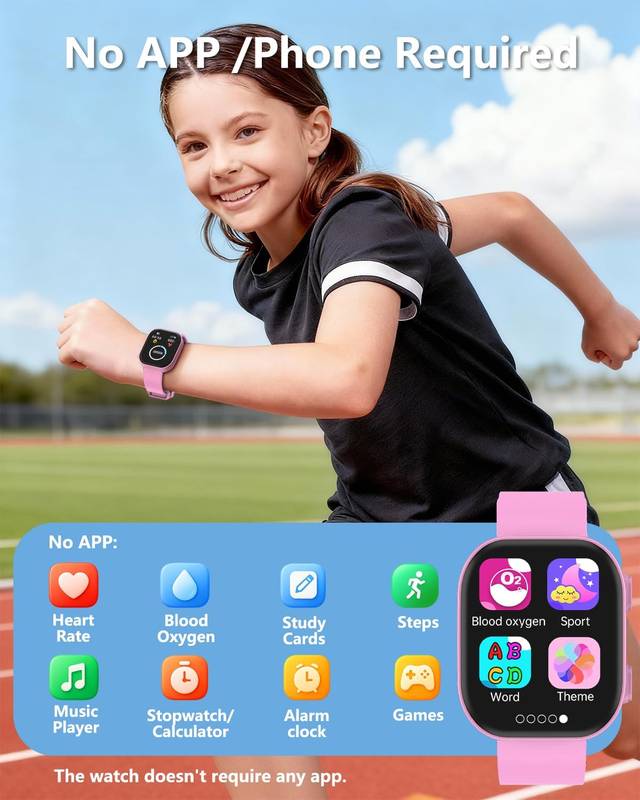
![Apple Watch Series 11 [GPS 46mm] Smartwatch with Jet Black Aluminum Case with Black Sport Band - M/L. Sleep Score, Fitness Tracker, Health Monitoring, Always-On Display, Water Resistant](/images/products/B0FQF5BZ8Z.jpg)
Design and comfort
I work at a garden center, 40 hours a week on my feet, hauling bags of soil and watering flats. I've worn the MorePro through all of it. The stock silicone band made my wrist sweat something fierce, so I swapped it for scrunchie bands from FTYQUEE and the problem went away.
The watch face is plastic, it feels lightweight, but it's survived every accidental knock against a metal shelf.
My dog Gus has sat on it twice and it's still ticking. The band hardware is the weak point, I've had band holders snap off on other cheap watches without doing anything rough.
The Apple Watch feels like jewelry, because it costs like jewelry. The Garmin feels like a tool, because it is one. The MorePro feels like what it is, a ~$25 piece of plastic that happens to work. I'm blown away by how much I've gotten used to it.
Performance and accuracy
Here's where I get particular. I have a known 5-mile course I've run hundreds of times. The MorePro told me 5.1 miles. That's a 2% error, and honestly, that's within my acceptable margin. My chest strap said my average heart rate was 158, the watch said 162.
That's close enough for training, but I want to be clear about what that difference means. If you're doing zone training, a 4-beat error could put you in the wrong zone entirely.
Show me the GPS trace. That's the review.
The Garmin was better, it said 5.0 on the same course and the heart rate was within 2 beats of my chest strap. But I've also seen Garmin users complain about heart rate drift during intervals. No watch is perfect. The Apple Watch I only wore for a few runs, and it was accurate too, but the battery anxiety killed the experience. I kept looking at the battery percentage instead of my pace.
The step tracking on the MorePro is where I have complaints. Nothing makes me angrier than a watch that silently stops counting my steps. It's happened twice now, I'll look down at the end of a day I spent on my feet and it says 2,000 steps.
The fix is always the same, reset it, and it works for a while, then stops again. I'm done caring about that.
The Garmin and Apple Watch don't have this problem, but they cost twenty times more.
Durability and battery
I've bought four cheap smartwatches in the past two years. The first was a ~$60 Amazon special that I accidentally submerged in a bucket and it died. The second one broke a pin latch but worked fine. The third took me two hours to pair because the app was still holding onto the old watch's Bluetooth connection. I almost threw it across the room.
The MorePro has been my most consistent. I charge it while I shower every morning, 15, 20 minutes tops, and it never drops below 70%. I've been doing this for months and it's become this weird ritual. The best battery I've had on any watch was a full day and night of wear and it still showed 82%. That's the dream.
But here's the pattern I keep seeing across every cheap watch I've looked at. The battery dying at three months is the single most common complaint. My first one did it. So did the one I bought as a gift for my mom.
One buyer, Mark from Ohio, said his watch died after three months of daily charging. Same thing happened to my second one.
It's a pattern, not a fluke. Plan for it. If the MorePro lasts me six months, that's about 14 cents a day.
My friend's Garmin costs 30 times more and does maybe 10 times more. I'll take the cheap one.
The app problem
The DaFit app is the weak link on the MorePro. Every sync issue I've ever had traces back to it. The QR code on the watch doesn't work, you have to find it in the manual. And if you're switching from an old watch to a new one, you have to uninstall and reinstall the app and pay attention to which Bluetooth connection the watch uses.
I've figured this out through sheer stubbornness and digging through reviews. The workaround is simple, scan the QR code in the manual, not on the watch.
It worked on my third try.
Once it works, the app gives you an incredible amount of health and activity data that's easy to understand. I get my steps, my sleep, my heart rate. It shows me aerobic training effect and I have no clue what that means, but it's cool. My mom called me once and had no idea I wasn't using my phone. She asked if I got a new phone. I told her it's the watch. She didn't believe me.
The Garmin app is more powerful but also more confusing. The Apple Watch app is the cleanest but it assumes you already own an iPhone. For a ~$25 watch, the DaFit app, once you fight through the pairing, is genuinely good.
Should you buy a smartwatch or a fitness tracker?
If you want to take calls, reply to texts, and control your music from your wrist, buy a smartwatch. The MorePro is the best cheap one I've tested, and for ~$25, WOW. It does what it says and the app gives you real data once you get it paired.
If you want to train for a marathon and you have the budget, the Garmin is worth the money. It's accurate, it's durable, and it will survive a training cycle without falling apart. I'm not going to pretend otherwise just because it's expensive.
If you're an iPhone person who wants the best smartwatch experience and you don't mind charging every day, the Apple Watch is the one. But it's a phone on your wrist, not a training partner.
For most people, the fitness tracker is the answer. It's cheaper, it lasts longer, and it tells you the truth about your runs. A ~$25 watch that tells the truth is better than a ~$400 watch that flatters you.
I'm currently working through a batch of budget watches in the ~$17 to ~$40 range, trying to find the ones that don't lie. I've got a spreadsheet with GPS drift, heart rate error, battery degradation, and app frustration levels.
I'm testing a couple of new ones now, and one of them has a heart rate sensor that's been surprisingly close to my chest strap.
I'll update this when I've got more data. The watch I'm wearing today might not be the one I recommend next month, and that's the point.
You get what you get, and sometimes you get way more.