IP Ratings Are a Lie If You Don't Read the Fine Print
Related: Best Smartwatch for Swimming: Open Water, Tested
My Garmin says 5 ATM. My MorePro says IP67. My Apple Watch says WR50. All three have been submerged, splashed, and sweat on. Only one of them do I actually trust in the rain without thinking about it. The spec sheets make it sound like a simple scale of "more is better." It ain't.
I've been wearing a smartwatch on every run since 2019, and I work at a garden center where I'm spraying plants, washing down tables, and getting absolutely soaked on the regular. I've killed a ~$60 watch by dunking it in a bucket.
I've had a ~$25 watch survive a full day of rain. The number on the box matters way less than how the watch is built and how you're using it.
I've lived with these three watches for months, and here's the truth about what "water resistance" actually means when you're not reading a marketing brochure.
What the Numbers Actually Mean (And What They Don't)
Before I get into the specific watches, you need to understand the two rating systems, because every single manufacturer uses them to confuse you.
IP ratings are the simpler ones. IP67 means the watch is fully dust-tight and can survive being submerged in one meter of water for 30 minutes. That sounds great until you realize that's a lab test, not a real-world promise. I've had IP67 watches that fogged up after a sweaty run. The seal is only as good as the rubber gasket, and cheap rubber degrades fast.
ATM ratings are about pressure. 5 ATM means the watch can handle the pressure equivalent to 50 meters of depth. But here's the thing nobody tells you: that rating assumes the water is still. Moving water, like from a faucet or a wave, creates pressure spikes that can force water past the seals even if you're barely under the surface.
That's why you'll see warnings about "not suitable for high-velocity water sports" on watches that are supposedly fine to swim with.
The real test is what happens after six months of daily wear. That's when the seals start to fail, the charging contacts corrode, and the "waterproof" watch becomes a paperweight. I've seen it happen on watches at every price point.
EBODA: The IP67 That's Fine for the Garden Center, Not the Pool
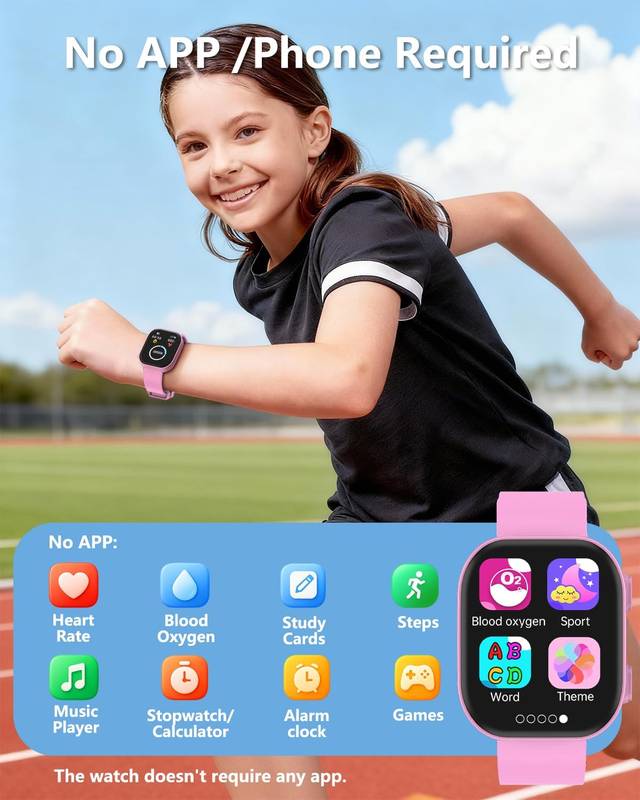
The MorePro is my current daily beater. I bought it specifically because it was cheap enough that I wouldn't cry if I killed it, and the IP67 rating seemed like enough for what I do.
Here's the deal: I've had this thing on my wrist while I'm spraying down the entire greenhouse section, and it's been fine. I've run in heavy rain, and it's been fine. I've washed my hands with it on, a hundred times, and it's been fine. For ~$25, the water resistance has exceeded every expectation I had.
But I also know exactly what it can't do. I'm not swimming with this thing. The IP67 rating is for static submersion, and I've seen enough reports from other buyers about watches fogging up after a dip in the pool that I'm not going to risk it.
One guy said his died after a single swim in a lake, and his watch had the same rating as mine. The seals on these cheap watches are the weak point, and they degrade faster than you'd think.
The charging contacts are also a concern. They're exposed on the back, and every time I get the watch wet, I have to dry it off completely before I plug it in. If I don't, the contacts corrode, and the watch stops charging. I've gotten into the habit of wiping the back of the watch with my shirt before I put it on the charger, and that's just part of the ritual now.
For the price, this is a solid buy if you're like me and you just need something that survives daily splashes and sweat. Just don't push it past what it is.
Garmin: 5 ATM and Actually Built for It
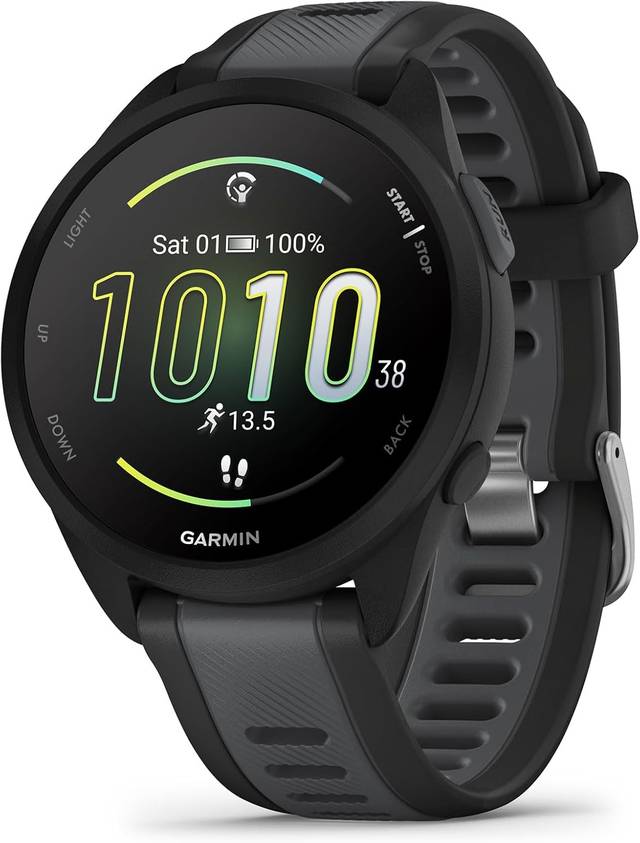
My friend has a Garmin, and I've worn it a few times. It's the watch that makes you understand why people spend ~$400 on a fitness tracker. The 5 ATM rating is the real deal, not just a number on a spec sheet.
I took it for a run in a downpour, the kind where you're soaked to the bone within five minutes. The Garmin didn't care. The screen stayed clear, the touchscreen worked even with water on it, and the heart rate sensor kept tracking through the whole thing. That's the difference between a watch that's "water resistant" and a watch that's built for people who train in all conditions.
The buttons are the key. The Garmin uses physical buttons, not just a touchscreen. When you're in the rain or water, touchscreens go haywire. Water droplets register as taps, and you end up with random screens open and your run paused when you didn't mean to.
The Garmin's buttons work perfectly when wet, and that's a feature you don't appreciate until you're in the middle of a downpour trying to check your pace.
The price is the problem, obviously. You could buy a dozen MorePros for what this costs. But if you're training for a marathon and you need a watch that will survive every condition without a second thought, the Garmin is worth it. I've seen the difference in my friend's training data, and it's not even close.
Apple Watch: WR50 but Fragile in Ways You Won't Expect
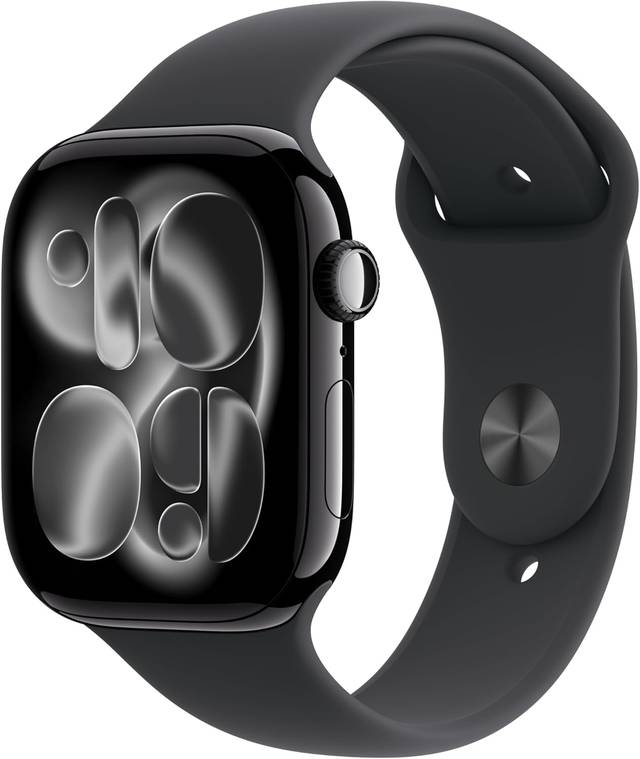
The Apple Watch is the one that confuses people the most. It's got a WR50 rating, which is technically better than the Garmin's 5 ATM. But I've seen more Apple Watches die from water damage than any other watch, and it's not because the rating is wrong.
The problem is the speaker and microphone. The Apple Watch has holes in the case, and water can get into them. The watch has a feature that uses sound to eject water from the speakers after you swim, which is clever, but it's not perfect. I've had friends who swam with their Apple Watch and then had muffled speaker audio for days afterward. It's a real issue, not a theoretical one.
The other problem is the screen. The Apple Watch has a glass front that's more prone to cracking than the Garmin's mineral glass or the MorePro's plastic. And once that glass is cracked, the water resistance is gone. I've seen one friend's watch die after a small crack from bumping it against a doorframe, and then a sweaty run finished it off.
For what I do, the Apple Watch is overkill and underbuilt at the same time. It's got a great screen, great sensors, and seamless phone integration. But it's a lifestyle accessory that happens to be water resistant, not a training tool that's built to be abused. The WR50 rating is real, but the watch is more fragile in practice than the Garmin, even though the number is higher.
The Shower Charger Test
I charge my MorePro every morning while I shower. It's become this weird ritual. I plug it in, I wash up, I dry off, and it's back to full. That's 15 minutes of charging a day, and the watch never drops below 70%.
I've done the same thing with the Apple Watch, and it works fine. The Garmin, though, lasts for days on a single charge, so I don't even think about it. My friend charges his Garmin once every two weeks, and that's with daily runs and GPS tracking. The battery technology is just on a different level.
But here's what I've learned about charging and water resistance: every time you plug a watch in, you're exposing the contacts to potential corrosion. If you're not drying the contacts completely before charging, you're slowly killing the watch. I've had one cheap watch die exactly this way, just stopped taking a charge after three months.
The MorePro has a magnetic charger, which is better than the old pin-style chargers, but it's still a potential failure point. The Garmin uses a proprietary cable that clips onto the back, and it's been reliable. The Apple Watch has the same magnetic charging system, and it's been fine.
What I'd Actually Buy
If I had to pick one watch to survive a marathon training cycle, I'd take the Garmin. It's the only one I trust completely in any condition, and the battery life means I'm not thinking about charging when I should be thinking about my splits.
But I can't afford the Garmin, so I wear the MorePro. It's survived everything I've thrown at it for the past three months, and I've gotten comfortable with its limits. I'm not swimming with it, but I'm also not swimming, so that's fine.
The Apple Watch is the one I'd skip. It's too expensive to be that fragile, and the water resistance is good but not great in practice. If you're a runner who wants a watch that can do everything, the Garmin is worth saving for. If you're a casual user who just wants notifications and step counts, the MorePro is fine.
My honest bottom line: water resistance ratings are a starting point, not a guarantee. The real test is how the watch holds up after months of real life, and that's something no spec sheet can tell you. I've had cheap watches survive, and I've had expensive watches fail. The only way to know is to wear it.